
The Matrix Resurrections
The Matrix Resurrections is a fascinating failure. By which I mean: it fails as a blockbuster sequel, it fails as an action film, it partially fails as a story, and yet it succeeds as a piece of cinema that forces genuine engagement. You cannot dismiss it. You also cannot fully recommend it.
Full analysis below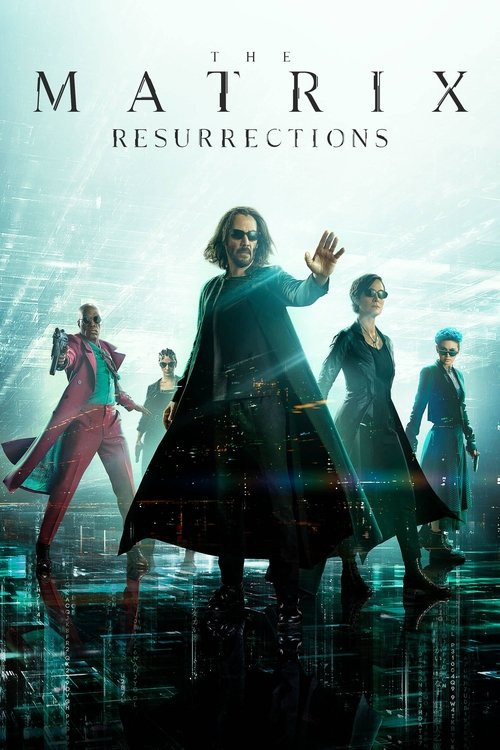
This film draws you in for a significant portion of its runtime with traditional or neutral content before springing its woke agenda. Know before you go!
The Matrix Resurrections is not a woke trap. It is one of the most openly self-aware and self-critical films in recent blockbuster history. Lana Wachowski explicitly frames the film as a meta-commentary on Warner Bros. forcing a sequel to a franchise she considers complete, on nostalgia as corporate exploitation, and on the nature of reality in an era of social media and identity politics. The film's progressive ideology is not hidden; it is the entire argument. Conservative audiences know exactly what they are getting within the first twenty minutes, when the film literally deconstructs its own marketing materials. The woke content is the point, not a surprise.
The Matrix Resurrections is a fascinating failure. By which I mean: it fails as a blockbuster sequel, it fails as an action film, it partially fails as a story, and yet it succeeds as a piece of cinema that forces genuine engagement. You cannot dismiss it. You also cannot fully recommend it.
The premise is bleak and self-aware. Neo, who died defeating the machines at the end of Revolutions, has been resurrected inside a new Matrix. He is Thomas Anderson again, living in San Francisco, working as a video game designer whose signature title is a trilogy called The Matrix. He takes blue pills given to him by his therapist (Neil Patrick Harris, chilling) and is not sure what is real. Trinity, also resurrected, lives nearby as a married suburban woman named Tiffany who does not recognize him. The machines have rebuilt both of them inside a new simulation because, as the villain eventually explains, Neo and Trinity together generate more power than either alone. Their love is literally a power source.
The early sections of the film are genuinely audacious. Warner Bros. and the machines overlap in the film's satire: the evil is corporate, the trap is nostalgia and franchise obligation, and Neo's situation maps directly onto Lana Wachowski's situation of being forced to make a sequel to a trilogy she considers complete. This level of self-awareness is rare in studio filmmaking. The problem is that it goes on too long and eventually the film has to decide whether to be a meta-commentary or an actual narrative, and it never quite commits to either.
The action sequences are the weakest in franchise history. The Wachowskis invented a new visual language for action cinema with the original Matrix. Resurrections uses conventional fast-cut action editing that could have been in any studio film from 2015-2021. The bullet-time aesthetic is referenced but not evolved. The climactic fight sequences are competent but uninspiring. For an R-rated film with a $190 million budget, this is a real problem.
Keanu Reeves and Carrie-Anne Moss are the best things in the film. Their performances are anchored in genuine feeling rather than nostalgic obligation. The scene where Neo first truly sees Trinity in the coffee shop, the moment of recognition between two people who are supposed to not remember each other, is the most purely emotional scene in any Matrix film. Moss in particular brings a physical and emotional authority that makes Trinity's eventual awakening feel earned rather than mechanical.
The ideology is explicit and worth addressing directly. Lana Wachowski has confirmed the Matrix trilogy as trans allegory: Neo's rejection of his assigned reality and his choice of a different identity reflects the trans experience of refusing the self you were given. Resurrections makes this subtext more literal: Neo and Trinity are both living lives imposed on them by others, performing identities that are not their own, medicated into compliance, and the film argues that their liberation is both romantic and political. The Analyst (Harris) explicitly uses therapy and medication as tools of control, which some viewers read as a critique of pharmaceutical culture and others as a critique of conversion therapy. The film supports both readings and perhaps intends both.
Conservative audiences will find the explicit ideology uncomfortable. The film is not trying to hide what it is saying. But I would argue that the critique of manufactured reality, of being medicated into accepting a false identity, of corporate power as fundamentally opposed to authentic selfhood, is not exclusively a progressive argument. There is a version of that critique that maps onto conservative concerns about technocracy, pharmaceutical dependency, and the construction of socially approved identities. The film is less interested in that version than in the trans-liberation version, but the gap between those readings is smaller than partisan reflexes suggest.
The larger failure is entertainment. Resurrections is a film made by a visionary director who does not want to make the film she is making. That conflict is the film's subject and its flaw. The result is a work of genuine intelligence that is often genuinely unpleasant to watch.
Formula: Weighted Score = Severity × Authenticity Multiplier × Centrality Multiplier
🔴 Woke Tropes
| Trope | Severity | Authenticity | Centrality | Score |
|---|---|---|---|---|
| Trans Liberation Allegory as Central Theme | 5 | 0.7 | 1.8 | 6.3 |
| Corporate Power as Primary Villain | 4 | 1 | 1 | 4 |
| Pharmaceutical Control as Oppression | 4 | 1 | 0.5 | 2 |
| Female Character Saves Male Lead | 2 | 0.7 | 1 | 1.4 |
| Racially Diverse Ensemble as Default | 1 | 0.7 | 0.5 | 0.35 |
| New Morpheus Race-Swap with In-Universe Justification | 2 | 1 | 0.5 | 1 |
| TOTAL WOKE | 15.1 | |||
🟢 Traditional Tropes
| Trope | Severity | Authenticity | Centrality | Score |
|---|---|---|---|---|
| Romantic Love as Genuine Transcendence | 5 | 0.7 | 1.8 | 6.3 |
| Individual Courage Against Systemic Power | 4 | 0.7 | 0.5 | 1.4 |
| Loyalty to Memory and Authentic Self | 3 | 0.7 | 0.5 | 1.05 |
| TOTAL TRADITIONAL | 8.8 | |||
Score Margin: -6 WOKE
Director: Lana Wachowski
LEFT. Lana Wachowski (formerly Andy Wachowski) is a trans woman who has been open about her identity and its influence on her work. The original Matrix trilogy is widely read as trans allegory, a reading the Wachowskis retroactively confirmed. Resurrections is more explicit than the originals: the film is directly about identity, authenticity, and the violence of being forced back into a role you have escaped. The progressive ideology is not subtext; it is text.Lana Wachowski directed Resurrections solo, without her sister Lilly, who did not want to revisit the franchise. The film was made during a period of personal loss (her parents died during production) and this grief permeates the narrative. Neo and Trinity being forcibly resurrected against their will, trapped in false lives, reads as both corporate satire and personal statement about identity suppression. Wachowski is a filmmaker of genuine visionary talent. Her politics are consistently progressive and consistently explicit. Resurrections is the most personal film in the Matrix franchise and arguably its most flawed.
Adult Viewer Insight
Conservative adults who loved the original Matrix will be disappointed by Resurrections as an action film and challenged by it as a political statement. The action is weak. The nostalgia is weaponized against itself. The ideology is explicit. And yet the film is more interesting than most of what surrounded it in 2021. Wachowski is doing something real here, even if it does not land. The Analyst's use of therapy and blue pills to maintain control maps onto legitimate concerns about pharmaceutical culture and therapeutic coercion that conservatives share. Neo and Trinity's love story is the most traditional element and it is genuinely moving. Worth watching for adults who can engage critically with its politics rather than simply being offended by them.
Parental Guidance
R. Ages 16+. Not suitable for children. Trans identity themes are central and confirmed by the director. Action violence throughout. Philosophically demanding.
Find The Matrix Resurrections on Amazon Prime Video, rent, or buy:
▶ Stream or Buy on AmazonAs an Amazon Associate, VirtueVigil earns from qualifying purchases.
Community Discussion 0
Subscribe to comment.
Join the VirtueVigil community to share your perspective on this review.