
The Ministry of Ungentlemanly Warfare
Guy Ritchie has spent thirty years making films about men who are very good at dangerous things, and The Ministry of Ungentlemanly Warfare is the logical culmination of that career.…
Full analysis below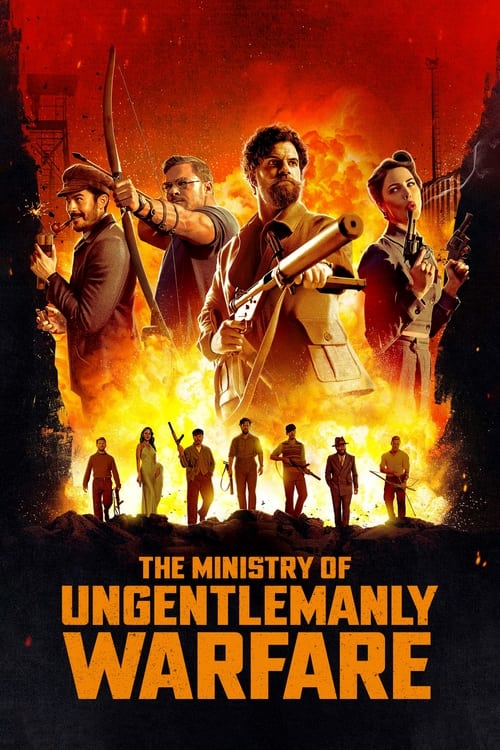
No trap. Guy Ritchie delivers exactly the film he advertised: a stylish, masculine, pro-Western WWII action-comedy that celebrates the men who were willing to fight dirty to protect their country. Conservative viewers can go in without their guard up.
Guy Ritchie has spent thirty years making films about men who are very good at dangerous things, and The Ministry of Ungentlemanly Warfare is the logical culmination of that career. It is a WWII action-comedy that celebrates masculine competence, British patriotism, and the willingness to fight dirty for civilization without a moment of second-guessing itself. In 2024, that is a genuinely unusual thing to see from a studio release.
The film is based on Operation Postmaster, a real SOE mission from late 1941 in which a small team of British irregulars sailed to Spanish-controlled Fernando Po off West Africa and hijacked a Nazi supply ship that was resupplying German U-boats. The U-boats were devastating Allied shipping. The logic was brutal and simple: destroy the resupply chain, kill the U-boats, save thousands of Allied lives. Winston Churchill backed the mission from the top. It was unauthorized, technically illegal under international law, and completely successful.
Ritchie structures the film as an ensemble heist. Henry Cavill plays Gus March-Phillipps, the team's leader, as a man of effortless physical authority who kills Germans with the same relaxed competence that other men use to make tea. Alan Ritchson's Anders Lassen is introduced fighting a bear and never really comes down from that register. Alex Pettyfer's Geoffrey Appleyard is the team's conscience and tactical brain. Hero Fiennes Tiffin, Babs Olusanmokun, and Henrique Zaga fill out the ensemble with the right combination of danger and wit.
The parallel operation involves Eiza Gonzalez as Marjorie Stewart, an SOE agent who runs intelligence in Fernando Po by seducing the SS commander in charge of the harbor. Gonzalez plays this as pure competence. She is not presented as a victim of her role or as a feminist statement about it. She is a professional doing a difficult job with exceptional skill, and the film treats this exactly the same way it treats Gus shooting people off boats. Both are forms of wartime tradecraft. Both are celebrated.
Cary Elwes brings dry wit to Brigadier Colin Gubbins, the military architect of the operation, and Henry Golding provides the comic bureaucratic friction of a senior officer who disapproves of everything the team does and cannot stop them.
The film has a particular kind of pleasure that was once common in adventure cinema and has become rare: unambiguous admiration for its protagonists. These men are good at violence. They enjoy being good at violence. The film enjoys their enjoyment of it. There is no introspective pause where Gus wonders whether he has become the monster he fights. He has not. He fights monsters so that civilization can survive. This moral clarity is bracing.
From a VirtueVigil perspective, this is one of the most straightforwardly traditional studio films of 2024. The ideology is old-fashioned Churchillian: civilization is worth defending, courage is a virtue, and the men willing to do what is necessary deserve honor. Winston Churchill appears in the film as a visionary who backs the mission and is shown as entirely right to do so. This is not a controversial portrayal in historical terms but it is notable that Ritchie commits to it without hedging.
The film's one woke concession is Babs Olusanmokun as Henry Hayes, whose historical identity is unclear but whose casting reads as deliberate diversity in an otherwise all-white historical European team. This does not intrude on the film's ideology or narrative. Hayes is simply part of the team and is shown as capable and loyal.
Guy Ritchie's aesthetic choices are all in service of celebrating the team. The camerawork is kinetic without being frenetic. The action sequences are clear and exciting. The period detail is well-served by the production design. The film does not overstay its welcome at 122 minutes. Christopher Benstead's score is propulsive and appropriately masculine.
Conservative audiences who have been waiting for a major studio war film that does not apologize for Western civilization or treat its male protagonists as problems to be unpacked will find this film deeply satisfying. Jerry Bruckheimer produced it. Guy Ritchie directed it. Henry Cavill is in it. These three names together are essentially a guarantee of traditional values and genre craftsmanship. The Ministry of Ungentlemanly Warfare delivers on all three.
| Trope | Category | Location | Authenticity |
|---|---|---|---|
| Diversity Ensemble (Mild) | WOKE | Babs Olusanmokun as Henry Hayes - the one non-European team member in an otherwise historically all-white British SOE operation | Mild diversity casting deviation from the historical record. The character is functional and competent; his presence does not generate ideological commentary within the narrative. |
| Female Seductress Operator | WOKE | Marjorie Stewart's spy tradecraft involves seducing the SS commander - the film's only female protagonist operates primarily through sexual attraction | Historically grounded. Female agents did use seduction as a tool in wartime intelligence operations. The film does not sexualize this exploitatively. Marjorie is presented as competent and admirable. The mild woke flag is for the film's implicit assumption that female agency in a war context looks like seduction rather than combat. |
| Masculine Heroism | TRADITIONAL | Throughout - every male protagonist is defined by physical courage, competence under pressure, and willingness to kill for a righteous cause; presented without irony or qualification | Authentic. Grounded in the historical record of the SOE operators. The film is a celebration of men who were genuinely exceptional. No deception in the framing. |
| Churchill as Hero | TRADITIONAL | Third act - Churchill personally backs the team, spares them court-martial, and adds them to his 'Ministry'; presented as exactly right in every judgment he makes | Authentic. Churchill's backing of special operations was historically real and historically correct. The film does not rehabilitate a contested figure; it celebrates an uncontested one. |
| Anti-Totalitarian Valor | TRADITIONAL | Entire film - the mission exists because Nazi Germany is strangling Allied supply lines and threatening civilization; defeating Nazis is the film's unambiguous moral framework | Authentic. The most defensible possible ideological premise. Killing Nazis to protect Western civilization requires no qualification. |
| Band of Brothers | TRADITIONAL | Throughout - the team operates on mutual trust, complementary skills, and genuine loyalty; the mission's success depends on each man doing his job without hesitation | Authentic. SOE teams operated precisely this way. The film celebrates male friendship and professional trust as inseparable from effective action. |
| Self-Sacrificing Heroism | TRADITIONAL | Multiple sequences - team members knowingly sail into a British naval blockade that will get them arrested; Appleyard and Lassen take positions with minimal survival margin; all accept the risk without drama | Authentic. The real operators took equivalent risks. The film does not manufacture false sacrifice; it depicts the real stakes of unconventional warfare. |
| Defense of Civilization | TRADITIONAL | Framing throughout - the mission is presented not as adventure-seeking but as a necessary contribution to the survival of Britain and Western Europe against a totalitarian enemy | Authentic. The strategic logic is historically real. The U-boat resupply chain was a genuine existential threat to Allied supply lines in 1941. |
| Institutional Trust (Earned) | TRADITIONAL | Churchill's backing validates the team against bureaucratic opposition; the hierarchy ultimately rewards competence and courage over protocol | Authentic. The historical Churchill backed special operations enthusiastically. The film's institutional resolution is historically grounded. |
| Traditional Masculinity Celebrated | TRADITIONAL | Throughout, but particularly in the Anders Lassen introduction (fighting a bear), the team's combat sequences, and Gus's collected authority under every form of pressure | Authentic. These men were genuinely exceptional physical specimens. The film is accurate in its presentation of the kind of men who volunteered for dangerous wartime special operations. |
| Honor and Duty | TRADITIONAL | The team refuses to abandon Appleyard when the mission requires a detour to rescue him; completion of the mission takes precedence over personal safety | Authentic. The historical record shows this level of commitment to teammates among the real operators. |
Director: Guy Ritchie
NEUTRAL / SLIGHT TRADITIONAL LEANGuy Ritchie is one of contemporary cinema's most consistently masculine directors. His filmography centers male competence, male friendship, and the aesthetics of physical and mental capability. Lock, Stock and Two Smoking Barrels (1998) and Snatch (2000) established his signature: witty, kinetic, populated by competent men who respect each other and dispatch their enemies with style. Sherlock Holmes (2009, 2011) applied this template to the Victorian detective with enormous commercial success. The Man from U.N.C.L.E. (2015) extended it to Cold War espionage. King Arthur: Legend of the Sword (2017) was an ambitious misfire but remained consistent in its celebration of masculine power. Aladdin (2019) was his one concession to corporate IP with its attendant progressive guardrails, though even there he minimized ideological interference. Operation Fortune: Ruse de Guerre (2023) returned him to his comfort zone: an ensemble of capable, witty, morally flexible professionals doing dangerous work together. Ministry is the purest expression of his traditional instincts to date. Ritchie has never shown interest in deconstruction, subversion, or social commentary. He makes films about people who are very good at difficult and dangerous things, and he admires them for it.
Writer: Paul Tamasy, Eric Johnson, Arash Amel, Guy Ritchie
Four writers, with Ritchie directing the ideology as much as the script. Tamasy and Johnson wrote Patriots Day and The Fighter, both traditional masculine films about real heroism. Amel is a Lebanese-British writer whose credits include A Private War. The collaborative script is competent and serves Ritchie's vision without generating friction. The adaptation draws from Damien Lewis's non-fiction account, which itself is a celebration of the audacity and competence of the original operators.
Producers
- Jerry Bruckheimer (Jerry Bruckheimer Films) — The most commercially successful producer in Hollywood history. Top Gun, Black Hawk Down, Pirates of the Caribbean, National Treasure, Crimson Tide. Bruckheimer's films are aggressively American, aggressively patriotic, and aggressively male in their core values. He produces films that celebrate military valor, national identity, and masculine competence. The anti-woke movement's ideal Hollywood producer. His involvement here is a strong traditional signal.
- Guy Ritchie (Toff Guy Films) — Self-producing director. See director profile above. Toff Guy Films is Ritchie's personal production vehicle. His creative control is total.
- Ivan Atkinson (Toff Guy Films) — Ritchie's longtime producing collaborator. Has worked with him on multiple projects including The Gentlemen and Operation Fortune. No independent ideological signal. Enabler of Ritchie's vision.
Full Cast
Fidelity Casting Analysis FAITHFUL WITH MINOR DEVIATIONS
The film is based on Operation Postmaster and the real SOE operators who conducted it. The historical figures of Gus March-Phillipps, Geoffrey Appleyard, and Anders Lassen are real men, and the casting reflects their historical demographics: white British and European men doing dangerous work in West Africa. Babs Olusanmokun as Henry Hayes brings a Black African operator into the team. The historical Hayes was not documented as Black. This is a minor casting deviation consistent with the film's slightly fictionalised nature. Eiza Gonzalez as Marjorie Stewart is the largest fidelity deviation: the historical Marjorie Stewart was a British woman; Gonzalez is Mexican-born and her accent is audible. The role is a composite character rather than a strict historical portrait, which limits the fidelity concern.
Henry Cavill (Gus March-Phillipps): Historically, March-Phillipps was a British officer known for physical courage and leadership. Cavill carries the physical authority and period masculine energy the role requires. Casting is appropriate and effective. Alan Ritchson (Anders Lassen): Lassen was a Danish commando and the only foreigner to win the Victoria Cross in World War II. Ritchson is American but physically credible and the performance is committed. The Danish background is acknowledged. Alex Pettyfer (Geoffrey Appleyard): Pettyfer is British-born, which is accurate for Appleyard. A minor but pleasing fidelity note. Eiza Gonzalez (Marjorie Stewart): Mexican actress in a British wartime spy role. This is the most visible fidelity gap. Gonzalez is effective in the role and the film leans into her glamour rather than her nationality, but the casting is clearly an internationalization choice. Babs Olusanmokun (Henry Hayes): No clear historical Black operator named Hayes documented in Operation Postmaster's chain. Minor historical deviation but the film presents itself as inspired by rather than strictly faithful to history. Cary Elwes (Gubbins): Historically Gubbins was Scottish-born British military. Elwes is British; the casting is appropriate.
Adult Viewer Insight
Conservative adult viewers will find The Ministry of Ungentlemanly Warfare one of the most unapologetically traditional Hollywood films of the past several years. The film presents Western civilization as worth defending, masculine courage as a virtue, and Winston Churchill as a heroic leader. All three premises are contested in contemporary culture. All three are presented here without irony, apology, or qualification. The film's treatment of Marjorie Stewart is worth noting specifically. She is a female operative who uses seduction as a professional tool. The film does not frame this as exploitation, empowerment, or a commentary on gender dynamics. It frames it as tradecraft. She is as competent and admirable as every other member of the team, and the film asks no more from her than it asks from Gus: do the dangerous work, do it well, come home alive. This is a genuinely equitable treatment that is neither feminist nor anti-feminist. The historical accuracy is loose by design. The film announces itself as inspired by true events and then dramatizes freely. The real Operation Postmaster was approximately this successful and approximately this audacious. The spirit is faithful even where the details are compressed or invented. For viewers curious about the real history, Damien Lewis's book Churchill's Secret Warriors provides the documented account. One note for those with strong opinions about Henry Cavill specifically: he has become something of a standard-bearer for masculine traditionalism in Hollywood discourse. His performance here is well-suited to that position. He plays a man who kills Nazis for Churchill and does not find this complicated. That is exactly what the film and the audience need from him.
Parental Guidance
Rated R. Content warnings apply but are primarily for action violence. Violence: Substantial. The film features combat violence including shootings, hand-to-hand combat, and a significant body count. The violence is stylized and exciting rather than gory. Appropriate for teens who can handle action-film violence. Sexual Content: Moderate. Marjorie's spy work involves seduction, and there is a scene that implies sexual activity. No nudity. The content is period spy-film rather than exploitative. Language: Moderate. Some strong language in combat contexts. Age Recommendations: Suitable for teens 14 and up who have an interest in WWII history or action-adventure films. The R rating reflects the violence and some sexual content, but both are handled with restraint. Discussion Guidance: (1) The operation was technically illegal under international law but morally unambiguous. When is it right to break the rules to do the right thing? (2) Winston Churchill is presented as a visionary leader who backs the mission. How does this film's Churchill compare to how he is usually discussed in contemporary discourse? (3) The team is willing to risk their lives for people they will never meet. What motivates that kind of sacrifice? These are excellent conversation starters for families watching with teens.
Find The Ministry of Ungentlemanly Warfare on Amazon Prime Video, rent, or buy:
▶ Stream or Buy on AmazonAs an Amazon Associate, VirtueVigil earns from qualifying purchases.





Community Discussion 0
Subscribe to comment.
Join the VirtueVigil community to share your perspective on this review.