
The Notebook
The professional critics never liked The Notebook. 53% on Rotten Tomatoes, 53 on Metacritic. 'Shameless manipulation,' one reviewer called it. 'A tearjerker with the subtlety of a sledgehammer.' The audience score is 86%. The film earned $115 million on a $29 million budget. It launched two careers.…
Full analysis below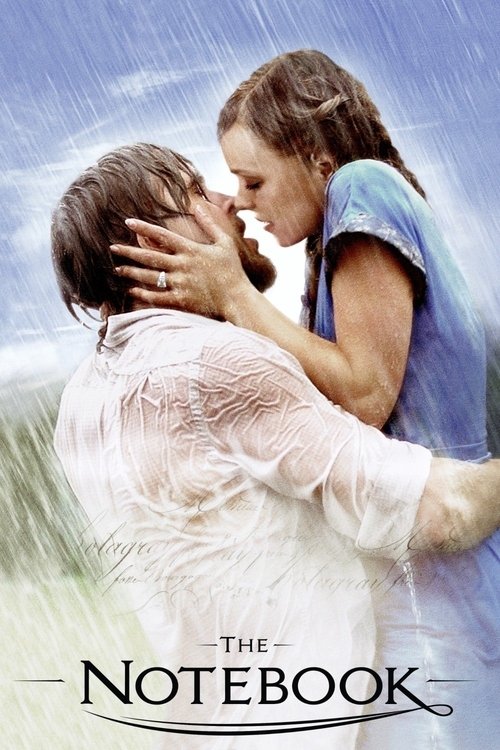
NOT A WOKE TRAP. The Notebook is a love story about heterosexual devotion that lasts a lifetime, told through the framing device of a husband reading to his wife with dementia because he refuses to let her forget him. Every progressive element in the film (premarital sex, class conflict, female choice) is visible from early in the runtime and is subordinated to the film's overwhelming thesis about lifelong commitment. No bait and switch. What you see in the first fifteen minutes is what the film is.
The professional critics never liked The Notebook. 53% on Rotten Tomatoes, 53 on Metacritic. 'Shameless manipulation,' one reviewer called it. 'A tearjerker with the subtlety of a sledgehammer.' The audience score is 86%. The film earned $115 million on a $29 million budget. It launched two careers. Twenty years later, when someone wants to name the romantic movie, they name The Notebook.
Critics are wrong about manipulation in romance. The question is not whether a film is trying to make you cry. Of course it is. The question is whether it earns the tears. The Notebook earns them.
Nick Cassavetes structured the film as a doubled love story: an old man (James Garner) reads to an old woman (Gena Rowlands, his real-life mother) from a notebook each day, trying to break through her dementia. The story he reads is theirs: a summer romance in 1940s South Carolina between a poor young man named Noah and a wealthy girl named Allie, separated by class, parental opposition, and World War II, and reunited years later when both have built different lives.
The audacity of the film is that it asks you to watch two love stories simultaneously. The young romance, which is all heat and fighting and rain-soaked kisses, is gorgeous. But the older romance is the real movie. An old man who spends every day in a memory care facility reading to his wife, trying to return her to herself for even a few lucid minutes, is performing one of the most radical acts of devotion in American cinema. Noah is not at that facility because he has to be. He checks in voluntarily. He has a choice. He chooses her, every day, even when she does not recognize him.
Ryan Gosling and Rachel McAdams became genuine cultural phenomena because of this film. Their chemistry is real and was reportedly hard-won: Gosling famously asked the director to replace McAdams mid-shoot, the two became close during reshoots, and then dated for years afterward. Whatever happened off-camera, what ended up on screen is undeniable. The famous rain kiss is not famous because the shot is beautiful (though it is). It is famous because you believe them.
But I want to talk about James Garner, because he is the film's secret weapon and one of the most underrated performances in any romance film. Garner was 75 when he made The Notebook, near the end of a career that included The Rockford Files, Maverick, and a reputation as one of Hollywood's most dependably charismatic leading men. He plays Noah as a man at absolute peace with his choices, however costly. There is no resentment in his Noah, no self-pity, no performance of sacrifice. He is just there, doing the thing, because she is worth it. That is not acting. That is wisdom made visible.
The film is not politically complicated. It knows what it is. A class conflict separates two people who love each other. Their families and circumstances push them apart. Each builds a life. Each still loves the other. When they find their way back, the film does not pretend the years apart were easy or that the choices made were costless. Allie's fiance Lon is a good man. He loves her. The film gives him enough dignity that her choice to leave him is genuinely difficult rather than a relief. This is unusual in Hollywood romance, which typically renders the 'wrong' boyfriend as a cartoon obstacle to simplify the audience's choice.
The criticism that The Notebook valorizes following your heart over commitment is worth taking seriously. Allie does break her engagement. She does return to Noah while she is promised to another man. The film endorses this. If you believe that commitment means honoring your promises even when your heart pulls elsewhere, the film's thesis is uncomfortable. I think that discomfort is intentional and honest. The film is not advocating infidelity as a general principle. It is making a specific argument about a specific love: that some connections run deeper than circumstance, and that pretending otherwise poisons everything it touches.
Gena Rowlands in the present-day sequences is the reason the film matters beyond its appeal as a teenage weepie. Her portrayal of dementia is not a performance trick. It is a performance built on emotional specificity: the moments of confusion, the sudden clarity, and the devastating moments when clarity returns and she understands what she has lost. The film uses Allie's dementia not as tragedy porn but as a test of love's permanence. Can Noah reach her? Can love outlast memory? The film answers yes, once, in a scene that is earned rather than manufactured, and that answer is why people have been watching this movie for twenty years.
TRADITIONAL is the right verdict. The film's commitment to lifelong heterosexual devotion is absolute. Its treatment of marriage as a covenant worth organizing your entire life around, even the last years of your life, in a memory facility, reading to someone who may not know you, is one of the most traditional arguments any Hollywood movie has made in the past fifty years. The counterarguments (premarital sex, breaking an engagement) are real but subordinate. This film is about what forever looks like when someone means it.
Formula: Weighted Score = Severity × Authenticity Multiplier × Centrality Multiplier
🔴 Woke Tropes
| Trope | Severity | Authenticity | Centrality | Score |
|---|---|---|---|---|
| Premarital Sex Depicted Positively | 2 | 0.7 | 1 | 1.4 |
| Female Autonomy Overriding Family and Social Expectation | 2 | 1 | 1 | 2 |
| TOTAL WOKE | 3.4 | |||
🟢 Traditional Tropes
| Trope | Severity | Authenticity | Centrality | Score |
|---|---|---|---|---|
| Lifelong Heterosexual Devotion as Supreme Value | 5 | 0.7 | 1.8 | 6.3 |
| Marriage as Lifelong Covenant | 4 | 0.7 | 1.8 | 5.04 |
| Class Should Not Determine Love or Character | 3 | 1 | 1 | 3 |
| Parental Care and Devotion in Old Age | 4 | 0.7 | 1 | 2.8 |
| TOTAL TRADITIONAL | 17.1 | |||
Score Margin: +14 TRAD
Director: Nick Cassavetes
CENTER-LEFT. Cassavetes is primarily known as a craftsman and character-driven director rather than an ideological filmmaker. His background as an actor (his father was the legendary independent filmmaker John Cassavetes) gives him an actor-first sensibility. The Notebook is his biggest commercial success and represents his most mainstream work. He has spoken about his mother Gena Rowlands (who plays the older Allie) as his primary creative muse.Nick Cassavetes is the son of director John Cassavetes and actress Gena Rowlands. He began as an actor before transitioning to directing. His directorial credits include Unhook the Stars (1996), She's So Lovely (1997), John Q (2002), The Notebook (2004), Alpha Dog (2006), and My Sister's Keeper (2009). The Notebook is his most commercially successful film and marked a significant departure from his earlier, more independent work. Casting his own mother Gena Rowlands as older Allie was both a personal tribute and a casting choice that elevated the film's emotional credibility.
Adult Viewer Insight
Conservative adults who dismissed The Notebook as a teenage romance film have missed one of Hollywood's most sincere arguments for lifelong marital devotion. The frame story, an elderly man voluntarily institutionalizing himself to be near his wife with dementia and reading to her daily, is not sentiment. It is theology. The film is arguing, as clearly as any prestige drama has, that the promise of love is permanent and that keeping it costs something real. James Garner's performance in those sequences is a masterclass in how to play peace rather than sacrifice, which is the distinction that makes the film's central thesis true rather than merely sentimental. The young romance is beautiful but it is the argument. The old romance is the proof.
Parental Guidance
Find The Notebook on Amazon Prime Video, rent, or buy:
▶ Stream or Buy on AmazonAs an Amazon Associate, VirtueVigil earns from qualifying purchases.
Community Discussion 0
Subscribe to comment.
Join the VirtueVigil community to share your perspective on this review.