The Old Guard
The Old Guard surprised a lot of people when it became one of Netflix's biggest hits of 2020.…
Full analysis below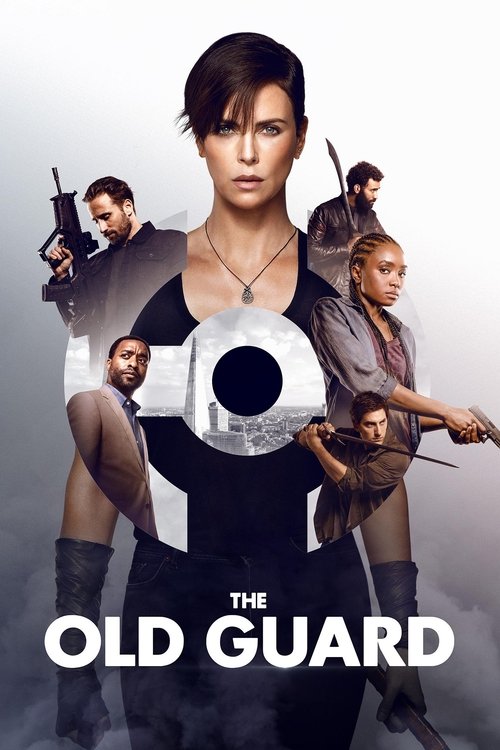
Partial woke trap. The Netflix marketing for The Old Guard emphasized the action, Charlize Theron's warrior character, and the immortality premise. The significant LGBTQ content (Joe and Nicky as a centuries-long gay couple, including a passionate kiss and a monologue about romantic love between men) was not prominent in promotional materials. Conservative audiences who chose this based on the action premise could reasonably have been surprised by the prominence of the gay relationship. The anti-Big Pharma villain is also more politically explicit than the trailer suggests. That said, the film's traditional elements (sacrifice, duty, warrior brotherhood) are genuine and substantial enough that the TRADITIONAL LEAN verdict holds.
The Old Guard surprised a lot of people when it became one of Netflix's biggest hits of 2020. The premise sounds like a standard action thriller: a team of immortal mercenaries, led by Charlize Theron's ancient Scythian warrior Andy, discovers they can die, while a newly immortal Marine named Nile threatens to expose their existence to a pharmaceutical executive who wants to exploit their regenerative abilities. What makes the film more interesting than that synopsis suggests is what the immortality actually means to the people who have it.
Andy (Andromache of Scythia) has been alive for roughly three thousand years. She has fought in nearly every major conflict in human history. She is exhausted in a way that no amount of sleep can fix. The film's opening image is her staring at the ceiling at 2am, unable to sleep, in the flat affect of someone who has done everything and found it insufficient. Charlize Theron plays this with her characteristic physical commitment and emotional restraint: Andy is not depressive, not dramatic, just deeply, historically tired.
This is the film's most conservative insight: immortality is not a gift. It is a burden. The ability to live without dying means watching everyone you love die while you continue. It means fighting the same wars under different names. It means discovering that human nature does not change, that the things you fight for in one century are undone in the next, and that you will be there to watch it happen again. The film takes this burden seriously in ways most superhero films cannot: because the characters have actually lived through centuries, their weariness is earned rather than performed.
The film's warrior ethic is its most traditionally compelling element. Andy, Joe, Nicky, and Booker operate as a military unit built on centuries of trust. Their combat effectiveness comes from absolute discipline, absolute loyalty, and absolute honesty with each other about their own failures. When Booker betrays the group, the punishment is exile: one hundred years of separation. The moral framework is warriors': loyalty is sacred, betrayal is the worst crime, and consequences are real. This is not a world where feelings are discussed in therapy. It is a world where actions determine belonging.
I want to address the Joe and Nicky element directly, because it is significant and the marketing obscured it. Joe (Marwan Kenzari) and Nicky (Luca Marinelli) are a gay couple who have been together for roughly nine hundred years. They met as soldiers on opposite sides of the Crusades, killed each other, were reborn side by side, and fell in love. The film treats their relationship with genuine seriousness. A scene where a mercenary mocks Joe by calling him 'his boyfriend' prompts an extended monologue from Joe about what Nicky is to him: 'He's more to me than you can dream.' The monologue is written and performed with real emotion.
For conservative viewers, this is where the film's woke element lands hardest. Joe and Nicky are not background characters. They are central. Their relationship is not ambiguous. The film presents their centuries-long bond as among the most authentic forms of love in the story.
Here is what makes this more complicated than a straight progressive box-check: the film's treatment of Joe and Nicky fits within the film's broader warrior ethic. Their love is presented as the deepest form of loyalty, the most durable bond. The film is not using them to make a political statement about gay rights; it is using them to illustrate what nine hundred years of shared sacrifice creates between two people. Whether that argument is persuasive to conservative viewers will depend on their specific objections to LGBTQ representation. The film is not camp, not performative, not using the relationship to score progressive points. It is using the relationship as a genuine expression of the film's theme: that what makes immortal existence bearable is the people you fight beside.
The villain (Merrick, played by Harry Melling) is a pharmaceutical executive who wants to exploit the immortals' regeneration for profit. The anti-Big Pharma framing is explicitly progressive and on-the-nose. Merrick is less a character than a target: young, entitled, willing to torture for profit, dismissive of human suffering. This is the film's weakest ideological element and its weakest narrative element simultaneously.
Chiwetel Ejiofor's Copley provides the film's most interesting moral complexity. He works with Merrick but is motivated by personal grief (his wife died of a disease he hoped the immortals' biology could cure). His arc, from collaborator to ally, is the film's most human journey.
KiKi Layne's Nile brings genuine emotion to what could have been a standard 'new recruit' role. Her disorientation at discovering her immortality, her grief at being permanently separated from her family, and her eventual integration into the team are handled with more psychological realism than the genre usually allows.
The action sequences are unusually strong for a Netflix production. Prince-Bythewood shoots combat with clarity and consequence: you always know where people are, what they are trying to do, and what it costs them. The pharmacy fight sequence is the film's action highlight, balancing choreography with character in ways that most superhero films sacrifice one for the other.
The Old Guard earns its TRADITIONAL LEAN verdict not by hiding its progressive elements but because its warrior ethics, its treatment of loyalty and betrayal, its meditation on the burden of outliving everyone you love, and its presentation of sacrifice as the condition of service all resonate with traditional values. The gay couple and the anti-pharma villain are real woke elements. But the film's bones are more traditional than its surface.
Formula: Weighted Score = Severity × Authenticity Multiplier × Centrality Multiplier
🔴 Woke Tropes
| Trope | Severity | Authenticity | Centrality | Score |
|---|---|---|---|---|
| Gay Couple as Central Heroic Characters | 4 | 0.7 | 1 | 2.8 |
| Female Warrior as Superior Physical and Strategic Leader | 3 | 0.7 | 1 | 2.1 |
| Anti-Corporate / Anti-Big Pharma Villain | 4 | 1 | 1 | 4 |
| Diverse International Ensemble (Race and Gender Mix) | 2 | 1 | 0.5 | 1 |
| Moral Ambiguity of Extra-State Violence | 2 | 1 | 0.5 | 1 |
| TOTAL WOKE | 10.9 | |||
🟢 Traditional Tropes
| Trope | Severity | Authenticity | Centrality | Score |
|---|---|---|---|---|
| Sacrifice and Duty to Protect Humanity | 4 | 0.7 | 1.8 | 5.04 |
| Brotherhood and Found Family Across Centuries | 4 | 0.7 | 1.8 | 5.04 |
| Loyalty and Honor Among Warriors | 3 | 1 | 1 | 3 |
| Immortality as Burden, Not Gift | 3 | 0.7 | 0.5 | 1.05 |
| Mentorship Across Generations | 2 | 0.7 | 0.5 | 0.7 |
| TOTAL TRADITIONAL | 14.8 | |||
Score Margin: +4 TRAD
Director: Gina Prince-Bythewood
CENTER-LEFT. Prince-Bythewood is a Black woman director known for Love & Basketball (2000) and Beyond the Lights (2014). She is a skilled filmmaker who works in multiple genres and brings emotional authenticity to action. She is progressive in her commitment to diverse representation but does not make ideological films in the sense of prioritizing message over craft. The Old Guard is her most action-heavy film and demonstrates genuine command of large-scale action sequences.Gina Prince-Bythewood's filmography shows consistent craft and emotional intelligence across genres. She approached The Old Guard as an action film that takes its characters seriously: the immortal warriors are not defined by their powers but by what those powers have cost them over centuries. Her direction brings weight and consequence to action sequences that could easily have been weightless. She subsequently directed The Woman King (2022), which received more polarized political reception. The Old Guard represents her work at its most accessible to mixed audiences.
Adult Viewer Insight
Conservative adults who enjoy action films and can navigate LGBTQ content that is present but not politically aggressive will find The Old Guard unexpectedly rewarding. The film takes its warrior ethic seriously. Betrayal has real consequences. Loyalty is treated as sacred. Immortality is presented as a burden that demands purpose. These are traditional values. Joe and Nicky's relationship is the line that many conservative viewers will draw, and it is a meaningful element of the film, not a detail you can skip past. Adults who can engage with the film despite that element will find an action film more interested in character and consequence than most. Adults who cannot will find it frustrating, because the relationship is not incidental.
Parental Guidance
R. Best for ages 16 and up. The violence is graphic and frequent. The LGBTQ content (a gay male couple in a central role) is substantial and should factor into viewing decisions for families. No sexual content beyond a kiss. Thematic depth is appropriate for older teenagers and adults.
Find The Old Guard on Amazon Prime Video, rent, or buy:
▶ Stream or Buy on AmazonAs an Amazon Associate, VirtueVigil earns from qualifying purchases.
Community Discussion 0
Subscribe to comment.
Join the VirtueVigil community to share your perspective on this review.