
The Penguin
The Penguin is the best argument that prestige superhero television doesn't have to be ideologically captured to be excellent.…
Full analysis below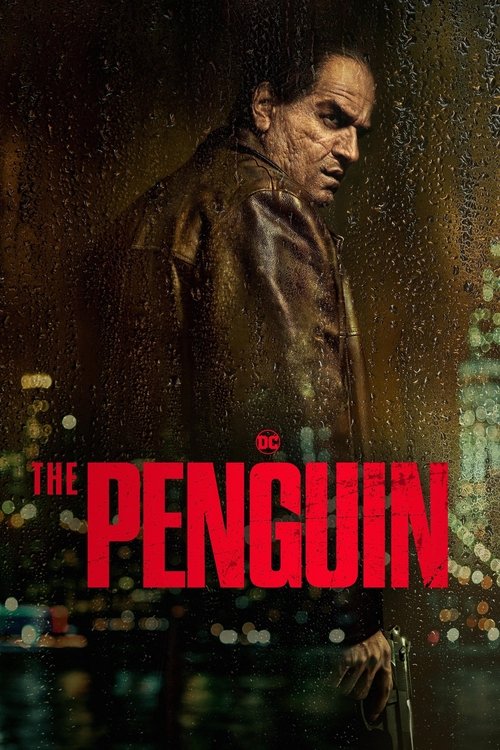
The Penguin commits to crime drama genre conventions with unusual discipline. The show's moral universe punishes criminality through consequence rather than lecture. The female lead villain is formidable because she is written as a genuine antagonist, not because the show needs to signal progressive credentials. This is not a woke trap; it is one of the better crime dramas of 2024.
The Penguin is the best argument that prestige superhero television doesn't have to be ideologically captured to be excellent. HBO's eight-episode spinoff from Matt Reeves's The Batman commits so fully to the crime drama genre - specifically the HBO tradition of The Sopranos and The Wire - that it functions less as a superhero show and more as a sustained character study in ambition, violence, and the price of power. The result is one of 2024's strongest dramatic series and a model for how franchise content can serve its characters rather than its brand.
Colin Farrell is unrecognizable under prosthetics as Oz Cobb - the man who will become the Penguin. Farrell's performance is the kind that makes you forget you're watching makeup effects. Oz is cunning, pathetic, funny, brutal, and occasionally heartbreaking - not because the show excuses his violence, but because it fully renders his psychology. He is a man from Gotham's working poor who has convinced himself that crime is the only honest meritocracy available to him. His relationship with his mother, Francis Cobb (Deirdre O'Connell, remarkable), is the season's emotional spine - not in a sentimental way, but in the way that truly formative family relationships shape people in ways they never fully escape.
The other great performance is Cristin Milioti as Sofia Falcone, heir to the Falcone crime family and the season's genuine antagonist. Sofia is not a feminist symbol - she is a villain with a fully rendered psychological history. Institutionalized by her father, dismissed by every man in her orbit, and burning with the specific kind of rage that comes from being underestimated by people you are in fact smarter than, Sofia is a character of real menace. The show's dynamic - two people, both of whom believe they deserve to run Gotham's criminal underworld, neither of whom can admit they need the other - generates eight episodes of sustained tension without requiring the story to take political sides.
What makes The Penguin traditionally valuable, by VirtueVigil's measure, is what the show doesn't do. It doesn't excuse its criminals through social justice framing - Oz's working-class origins don't make his violence heroic, and the show punishes him for his choices with increasing severity as the season progresses. The institutional framework of Gotham city - the political corruption, the police compromised by organized crime - is presented as the result of individual human failures rather than systemic oppression. Oz's ambition is not endorsed; it is examined. And the show's moral universe, drawn from the crime drama tradition, ultimately holds its characters accountable in ways that progressive ideology often resists.
The series is not without its progressive dimensions. A female showrunner with a female lead villain is notable, and the show's sympathy for Sofia's psychological wounds reflects an awareness of how patriarchal family structures can generate monstrous results. Rhenzy Feliz as Victor Aguilar, Oz's teenage ward, provides a coming-of-age subplot that adds moral weight through the lens of a kid being drawn into a world that will cost him dearly. But these elements serve the story rather than serving an agenda. The show is not making an argument; it is telling a story. That distinction matters enormously.
For conservative viewers, The Penguin is a genuine recommendation. It is violent, dark, and not appropriate for family viewing. But as prestige crime drama, it earns its darkness through character and consequence rather than shock and ideology. This is what HBO used to do regularly. It's gratifying to see them do it again.
| Trope | Category | Location | Authenticity |
|---|---|---|---|
| Institutional Corruption | WOKE | Gotham City political system - politicians and police compromised by organized crime | Natural. Gotham's institutional corruption is canonical from the comics and The Batman (2022). Not a progressive insertion. |
| Strong Female Villain / The Girl Boss (Subverted) | WOKE | Sofia Falcone - female crime boss seeking to reclaim her family's empire | Natural. Sofia is a villain, not a hero. The show does not endorse her actions. The female empowerment framing is mitigated by her genuine menace. |
| Trauma as Character Motivation (without excuse) | WOKE | Sofia's institutionalization backstory; Oz's working-class origins | Natural. The show renders trauma as explanation, not excuse. Consequence still applies. |
| Crime Is Punished | TRAD | Every major character's arc ends in consequence; the criminal world is not presented as aspirational | Organic. The show operates within the crime drama moral tradition: ambition + violence = loss. |
| Maternal Bond | TRAD | Oz and Francis Cobb - the mother-son relationship is the season's emotional spine | Organic. Francis Cobb is one of the most complexly drawn mothers in prestige TV. The bond is genuine and the damage it causes is the result of love misapplied, not of ideology. |
| Personal Responsibility | TRAD | Oz's arc - every choice he makes carries direct consequence; no systemic excuse offered | Organic. The show holds its antihero accountable in ways that progressive crime drama often avoids. |
| Loyalty and Betrayal | TRAD | Oz and Victor's relationship - loyalty tested, consequences of betrayal devastating | Organic. The traditional crime drama value of loyalty is central to both the Oz/Victor and the Falcone family dynamics. |
| The Wise Elder / Mentor (Inverted) | TRAD | Oz mentors Victor - but in crime, making the mentor figure a cautionary version of the archetype | Natural. The show deconstructs the mentor-protégé relationship through the crime lens, but the archetype's weight is fully present. |
| Family as Origin of Character | TRAD | Both Oz's Cobb family and Sofia's Falcone family - character is formed by family relationships that cannot be escaped | Organic. Family as the forge of character is the show's thematic core. |
Director: Craig Zobel (eps 1-3), Helen Shaver (eps 4-5), Kevin Bray (eps 6-7), Jennifer Getzinger (ep 8)
MIXED - genre storytelling; no dominant ideological signalCraig Zobel (Compliance, The Hunt, Mare of Easttown) leads the directorial team for the opening arc. He is a skilled crime and thriller director whose work ranges across political spectrums. The remaining directors bring prestige TV credentials. No single ideological throughline emerges from the directing team.
Writer: Lauren LeFranc (showrunner)
Lauren LeFranc developed the series and serves as showrunner and primary writer. Her previous credits include Chuck and Hemlock Grove - genre entertainment, not ideology-first storytelling. LeFranc was specifically tasked with translating Matt Reeves's noir Batman universe into a prestige TV format, and she has spoken about her intention to write Sofia Falcone as a fully realized villain rather than a feminist symbol. The execution largely bears this out.
Producers
- Matt Reeves (6th & Idaho Motion Picture Company) — Director of The Batman (2022) and franchise architect. Reeves's Batman universe is a noir crime story rather than a superhero power fantasy - thematically grounded in personal obsession, institutional failure, and the consequences of violence. No strong progressive ideological signal; the franchise is genre-first.
- Dylan Clark (Dylan Clark Productions) — High-end genre producer (Planet of the Apes reboots, The Batman). Follows prestige genre work. No independent ideological signal.
- Colin Farrell (Acid and Tender Productions) — Executive producer and star. Farrell's personal involvement in shaping Oz Cobb as a character kept the show grounded in character psychology rather than franchise messaging.
Full Cast
Fidelity Casting Analysis FAITHFUL
Batman universe characters are cast consistent with Matt Reeves's established Batman reboot. No canon-swap concerns.
The Penguin operates within the universe established by The Batman (2022), and all returning characters are played by their original actors. Colin Farrell reprises Oz Cobb from The Batman, continuing the realistic-grounded interpretation rather than the comic book versions. Sofia Falcone is a Penguin-adjacent character from the comics' Falcone crime family; Cristin Milioti's casting does not contradict established comic canon in any significant way. The Falcone family is canonically Italian-American, which the show maintains. The show introduces original characters (Victor Aguilar) who belong entirely to this continuity. No fidelity concerns.
Adult Viewer Insight
Conservative viewers who enjoy serious crime drama will find The Penguin their best option in the superhero-adjacent genre since The Dark Knight trilogy. The show's moral universe is not progressive - crime is crime, violence has consequences, and nobody is redeemed simply by having a traumatic backstory. Colin Farrell's performance is extraordinary. Watch it for the character study alone. The politics are genre, not agenda.
Parental Guidance
Ages 18+ only. This is HBO crime drama for adults. - Violence: Heavy throughout - Gotham's underworld is depicted with brutal realism. Several graphic violence scenes. - Language: Strong language consistent with crime drama genre - Sexual content: Moderate - some adult content but not gratuitous - Thematic content: Organized crime, murder, mental illness, institutionalization, dysfunctional family dynamics, violence as means to power - Deirdre O'Connell's Francis Cobb has severe mental illness depicted with clinical accuracy that may be disturbing - Not appropriate for anyone under 18. Adults should be aware of the sustained darkness of tone before beginning.
Find The Penguin on Amazon Prime Video, rent, or buy:
▶ Stream or Buy on AmazonAs an Amazon Associate, VirtueVigil earns from qualifying purchases.





Community Discussion 0
Subscribe to comment.
Join the VirtueVigil community to share your perspective on this review.