
The Wedding Banquet
The original 1993 Wedding Banquet was a film about a gay man living a double life, caught between the love he had chosen and the family expectations he had not been able to refuse. It was genuinely moving because it took the parents seriously. They were not villains.…
Full analysis below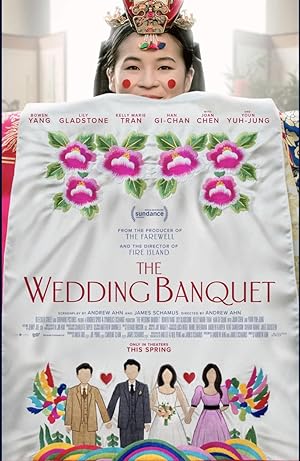
This film draws you in for a significant portion of its runtime with traditional or neutral content before springing its woke agenda. Know before you go!
Not a woke trap, though borderline. The original 1993 Ang Lee film was about a gay man arranging a sham marriage to satisfy his traditional Chinese parents. The 2025 remake replaces the single gay man with an entire queer polyamorous household, adds a lesbian couple pursuing IVF, and centers PFLAG activism as a plot element. The marketing does not hide this, but it also does not lead with it. Viewers who know the original may not realize how extensively the remake has amplified its progressive content. Still, this is a limited theatrical release with Sundance origins that signals its ideological orientation clearly enough.
The original 1993 Wedding Banquet was a film about a gay man living a double life, caught between the love he had chosen and the family expectations he had not been able to refuse. It was genuinely moving because it took the parents seriously. They were not villains. They loved their son and wanted grandchildren and did not know that their happiness depended on their son's silence about who he was.
The 2025 remake makes a different choice. It starts from a fully visible queer household, complete with a PFLAG-active mother (Joan Chen, warm and generous in the role), and rebuilds the farce around a visa problem rather than closeted identity. The emotional engine is different and, on its own terms, it mostly works.
Bowen Yang and Lily Gladstone are both genuinely charming. Yang brings his SNL-refined comedic timing to Chris's panicked scheming. Gladstone continues to demonstrate she can do almost anything; her Angela is warmer and funnier than Gladstone's typically intense dramatic register. Joan Chen as Angela's PFLAG-activist mother is the film's best character, given real scenes rather than just symbolic function.
The problem is that the remake's expansion dilutes the original's emotional precision. Four queer characters, two relationships, a visa problem, an IVF subplot, a disapproving Korean grandfather, and a grandmother who turns out to be more understanding than expected: the film tries to hold all of this and loses traction. The Letterboxd observation that 'the two guys were supposed to have been together 5 years but there's no chemistry' is accurate and damaging. The relationship at the plot's center does not feel real, which undermines the emotional stakes that should land in the third act.
The film's ideological profile is the clearest thing about it. This is a fully progressive vision of queer family life in which the older generation's homophobia is the only obstacle and the resolution involves them coming around. Min's grandfather represents traditional values as bigotry to be overcome. His grandmother represents tradition as flexible and loving. The film's thesis: tradition is fine as long as it eventually affirms queer identity. That is a progressive argument wearing a traditional-family-comedy costume.
For VirtueVigil's purposes, this is worth seeing if you want to understand how contemporary Hollywood frames the conflict between traditional family expectations and queer identity. It is not worth seeing if you want to enjoy a well-constructed romantic comedy. The craft issues are real. The original is better. And the original is on streaming.
Formula: Weighted Score = Severity × Authenticity Multiplier × Centrality Multiplier
🔴 Woke Tropes
| Trope | Severity | Authenticity | Centrality | Score |
|---|---|---|---|---|
| Queer Household as Default Normal | 5 | 0.7 | 1.8 | 6.3 |
| Traditional Values as Bigotry to Overcome | 4 | 0.7 | 1.8 | 5.04 |
| PFLAG Activism as Model Parenthood | 4 | 1 | 1 | 4 |
| IVF as Family Building Default | 2 | 0.7 | 1 | 1.4 |
| Green Card Marriage as Sympathetic Scheme | 2 | 1.4 | 0.5 | 1.4 |
| Gender-Swapping from Source Material | 1 | 1.4 | 0.5 | 0.7 |
| TOTAL WOKE | 18.8 | |||
🟢 Traditional Tropes
| Trope | Severity | Authenticity | Centrality | Score |
|---|---|---|---|---|
| Intergenerational Family Bonds Cross Cultural Lines | 3 | 0.7 | 1.8 | 3.78 |
| Desire for Children as Universal Human Good | 0.7 | 0.5 | ||
| TOTAL TRADITIONAL | 3.8 | |||
Score Margin: -15 WOKE
Director: Andrew Ahn
LEFT. Ahn is an openly gay Korean-American filmmaker whose previous work includes Spa Night (2016), a drama about a Korean-American gay man navigating his identity and family expectations, and Fire Island (2022), a gay rom-com for Hulu featuring an all-Asian-American queer cast. The Wedding Banquet is his most ambitious film in terms of budget and cast but is entirely continuous with his career project of depicting queer Asian-American life with specificity and warmth. His ideology is not a background presence in this film. It is the film.Andrew Ahn is a Korean-American director based in Los Angeles. He studied at UCLA School of Theater, Film and Television. His debut feature Spa Night premiered at Sundance 2016. Fire Island (2022) brought him significant mainstream attention and positioned him as a leading voice in queer Asian-American cinema. The Wedding Banquet represents his highest-profile project: a remake of an Ang Lee classic, co-written with Lee's collaborator James Schamus, and starring Academy Award nominees Bowen Yang and Lily Gladstone.
Writer: Andrew Ahn & James Schamus
James Schamus co-wrote the original 1993 Ang Lee film and returns here to co-write the remake with Ahn. Schamus is also a film theorist and former Focus Features CEO. The original film's comedy derived from one gay man hiding his sexuality from his traditional parents. The remake expands this to encompass a fully queer household: two lesbian partners, a gay male couple, and a Korean student whose visa situation drives the plot. The writing is technically accomplished but some critics noted the expanded cast dilutes the emotional clarity of the original's simpler premise.
Adult Viewer Insight
Conservative audiences who want to understand the culture they are navigating should see The Wedding Banquet as an instructive piece of progressive filmmaking. It is not a bad-faith attack on traditional values. It is a sincere vision of family that defines family as whoever loves each other, tradition as whatever the grandmothers decide to accept in the end, and the only barrier to happiness as the unwillingness of older generations to affirm their descendants' choices. This is a real cultural argument and it is made here with genuine warmth rather than hostility. Joan Chen's PFLAG mother is not a parody. Youn Yuh-jung's grandmother is not a villain. The film believes it is showing what healthy family looks like. Conservative audiences who disagree should understand what they are disagreeing with: not malice, but a genuinely different understanding of what family and tradition are for. The original 1993 Ang Lee film is a more interesting object from a traditional values perspective because it takes the conflict more seriously. The parents' desire for grandchildren is treated as legitimate and their grief when they discover the truth is real. The 2025 remake softens the traditional side to make the resolution easier. That softening is itself a values statement.
Parental Guidance
Rated PG-13. Sexual Content: Same-sex romantic relationships are depicted throughout, including physical affection between the male couple and the female couple. No explicit sexual content. IVF procedures are discussed. Language: Mild to moderate. Violence: None. Thematic Content: The film centers gay and lesbian characters whose primary challenge is acceptance from family. PFLAG is depicted positively as a community resource for parents of LGBTQ children. Traditional Asian family expectations around marriage and grandchildren are depicted as obstacles to be overcome. Age Recommendation: 13 and up with parental guidance for conservative families. This film is a full-throated celebration of queer family life. Conservative parents should preview and decide whether to engage with it as a conversation starter or avoid it entirely. The film is not age-inappropriate in terms of content, but its values framework requires discussion with younger viewers. Discussion Points: What does the film say about what family is for? How does it portray traditional expectations? What is PFLAG and what does it represent in the context of this story?
Find The Wedding Banquet on Amazon Prime Video, rent, or buy:
▶ Stream or Buy on AmazonAs an Amazon Associate, VirtueVigil earns from qualifying purchases.
Community Discussion 0
Subscribe to comment.
Join the VirtueVigil community to share your perspective on this review.