
Thelma
Thelma is based on something that actually happened to director Josh Margolin's grandmother. A scammer called her, pretending to be Josh, and told her he had been arrested. She sent $10,000 to an address he gave her. She was 93.…
Full analysis below
Conservative viewers and their parents and grandparents will love this film. Its values are their values: dignity, agency, personal responsibility, family love, and the conviction that being old does not mean being helpless. This is one of the most traditionally values-aligned mainstream films of 2024.
Thelma is based on something that actually happened to director Josh Margolin's grandmother. A scammer called her, pretending to be Josh, and told her he had been arrested. She sent $10,000 to an address he gave her. She was 93. And then, when she found out she had been deceived, she decided to go get her money back.
Margolin turned that story into something genuinely wonderful. Thelma, played by June Squibb in a career-defining performance at 94 years old, is not a film about a helpless old woman. It is a film about an old woman who refuses to be treated as helpless. That distinction is everything.
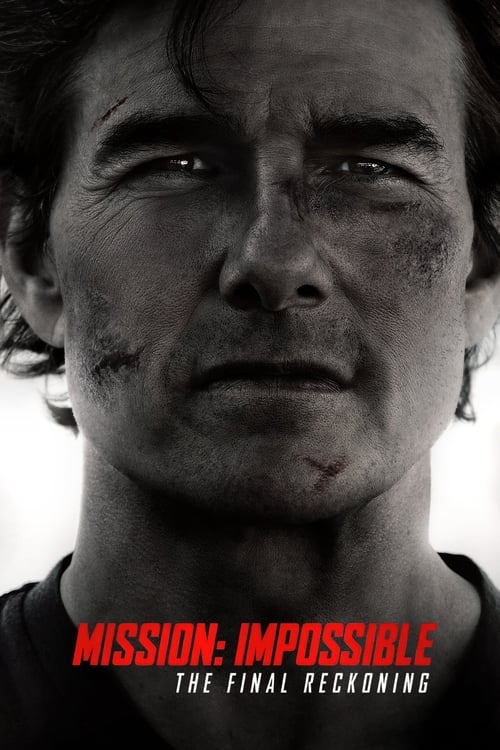
The premise is framed explicitly as a Mission Impossible parody for the elderly set. Margolin shows Thelma watching the Tom Cruise original on television and deciding that if a man can hang off a cliff, she can retrieve $10,000 from a scammer. This is the film's central joke and its central truth: physical capability is relative, but determination is not. A 93-year-old woman with a scooter and a stolen gun is still a 93-year-old woman with a plan.
Squibb makes the whole thing work. This is not a sentimentalized old-lady performance. Thelma Post is sharp, irritable, proud, occasionally wrong about things, genuinely funny, and authentically scared of physical vulnerability in a way the film takes completely seriously. When she falls in a shady neighborhood and cannot get up on her own, the scene is not played for laughs. It is played for the reality of what it feels like to have your body stop cooperating. The film earns its comedy by respecting its central character enough to show her real limitations alongside her real strengths.
Richard Roundtree plays Ben, Thelma's elderly friend and reluctant co-conspirator, in his final film appearance before his death in October 2023. The performance is a fitting farewell. Roundtree plays Ben as a complete human being - not as a token sidekick and not as a Shaft reference. He is a widower who felt responsible for his wife's fall because his hearing impairment meant he did not hear her in time. His grief and his friendship with Thelma are the most emotionally complex elements in the film. The scenes between Squibb and Roundtree are the best in the movie.
Fred Hechinger as Thelma's grandson Daniel provides the film's generational commentary. Daniel is a kind but directionless young man who has structured much of his identity around looking after Thelma, which means he has not built much of a life for himself. The film is honest about this as a problem. His journey through the film - from panicked family member searching for his missing grandmother to someone who has seen what she is capable of and recalibrated his assumptions about her - is the secondary arc.
The family dynamics are drawn with particular affection. Clark Gregg and Parker Posey as Alan and Gail, Thelma's son-in-law and daughter, are overprotective out of love rather than condescension, even if the effect on Thelma is the same. The film does not make them villains. They are people who love her and are frightened by what could happen to her, and who have forgotten that being frightened for someone is not the same thing as respecting them. Thelma's mission is partly about recovering her money and partly about reclaiming her sense of herself as someone capable of independent action.
Margolin shot the film on a budget of $3 million and made every dollar visible in the sense that counts: he put it into the performances and the emotional specificity of the script, not into production gloss. The film is shot with care and attention to Thelma's physical perspective - low angles, careful attention to how her body moves through space. This is filmmaking in service of character.
For conservative viewers this film is close to a gift. Here is a film that treats an elderly woman with complete dignity, centers family love as a genuine value rather than a burden to be escaped, takes personal responsibility seriously as a moral stance, and makes its protagonist's determination to right a wrong the engine of the entire story. Thelma does not ask for the government to help her. She does not blame systemic anything. She decides to go get her money back and she goes. That is as traditional an action premise as exists.
| Trope | Category | Location | Authenticity |
|---|---|---|---|
| Elder Dignity and Agency | TRADITIONAL | Entire film - Thelma Post is presented as a full human being at 93 with desires, anger, pride, capability, and genuine courage; her age is not treated as a limitation on her personhood | Authentic. This is the film's central artistic and moral commitment. Margolin based the story on his real grandmother and treats her as the most capable person in her own story. This is exceptional in mainstream cinema. |
| Personal Responsibility Over Victimhood | TRADITIONAL | Central premise - Thelma is scammed but instead of waiting for the police or accepting the loss, she decides personally to retrieve her money | Authentic. Thelma's response to victimization is not to demand institutional help but to take direct personal action. This is the film's moral engine and it runs on a deeply traditional premise: when wronged, act. |
| Grandmother-Grandson Bond | TRADITIONAL | Throughout - Daniel and Thelma's relationship is the film's emotional center; their love is specific, funny, complicated, and entirely genuine | Authentic. Margolin based this on his real relationship with his grandmother. Many of their dialogue exchanges were drawn from actual conversations. The specificity shows. |
| Friendship Tested and Redeemed | TRADITIONAL | Thelma and Ben arc - old friends who had grown apart reconnect, argue honestly, and recommit to each other; Ben's return after leaving her is the film's most moving moment | Authentic. The Thelma-Ben relationship is the film's emotional B-story and in some ways its richest content. Two elderly people choosing each other after loss is not given much space in mainstream cinema. This film gives it full weight. |
| Defense of Personal Honor | TRADITIONAL | Central premise - Thelma goes after the scammer not just for the money but because being deceived is an insult to her dignity; she is defending her sense of self | Authentic. The film is clear that the $10,000 is not really the point. Thelma cannot be the woman who got fooled and did nothing about it. Her honor requires action. This is a traditional motivation. |
| Family Love Without Ideology | TRADITIONAL | Throughout - the Markowitz family's love for Thelma is genuine, complicated, and presented without any political subtext; they love her; they argue; they reconcile | Authentic. Clark Gregg and Parker Posey as the daughter and son-in-law are not villains. They are loving people who have gotten the balance wrong. The film does not punish them for loving too much. |
| Grandson as Work in Progress | WOKE | Daniel subplot - the grandson is coded as a directionless millennial whose sense of purpose has been defined by caring for his grandmother rather than building his own life | Mild and complex. The film treats Daniel's aimlessness as a problem rather than a virtue, which mitigates any progressive reading. He is not celebrated for his dependence; he is shown growing past it. Trace-level concern. |
Director: Josh Margolin
APOLITICAL - debut feature inspired by genuine love for his grandmother; no political agendaThelma is Josh Margolin's feature debut. The film's entire premise came from a real event: a scammer called Margolin's actual grandmother posing as Josh and convinced her to send $10,000. His grandmother was 103 at the time of the film's Sundance premiere and still alive. Margolin's relationship with his grandmother is the film's true subject. No political agenda is detectable in his work. He is a filmmaker motivated by affection and personal experience, not by ideology. Ideological tendency: APOLITICAL.
Writer: Josh Margolin
Sole writer. His script draws directly from his own grandmother's experiences and their relationship. The dialogue between Thelma and her grandson Daniel is reportedly drawn from real conversations. This biographical foundation gives the film an authenticity that is rare in feature debuts. The screenplay is funny, gentle, and specific - the marks of writing from life rather than from formula.
Producers
- Zoe Worth and Chris Kaye (Bandwagon) — Independent producers working on their debut feature alongside Margolin. No ideological signal independent of the project itself.
- Nicholas Weinstock (Anonymous Content (production company)) — Experienced indie producer. Credits include diverse independent films. No strong ideological signal; he finances promising independent projects regardless of political content.
Full Cast
Fidelity Casting Analysis N/A - ORIGINAL SCREENPLAY
Thelma is an original story based on a real event in director Josh Margolin's family. There is no source material to be faithful to. The casting was driven by finding actors who could honor the emotional truth of the story. Richard Roundtree (Shaft, 1971) was cast in his final film role as Ben, Thelma's elderly friend and ally. Malcolm McDowell (A Clockwork Orange) plays the scammer ringleader in a brief but effective antagonist performance.
June Squibb (Thelma): The Academy Award-nominated actress (Nebraska, 2013) finally gets a leading role at 94 years old. She is spectacular - not because she plays old, but because she plays a full person who happens to be old. Her Thelma is stubborn, sharp, funny, and frightened in exactly the right proportions. This is not a sentimental performance. It is a real one. Fred Hechinger (Daniel): The young actor (News of the World, The White Lotus Season 2) plays the grandson with genuine warmth. His relationship with Squibb is the film's heart. Richard Roundtree (Ben): Roundtree's final performance is a gift. He plays the elderly friend with dignity and gentle comedy. He resists every temptation to wink at his action hero legacy. Malcolm McDowell (Harvey): Brief villain appearance. His natural presence adds menace to what could have been a nothing role.
Adult Viewer Insight
Conservative adults will find Thelma one of the most genuinely affirming mainstream films of 2024. The film's worldview aligns almost perfectly with traditional values: personal responsibility, elder dignity, family bonds, the courage to take action, and the understanding that being physically limited does not mean being morally or spiritually diminished. The film deserves particular credit for how it treats aging. Most mainstream cinema treats elderly characters as comic relief, as burdens, or as objects of sentimental pity. Thelma treats its 93-year-old protagonist as a full human being with desires, anger, pride, fear, and genuine capability. The film acknowledges her limitations with complete honesty - the fall sequence is realistic and uncomfortable - but insists that limitations do not define a person. This is a countercultural stance in a culture that tends to define people by what they cannot do. Richard Roundtree's final performance should not be overlooked. He was 81 when filming and had been diagnosed with pancreatic cancer. He brought full creative commitment to a supporting role in a small indie film. His professionalism and dignity in this final chapter of his career is itself a traditional value: the craftsman who gives his full attention to every job regardless of its scale. His death in October 2023 means Thelma serves as his farewell, and he chose well. Margolin dedicated the film to his real grandmother, who was 103 at Sundance. The personal love behind the project is visible in every frame. When a filmmaker makes something out of genuine affection for a real person, that authenticity tends to translate to the screen. It does here. The National Board of Review named Thelma one of the top ten independent films of 2024. On a $3 million budget it grossed $13 million and found an audience that connected with it deeply. The reviews were warm. This is a film that deserved a wider audience than it found.
Parental Guidance
Rated PG-13. Family-friendly with minor considerations. Violence: Mild. A stolen gun is a plot device but is not used to kill anyone. Thelma falls and cannot get up - realistic and affecting, not graphic. A brief explosion. Nothing severe. Sexual Content: None. Language: Mild. A few instances of adult language but nothing egregious. Substance Use: None of significance. Scary Content: The phone scam premise may alarm elderly viewers or their family members - the scam depicted is extremely common. Parents may want to discuss phone scam awareness with elderly relatives after watching. Age Recommendations: Appropriate for ages 10 and up. Particularly good for multi-generational family viewing - something grandparents, parents, and older children can watch together and discuss. Discussion Guidance: (1) Thelma's family tries to protect her but she finds their protection patronizing. Is there a difference between protecting someone and respecting them? How do you find the balance? (2) Daniel has built his identity around looking after Thelma. After watching what she is capable of, what do you think should change for him? (3) Thelma decides to handle the situation herself rather than waiting for the police to help. Was that the right choice? What does it say about personal responsibility? (4) Ben feels responsible for his wife's fall. How does guilt change the way we treat the people we love?
Find Thelma on Amazon Prime Video, rent, or buy:
▶ Stream or Buy on AmazonAs an Amazon Associate, VirtueVigil earns from qualifying purchases.



Community Discussion 0
Subscribe to comment.
Join the VirtueVigil community to share your perspective on this review.