
Thunderbolts*
Thunderbolts asks you to care about six characters you either forgot existed or could not name at gunpoint. The question is whether it delivers a story worth telling. The answer, with significant reservations, is: sort of.
Full analysis below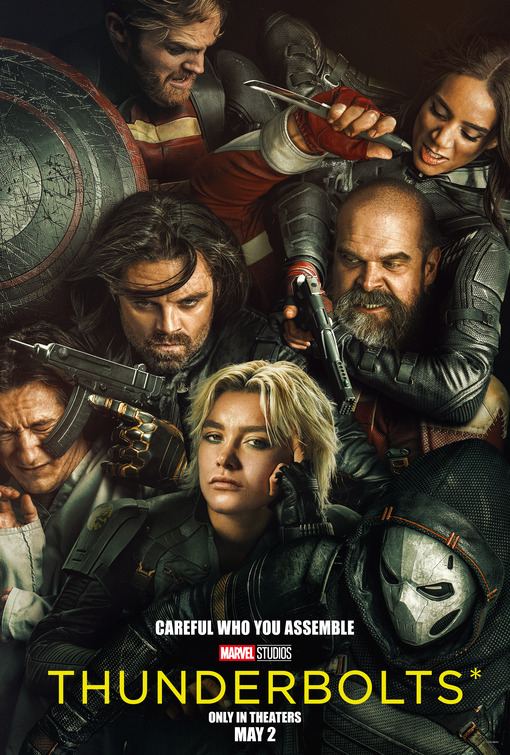
This film draws you in for a significant portion of its runtime with traditional or neutral content before springing its woke agenda. Know before you go!
Explanation admits female superiority messaging throughout. Present from the start, not hidden.
Thunderbolts asks you to care about six characters you either forgot existed or could not name at gunpoint. The question is whether it delivers a story worth telling. The answer, with significant reservations, is: sort of.
David Harbour is having the time of his life as Red Guardian, and his energy is infectious. He is the oxygen that keeps the audience breathing. Florence Pugh is a genuinely exceptional actress, but the film surrounds her talent with a framework that undercuts it. Yelena is compelling not because she earns our respect through struggle but because the film has been engineered to ensure she is the most competent person in every room.
Sebastian Stan's Bucky Barnes, a character with one of the most compelling arcs in the MCU, is reduced to an afterthought. He shows up, gets beaten with his own metal arm, and serves as emotional furniture. Wyatt Russell's U.S. Agent has been systematically dismantled into a loudmouth punchline. Florence Pugh literally separates two bickering men and the audience is meant to cheer the woman putting the men in their place.
The Sentry storyline is the film's most interesting element and most frustrating. One of Marvel's most powerful beings is ultimately defeated by being talked through his feelings. The action pits street-level characters against a Superman-level being, and they bring knives.
The film's tonal identity is its deepest flaw. It wants to be a character study about broken people finding connection, a snarky action comedy, a Sentry introduction, and a Valentina political thriller all at once. These ambitions compete rather than complement. The result is too depressing to be fun, too jokey to be dramatic, and too rushed to be epic.
For conservative viewers, Thunderbolts is a representative example of the MCU's current priorities: female characters elevated at male characters' expense, emotional vulnerability treated as the highest virtue, and traditional heroism replaced by group therapy. The traditional elements that exist, Red Guardian's paternal instincts, Bucky's quiet loyalty, misfits finding family, are genuine but perpetually undermined.
| Trope | Category | Location | Authenticity |
|---|---|---|---|
| The Girl Boss (pervasive) | WOKE | Throughout -- Every female character snarky and hyper-competent, every male character a punchline | Fabricated -- comics Thunderbolts had no such gender dynamic |
| The Emasculated Male | WOKE | Throughout -- Bucky beaten with own arm, U.S. Agent a moron, Red Guardian a lovable idiot, Sentry a depressed wreck | Divergent from source material |
| The Girl Boss (combat) | WOKE | Action sequences -- Yelena of average build tosses 200-pound men, courtesy fighting choreography | MCU power scaling exaggerated beyond source material |
| The Bad Father | WOKE | Throughout -- Red Guardian absent and unreliable, U.S. Agent explicitly a bad father | Mixed -- Red Guardian in comics is complicated but MCU emphasis on paternal failure is editorial |
| Therapy as Heroism | WOKE | Sentry confrontation -- Most powerful being stopped by getting in touch with his feelings | Divergent -- comics Sentry stories don't resolve through group therapy |
| Institutional Evil | WOKE | Valentina storyline -- CIA director assembles team as death trap, government is primary antagonist | Mixed -- government distrust has been a Marvel theme since the 1970s |
| The Legacy Replacement | WOKE | Entire film -- Yelena as Black Widow successor, Thunderbolts positioned as New Avengers replacing legacy heroes | Mixed -- rosters change in comics but MCU approach is demographic |
| Found Family | TRADITIONAL | Throughout -- Broken people finding connection, Red Guardian names them with paternal pride | Authentic -- classical narrative structure |
| The Self-Sacrificing Hero | TRADITIONAL | Multiple sequences -- Team risks lives for each other, Red Guardian willing to sacrifice for strangers | Authentic |
| Paternal Love | TRADITIONAL | Red Guardian's storyline -- Love for Yelena is real and unconditional despite buffoonery | Authentic -- Harbour's performance sells it |
| Redemption | TRADITIONAL | Throughout -- Every member seeking redemption for their past, narrative spine of the film | Authentic |
| Loyalty Under Fire | TRADITIONAL | Second and third acts -- Team chooses to stand together when running would be rational | Authentic |
Director: Jake Schreier
NEUTRALIndie filmmaker making his blockbuster debut. Robot & Frank was charming and traditional. The film's ideology comes from Marvel, not Schreier.
Writer: Eric Pearson & Joanna Calo
Pearson wrote Thor: Ragnarok and Black Widow. Calo is best known for The Bear. Pearson is a reliable studio hand; Calo likely brought the character-study ambitions.
Fidelity Casting Analysis SHIFTED
The MCU version centers characters chosen from recent MCU projects rather than faithfully adapting a specific comics roster.
Yelena Belova as Black Widow successor is faithful to comics concept. Bucky Barnes is faithful but badly underserved. Red Guardian is reimagined as buffoonish-but-loving. The Sentry is reduced from one of Marvel's most complex characters to a therapy narrative.
Adult Viewer Insight
Conservative adult viewers should approach Thunderbolts understanding it is a moderately entertaining but deeply flawed MCU entry that treats its male characters as second-class citizens. David Harbour's performance and the found-family theme provide enough entertainment value for a passable watch. The more instructive experience is to notice what the MCU values now versus Phase One: the shift from heroism-through-excellence to heroism-through-vulnerability is the MCU's most significant ideological evolution, and Thunderbolts is its purest expression.
Parental Guidance
Rated PG-13 for action violence, language, and thematic elements. Extended fight sequences, characters getting beaten seriously, building destruction. Moderate language. No sexual content or substance use. Depression, loneliness, trauma, and abandonment are major themes. The Sentry is explicitly depicted as mentally ill. The tonal darkness and thematic weight make this unsuitable for younger MCU fans. 12 and up. For teens, the film could prompt discussion about how Hollywood depicts masculinity and whether the men are broken, women are strong framework reflects reality or an agenda.
Find Thunderbolts* on Amazon Prime Video, rent, or buy:
▶ Stream or Buy on AmazonAs an Amazon Associate, VirtueVigil earns from qualifying purchases.



Community Discussion 0
Subscribe to comment.
Join the VirtueVigil community to share your perspective on this review.