
Titanic
Titanic holds a strange place in film history. It won eleven Academy Awards and $2.2 billion at the global box office in 1997. It made Leonardo DiCaprio a global superstar and Kate Winslet one of the defining actresses of her generation. 'My Heart Will Go On' became inescapable.…
Full analysis below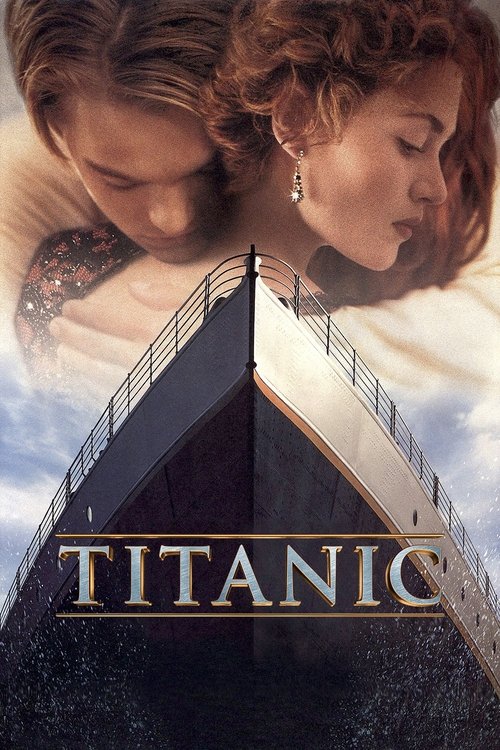
This film draws you in for a significant portion of its runtime with traditional or neutral content before springing its woke agenda. Know before you go!
NOT A WOKE TRAP. Titanic's class commentary and its framing of the rich as villains are present from the film's opening act. The trailer and marketing showed a romance between a poor artist and a first-class society girl. The class dynamics are not hidden. The film's sympathies are with the poor and against the aristocracy from the first scene with Rose's family. Audiences knew what they were buying. The film is honest about its romantic and class-commentary themes. No bait and switch.
Titanic holds a strange place in film history. It won eleven Academy Awards and $2.2 billion at the global box office in 1997. It made Leonardo DiCaprio a global superstar and Kate Winslet one of the defining actresses of her generation. 'My Heart Will Go On' became inescapable. Then, almost immediately, a cultural backlash set in. Titanic became the example critics and film snobs used to prove that commercial success and artistic merit are unrelated. The movie was seen as a crowd-pleasing romance wrapped around a disaster movie, admired for its technical achievements and politely dismissed as emotionally manipulative.
That backlash was wrong. Titanic is a genuinely great film.
The technical achievement is so overwhelming that it can obscure the craft underneath. Cameron spent three years and $200 million (an almost incomprehensible budget in 1997) building a near-full-scale reproduction of the ship, diving the actual wreck over thirty times, and developing new filmmaking technology to capture the sinking. The result is a film that achieves something rare: it makes an event that audiences know in advance, including the ending, feel genuinely uncertain in the watching of it. You know the ship sinks. You know Jack dies. Cameron makes you forget that you know. That is not manipulation. That is filmmaking at its highest level.
The story Cameron built around the historical disaster is deliberately archetypal. Jack Dawson is the poor artist with natural grace and moral clarity, winning third-class passage at a poker game and existing entirely as the embodiment of romantic freedom. Rose DeWitt Bukater is the first-class society girl trapped by engagement to Cal Hockley (Billy Zane), a cartoonishly villainous old-money heir who treats her as a possession. They fall in love in the ship's bowels and the ship's heights simultaneously, and the class barrier between them is meant to represent every barrier that convention and wealth construct against genuine human connection.
The class commentary is real and persistent, and it is where Titanic earns its woke designation. The poor are vital, joyful, dancing, free. The rich are rigid, cruel, and cowardly. The ship's officers make decisions that doom steerage passengers while protecting first class. Cal bribes a lifeboat officer while Jack is handcuffed to a pipe below decks. The film's historical sympathies are with the people who died because they were born poor. This is not a neutral reading of the disaster. It is a progressive interpretation that assigns moral weight to class position.
Billy Zane's Cal Hockley is the film's most significant ideological choice. Cameron writes him as a near-psychopathic villain with no redeeming qualities whatsoever. He belittles Rose, strikes her, threatens Jack with a gun, abandons ship with a stolen child (to secure a lifeboat seat), and finally ends the film having survived through cowardice while Jack died through heroism. Cal represents everything Cameron believes about old money and inherited privilege: it is an engine of cruelty, and the cruelty is enacted primarily on the poor and on women.
And yet. The film's traditional elements are substantial and genuine.
Jack Dawson is not a progressive hero. He is a traditional romantic hero: brave, self-sacrificing, practically skilled, genuinely protective, and completely devoted to the woman he loves. His love for Rose is not about her social position or her politics. It is about who she is. He sees her, as the Na'vi would say in Cameron's later film, and that sight is a sacred act. His death, giving his life so Rose can survive, is the most complete act of masculine sacrifice in mainstream Hollywood romance. He does not survive. He does not subvert the trope. He dies so she can live, and the film presents this as the greatest possible expression of love.
Rose's arc is worth examining honestly. She begins the film as a captive of her class and her engagement. She ends it as a woman who has lived a full and independent life: she became a pilot, an actress, a rider of horses. Her liberation is framed as Jack's gift to her. Without Jack, she would have married Cal and suffocated. This is a romantic dependence structure: the woman is saved from a false life by the right man. This is not a feminist narrative. It is a romantic one, and the distinction matters. Cameron presents female autonomy as something a good man enables, not something a woman seizes despite men. That is a traditional romantic framework.
The film's emotional center is death accepted with grace. As the ship sinks, we see acts of extraordinary courage: a string quartet playing until the water reaches them, a man holding a crying woman while the stern rises, parents putting their children to bed as the ship goes down. These are not political acts. They are human acts, and Cameron films them with the reverence they deserve. The film understands that how people face death reveals who they are, and it uses the disaster to show people at their finest and worst without editorial judgment in these moments.
The VVWS score reflects a film with genuine traditional romantic content weighted against persistent class warfare framing and aristocratic villainy. The margin is narrow, landing at WOKE LEAN. This is honest. Titanic is not aggressively progressive in the way Avatar is. It is romantic first, classist second, and the romance is so good that it frequently overwhelms the ideology. But the class framing is real and structurally embedded. The villains are the rich. The heroes are the poor. That is a choice Cameron made deliberately, and it shapes the film from first frame to last.
Where does this leave the conservative viewer? Watch it. Despite the class politics, Titanic is one of the most purely effective romantic films ever made. Jack and Rose's love story works because DiCaprio and Winslet have genuine chemistry and because Cameron writes Jack as a man worth dying for. The disaster sequences are among the best in cinema history. The film earns its emotional devastation.
You will be watching through a progressive lens for class structure, but the film's heart, its insistence on love as the thing worth dying for and sacrifice as the proof of love, is as traditional as it gets.
Formula: Weighted Score = Severity × Authenticity Multiplier × Centrality Multiplier
🔴 Woke Tropes
| Trope | Severity | Authenticity | Centrality | Score |
|---|---|---|---|---|
| Class Warfare / Rich as Villain | 5 | 0.7 | 1.8 | 6.3 |
| Patriarchal Engagement as Imprisonment | 4 | 0.7 | 1.8 | 5.04 |
| Female Liberation Through Romance | 3 | 1 | 1 | 3 |
| Institutional Authority as Corrupt | 3 | 1 | 0.5 | 1.5 |
| Self-Actualization over Duty | 2 | 1 | 0.5 | 1 |
| Premarital Sex Presented Positively | 2 | 0.7 | 0.5 | 0.7 |
| Historical Revisionism in Service of Class Narrative | 2 | 1 | 0.5 | 1 |
| TOTAL WOKE | 18.5 | |||
🟢 Traditional Tropes
| Trope | Severity | Authenticity | Centrality | Score |
|---|---|---|---|---|
| Ultimate Masculine Sacrifice | 5 | 0.7 | 1.8 | 6.3 |
| Romantic Love as the Highest Value | 4 | 0.7 | 1 | 2.8 |
| Grace Under Pressure / Dignity in Death | 4 | 0.7 | 0.5 | 1.4 |
| Courtship and Genuine Emotional Connection | 3 | 0.7 | 1 | 2.1 |
| Historical Reverence and Memorial | 3 | 0.7 | 0.5 | 1.05 |
| TOTAL TRADITIONAL | 13.7 | |||
Score Margin: -5 WOKE
Director: James Cameron
PROGRESSIVE / ENVIRONMENTAL ACTIVIST. Cameron's political views are consistent across his filmography: institutional power and inherited wealth are suspect, individual courage and love transcend class, and the powerful exploit the vulnerable. Titanic is his most mainstream expression of these values. Unlike Avatar, the politics here are secondary to the romance and the spectacle, which is why Titanic lands ideologically softer than his sci-fi work. Cameron the craftsman dominates Cameron the polemicist in Titanic.At the time of Titanic's release, Cameron had already made The Terminator, Aliens, The Abyss, Terminator 2, and True Lies. Titanic was his most expensive and risky project. It came in over budget and was widely predicted to be a career-ending disaster before release. It became the highest-grossing film in history at the time, winning 11 Academy Awards including Best Picture and Best Director. Cameron's perfectionism, obsessive historical research, and insistence on practical effects (including building a near-full-size replica of the ship) are evident in every frame.
Writer: James Cameron
Cameron wrote the original screenplay after becoming obsessed with the historical disaster and diving the actual wreck. The script weaves a fictional romance onto the documented historical record with impressive fidelity. The characters of Jack and Rose are invented, but the ship, the sinking timeline, the evacuation decisions, and dozens of historical figures (including the Astors, Molly Brown, Captain Smith, and First Officer Murdoch) are depicted with careful attention to the historical record. The class commentary is Cameron's interpolation onto real history. The historical framework gives the script weight and specificity that pure romantic invention would lack.
Adult Viewer Insight
Parental Guidance
PG-13, appropriate for ages 12 and up. Brief nudity and implied sexual content. Harrowing and prolonged disaster violence. Emotionally devastating finale. Parents should discuss the film's class commentary with older teens.
Find Titanic on Amazon Prime Video, rent, or buy:
▶ Stream or Buy on AmazonAs an Amazon Associate, VirtueVigil earns from qualifying purchases.
Community Discussion 0
Subscribe to comment.
Join the VirtueVigil community to share your perspective on this review.