
Toy Story 4
Here is the most charitable reading of Toy Story 4 I can offer: it is a technically brilliant film that makes a catastrophic moral choice in its final fifteen minutes.
Full analysis below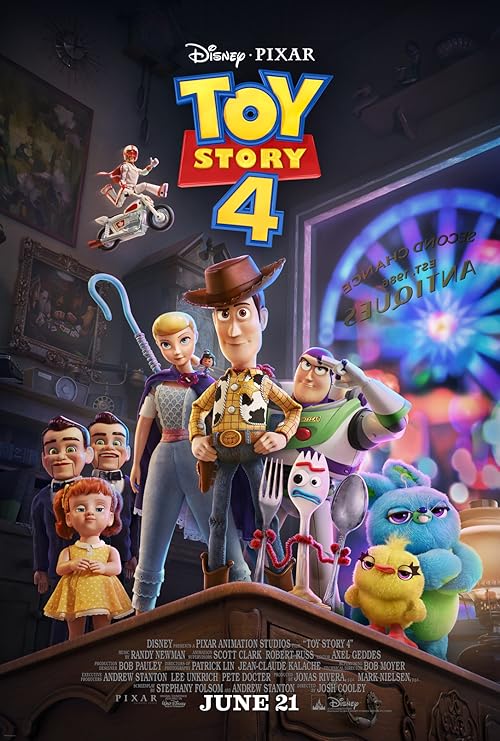
This film draws you in for a significant portion of its runtime with traditional or neutral content before springing its woke agenda. Know before you go!
Mild woke trap. The marketing positioned Toy Story 4 as a return to beloved characters and a feel-good sequel to one of cinema's most beloved trilogies. The first three films built an audience that deeply trusted the Toy Story universe and its values. That trust is partially betrayed here. The film's central argument — that Woody was wrong to define himself by his loyalty to a child, and that personal fulfillment should supersede commitment — does not appear in any meaningful way in marketing materials. Families expecting a heartwarming continuation of the themes that made Toy Story 3 so devastating will find instead a film that quietly repudiates those themes. The woke content is not front-loaded. It emerges gradually through Woody's arc and becomes clear only in the final act. This qualifies as a mild woke trap.
Here is the most charitable reading of Toy Story 4 I can offer: it is a technically brilliant film that makes a catastrophic moral choice in its final fifteen minutes.
Let me explain what I mean.
The first three Toy Story films built something rare: a complete moral universe. Toys have purpose. Purpose means belonging to a child. The deepest meaning a toy can have is being loved, played with, and needed. Toy Story 3 ended with Andy giving his toys to Bonnie — a heartbreaking but morally clear act of generational continuity. The toys find new purpose. The values hold.
Toy Story 4 cracks those values open and asks an uncomfortable question: what if Woody's purpose was never really about the children at all? What if it was about Woody himself — his need to be needed, his identity crisis when he isn't?
This is not a crazy question. It's psychologically interesting. And for about two-thirds of the film, it generates real drama. Bonnie doesn't want to play with Woody. She loves Forky (Tony Hale), a plastic spork she made in kindergarten, more than the cowboy who has been her toy since Andy handed him over. Woody is hurt and purposeless. When Forky escapes on a road trip, Woody's rescue mission gives him momentary direction.
The antique shop section introduces Gabby Gabby (Christina Hendricks), a vintage doll who wants Woody's voice box. Her backstory is genuinely moving: she's spent decades waiting to be chosen by a child, her defective voice box always the obstacle. Her arc — yearning for a purpose she was denied — is Toy Story 4's best work. When she finally gets chosen by a little girl in the film's third act, it's a graceful, emotionally honest moment.
And then Woody decides to leave.
Woody chooses to stay behind with Bo Peep (Annie Potts), who has been living freely without a child for years, who has built a life around independent adventure rather than purpose-through-service. The film frames this as Woody finally 'figuring out what matters to him.' Bo is presented as having found a better way to live. Woody's three films of loyalty to children, of sacrifice, of 'you've got a friend in me' — reframed as attachment he needed to grow beyond.
This is where I have to be direct: this is a philosophically woke conclusion to what was a philosophically traditional franchise.
The Toy Story movies argued that purpose matters. That serving someone well, being genuinely there for them, is meaningful and dignified. That the end of one relationship opens the door to another form of the same commitment. Toy Story 3 was an elegy for that commitment, and it was devastating because those values had been earned over two films.
Toy Story 4 argues something different. It argues that Woody was wrong to define himself through his relationship to a child. That his real self is something he finds by cutting that relationship loose. That personal authenticity and self-discovery supersede commitment and loyalty.
This is the therapeutic-culture worldview applied to a children's franchise. It is not subtle. And it is not what the first three films were about.
Is Toy Story 4 woke in any other meaningful sense? Not particularly. The new characters are diverse in ways that don't call attention to themselves. Forky is a delightful comic creation without an agenda. Gabby Gabby's arc is a genuinely moving story about being chosen. The antique shop sequences are inventively eerie. The film is beautifully made — as a technical achievement in animation, it may be the best-looking of the four.
But the central argument it makes about Woody, about purpose, about what it means to be loyal to someone, is in direct conflict with the values that made this franchise matter. That is a meaningful problem. And it is a problem that parents who loved the first three films with their children should be aware of before pressing play on this one.
Formula: Weighted Score = Severity × Authenticity Multiplier × Centrality Multiplier
🔴 Woke Tropes
| Trope | Severity | Authenticity | Centrality | Score |
|---|---|---|---|---|
| Autonomy Over Duty / Self-Discovery Trumps Commitment | 5 | 1 | 1.8 | 9 |
| Prior Values Reframed as Attachment / Old Purpose as Pathology | 4 | 1 | 1 | 4 |
| Female Character as Enlightenment Figure / Male Lead Taught by Woman | 3 | 0.7 | 0.5 | 1.05 |
| Found Family / Chosen Life Over Given Role | 3 | 0.7 | 1 | 2.1 |
| Gabby Gabby Abandonment Arc / Inclusive Sympathy | 2 | 0.7 | 0.5 | 0.7 |
| Diverse New Characters / Representational Additions | 1 | 0.7 | 0.5 | 0.35 |
| TOTAL WOKE | 17.2 | |||
🟢 Traditional Tropes
| Trope | Severity | Authenticity | Centrality | Score |
|---|---|---|---|---|
| Gabby Gabby Redemption / Genuine Sacrifice Arc | 4 | 1 | 0.5 | 2 |
| Purpose and Meaning / Forky's Arc | 4 | 1 | 0.5 | 2 |
| Loyalty Among Friends / Buzz and the Gang | 3 | 1 | 0.5 | 1.5 |
| Craftsmanship and Excellence / Animation Achievement | 2 | 1 | 0.5 | 1 |
| Childhood and Play as Sacred | 3 | 1 | 0.5 | 1.5 |
| TOTAL TRADITIONAL | 8.0 | |||
Score Margin: -9 WOKE
Director: Josh Cooley
CENTER-LEFT. Cooley is a Pixar insider who has worked there since 2003, contributing to Ratatouille, Up, and Inside Out in various capacities. Toy Story 4 is his feature directorial debut. His public statements about the film emphasize Woody's 'journey of self-discovery' and finding 'what matters to you.' These are the language of contemporary therapeutic culture rather than classical storytelling.Josh Cooley spent years inside Pixar's story department before directing Toy Story 4. He is a skilled craftsman with genuine affection for the Toy Story world. The problem with Toy Story 4 is not incompetence — it is a deliberate creative direction that runs against the grain of what made the first three films work. Cooley and the writers made a conscious choice to resolve Woody's arc through separation and self-discovery rather than through sacrifice and loyalty. This is a philosophically coherent choice. It is also a meaningful departure from Toy Story's established values.
Writer: Andrew Stanton, Stephany Folsom
Andrew Stanton wrote the original Toy Story and Toy Story 2. His involvement here might seem like a guarantee of continuity, but the screenplay moves in a different direction from those films. Stephany Folsom (Thor: Ragnarok) co-wrote. The script is technically accomplished — Forky is a great comic creation, the antique shop is a memorably creepy set-piece — but its resolution requires Woody to make a choice that three films of character development make very hard to accept.
Adult Viewer Insight
Adults who grew up with the Toy Story films and introduced them to their own children may feel a specific kind of betrayal here. The first three movies were about things that matter: sacrifice, loyalty, purpose, the dignity of service, the grief of being outgrown and the grace of finding new purpose anyway. Toy Story 4 treats those values as Woody's problem rather than his identity. The ending sends children a message that is the opposite of what Toy Story 1-3 communicated: when your commitment stops serving your own fulfillment, leave. It's a coherent message. It's just not the one this franchise was built to deliver.
Parental Guidance
G rated. Content is clean. The real parenting issue is the ending, which sends a different message about loyalty and purpose than the first three films. Worth discussing with children who know the full franchise.
Find Toy Story 4 on Amazon Prime Video, rent, or buy:
▶ Stream or Buy on AmazonAs an Amazon Associate, VirtueVigil earns from qualifying purchases.
Community Discussion 0
Subscribe to comment.
Join the VirtueVigil community to share your perspective on this review.