
Tulsa King
Sylvester Stallone is 77 years old and he is having the best run of his career. Tulsa King is not a great show in the prestige television sense.…
Full analysis below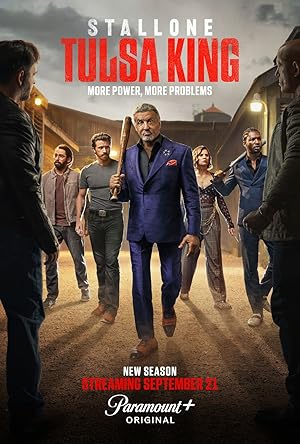
NOT A WOKE TRAP. Tulsa King's progressive elements are minimal and front-loaded. A Black female ATF agent is introduced in the first episode. A gay couple appears in episode three. Neither element is hidden or used to ambush conservative viewers in the back half of the series. The show's overwhelming traditional character, a 75-year-old Italian mob boss rebuilding his life through loyalty, hard work, and masculine virtue, dominates from scene one. The margin is strongly positive. No trap here.
Sylvester Stallone is 77 years old and he is having the best run of his career. Tulsa King is not a great show in the prestige television sense. The plotting is loose, the world-building is thin compared to Sheridan's other work, and the antagonists in Season 1 are not as menacing as the premise needs. But Stallone's performance is something else entirely. Dwight Manfredi may be the most fully human character he has ever played.
The premise is almost too simple. Dwight did 25 years without talking. When he gets out, his boss rewards him by shipping him to Tulsa, Oklahoma, a place Dwight has never been and has no interest in, to build a new Mafia operation in territory nobody has ever bothered with. It is exile dressed up as opportunity. Dwight knows it. He takes the job anyway, because loyalty to his boss is more fundamental to him than his own comfort.
What happens next is the show. Dwight gets to Tulsa and immediately starts doing what Mafia capos do: he assesses the landscape, identifies opportunities, and starts building relationships. The genius of the show is that the 'criminal empire' Dwight builds in Tulsa is nearly wholesome. He partners with a weed dispensary. He gets involved with a local rodeo. He takes a young Black man, Tyson, under his wing and starts mentoring him in the ways of loyalty and legitimate hustle. He falls for an ATF agent who knows exactly who he is.
This is not a show about moral relativism. It is a show about a specific kind of man, formed by a specific code, navigating a world that no longer operates by his rules and finding that his code still works. Dwight's value system is rigidly traditional: loyalty above all, respect earned through action, obligations met no matter the personal cost, a man's word is binding. He is baffled by a culture that doesn't operate this way. He adapts, but only at the edges. His core doesn't move.
Stallone plays all of this with genuine warmth and a self-awareness that his earlier work rarely showed. Dwight is funny without trying to be. His fish-out-of-water moments, confronting legal weed culture, trying to understand Uber drivers, navigating a country music scene he has zero frame of reference for, land because Stallone plays the confusion as real rather than performed. The comedy comes from character, not from the script telegraphing jokes.
The mentor arc with Tyson is the show's most traditional element and its most valuable. Dwight does not mentor Tyson because of any guilt about race or any woke impulse to balance the show's demographics. He mentors him because Tyson reminds him of his younger self: hungry, smart, undisciplined, capable of something if someone shows him the ropes. The relationship is transactional at first and genuine by the end. Jay Will and Stallone have real chemistry. The show treats the mentorship as something men do for each other across generations without making it a political statement, which is exactly right.
The romance with ATF agent Stacy Beale (Andrea Savage) is the show's weakest element. Stacy knows Dwight is a criminal, falls for him anyway, and the show never resolves this tension satisfactorily. Savage is a capable actress, but the writing gives her too little to do beyond oscillating between her professional obligations and her attraction to Dwight. The show is better when it keeps Dwight among his crew.
Here is the honest accounting of the woke elements.
The Black ATF agent protagonist is competent and well-written, but her presence in a show that otherwise reads as very white New York Italian is a diversity casting choice. Jay Will as Tyson is handled more organically. The show makes no political statements about race, and the characters are not defined by their racial identity, but the diversity is visible and worth noting as a production decision.
The legal marijuana dispensary as a setting and revenue source for Dwight's operation requires the show to treat recreational cannabis use as essentially normal and benign. Several characters use marijuana casually and the show's comic tone around the dispensary is entirely non-judgmental. Conservative viewers who consider marijuana legalization a social harm will find this more uncomfortable than most of the show's other content.
These elements are genuinely modest compared to the show's traditional core. Tulsa King is fundamentally about a man formed by the deepest kind of loyalty, living by a code even when that code exiles him, and finding that the code still works wherever you are. Dwight Manfredi is one of television's great traditional protagonists: a man who does what he says, who keeps his obligations, who earns respect through action rather than claiming it through identity. At 77, Stallone has finally found a character worthy of his particular gifts.
Season 2 maintains the quality. The antagonists get more interesting. Dwight's crew in Tulsa becomes a genuine found family, which is its own kind of traditional value structure. The show is not going to win prestige awards. It does not need to. It knows exactly what it is: old-school crime drama with a heart, a great performance at its center, and a genuine affection for the Midwest that Taylor Sheridan's other shows have made into a calling card.
Formula: Weighted Score = Severity × Authenticity Multiplier × Centrality Multiplier
🔴 Woke Tropes
| Trope | Severity | Authenticity | Centrality | Score |
|---|---|---|---|---|
| Diversity Casting in Authority Role | 2 | 1 | 1 | 2 |
| Casual Normalization of Marijuana Use | 3 | 0.7 | 1 | 2.1 |
| Gay Couple in Supporting Cast | 1 | 1 | 0.5 | 0.5 |
| Protagonist Is Unreformed Criminal Presented Sympathetically | 1 | 0.7 | 0.5 | 0.35 |
| TOTAL WOKE | 4.9 | |||
🟢 Traditional Tropes
| Trope | Severity | Authenticity | Centrality | Score |
|---|---|---|---|---|
| Loyalty as Supreme Virtue | 5 | 0.7 | 1.8 | 6.3 |
| Earned Respect Through Action | 4 | 0.7 | 1.8 | 5.04 |
| Cross-Generational Mentorship as Masculine Duty | 4 | 0.7 | 1 | 2.8 |
| Consequences for Betrayal | 4 | 0.7 | 1 | 2.8 |
| Rugged Individualism and Self-Reliance | 3 | 0.7 | 1 | 2.1 |
| Old-School Masculine Virtue (Hard Work, Obligation, Silence) | 3 | 0.7 | 0.5 | 1.05 |
| Found Family Built on Shared Code | 3 | 0.7 | 0.5 | 1.05 |
| TOTAL TRADITIONAL | 21.1 | |||
Score Margin: +16 TRAD
Director: Taylor Sheridan (Creator); Various directors including Craig Zisk
CENTER-RIGHT. Sheridan brings his signature blue-collar, consequence-driven storytelling to a crime framework. Like Yellowstone, the show is organized around loyalty, earned respect, and the dignity of hard work. Sheridan has less personal connection to Mafia culture than to ranch culture, and it shows occasionally, but his instincts are consistent: men are defined by what they do when pressure is applied.Taylor Sheridan created Tulsa King as a vehicle for Sylvester Stallone after the two discussed making a show together for years. Sheridan developed the concept quickly, reportedly writing the pilot in a weekend, and the speed shows in the premise's elegant simplicity: a 75-year-old Mafia capo, Dwight Manfredi, is exiled by his boss to Tulsa, Oklahoma after serving 25 years in prison without ratting anyone out. Sheridan's contribution is structural and tonal. The actual writing room, handled by Terence Winter (Boardwalk Empire, The Wolf of Wall Street) and others, carries the season-to-season creative load. Sheridan's fingerprints are most visible in the show's affection for the unglamorous working world Dwight inhabits and in its consistent treatment of loyalty as a value system rather than a sentiment.
Adult Viewer Insight
Conservative viewers should watch Tulsa King for Stallone alone, but they will stay for Dwight Manfredi's value system. This is a show organized around the idea that loyalty is a virtue, that a man's word means something, that respect is earned through action and not demanded through victimhood, and that an older man has something genuine to offer younger ones. These are not common themes in contemporary television. Sheridan keeps returning to them in show after show because he believes them, and so does Stallone. Tulsa King is not subtle about any of this, which is also refreshing.
Parental Guidance
Find Tulsa King on Amazon Prime Video, rent, or buy:
▶ Stream or Buy on AmazonAs an Amazon Associate, VirtueVigil earns from qualifying purchases.
Community Discussion 0
Subscribe to comment.
Join the VirtueVigil community to share your perspective on this review.