
We Live in Time
We Live in Time is a weepie. An exceptionally well-made one, built on two of the finest performances in recent romantic cinema. It will make you cry. Whether it should is a more interesting question.
Full analysis below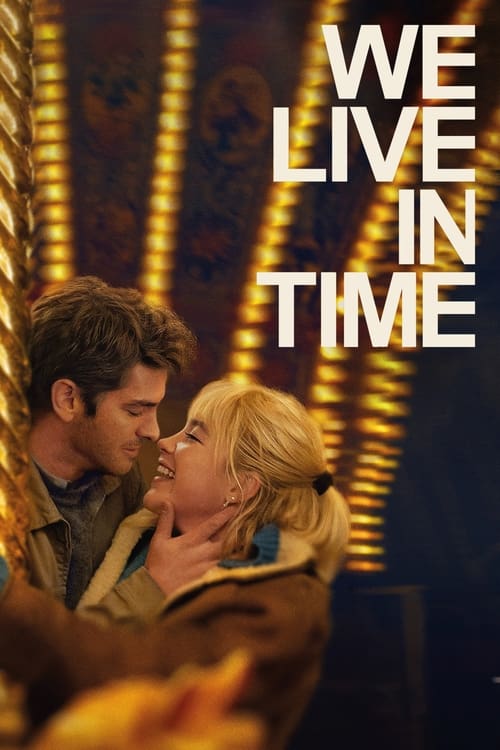
NOT A WOKE TRAP. We Live in Time is an A24 romance about a driven career woman and a gentler man who fall in love against the backdrop of a terminal cancer diagnosis. Nothing in the film's ideological content is hidden. Almut's ambivalence about having children is established early. Her prioritization of her career is a visible and repeated source of conflict throughout the film's structure. The trailers, posters, and critical consensus all correctly identified this as an emotionally devastating romantic drama about time and loss. Conservative viewers who object to the unmarried cohabitation and career-first framing will see both in the first act. There is no delayed ideology. The traditional elements, particularly the maternal sacrifice arc and Tobias's complete devotion, are equally visible from the start.
We Live in Time is a weepie. An exceptionally well-made one, built on two of the finest performances in recent romantic cinema. It will make you cry. Whether it should is a more interesting question.
The film tells the story of Almut (Florence Pugh), a Bavarian-fusion chef climbing toward the top of her profession, and Tobias (Andrew Garfield), an IT worker for a cereal company who is in the process of getting divorced when she literally hits him with her car. They fall in love. The film shows their relationship in nonlinear fragments, cycling between their early courtship, the middle years of building a life together, and the final stretch after her ovarian cancer returns at Stage 3 with a terminal prognosis.
The structure is clever. By the time you understand what you're losing, you already love them. Director John Crowley and writer Nick Payne earned that grief response. It doesn't feel manipulative because the relationship feels real. Pugh and Garfield have chemistry that reads as genuine. You believe this specific woman loves this specific man.
The film's traditional elements are real and central. Almut chooses to have a child despite medical advice that suggests the risks are significant. She undergoes cancer treatment in part because Tobias needs her to, and in part because she wants to see her daughter grow. The maternal drive here is not ideological. It is presented as elemental. She wants Ella. She fights to stay for Ella. That is the most traditional thing a film can show.
Tobias is also a quietly traditional figure. He is patient, devoted, and emotionally available without being weak. He proposes to Almut after her cancer returns. He stays. He parents. He grieves without leaving. He represents a version of committed masculinity that does not shout about itself but simply shows up. The film values this without ever naming it.
The friction point for conservative viewers is Almut's decision, late in the film, to secretly train for the Bocuse d'Or international cooking competition while also undergoing cancer treatment and planning her wedding. When Tobias discovers this, he is angry. The film takes his anger seriously. But it also, ultimately, takes Almut's side. Her argument is that she wants her daughter to remember her as someone who did not surrender. This is a genuine argument. The film does not collapse it into a simple lesson about priorities.
A traditionalist reading would say: you have a husband, a daughter, and a terminal illness. The competition can wait. A modern reading would say: her identity and her pride are also real, and demanding she sacrifice them is its own kind of cruelty. The film holds both positions and does not resolve the tension cleanly. For our purposes, the tension scores as a woke lean: career over family, at a moment of family crisis, is given sympathetic framing even if it is also given genuine pushback.
The unmarried cohabitation and the initial adulterous framing of the relationship (Tobias is technically married) are handled without moral commentary. This is normalization by omission rather than advocacy, but it registers on the VVWS scale.
None of this prevents We Live in Time from being deeply moving. Pugh's performance in the final act is exceptional work by any standard. The film earns its tears. It just earns them through a framework that is not entirely conservative, even if its emotional core, maternal love, committed partnership, and the refusal to abandon someone who is dying, is traditional at its foundation.
Formula: Weighted Score = Severity × Authenticity Multiplier × Centrality Multiplier
🔴 Woke Tropes
| Trope | Severity | Authenticity | Centrality | Score |
|---|---|---|---|---|
| Career Over Family at Moment of Family Crisis | 3 | 1 | 1.8 | 5.4 |
| Unmarried Cohabitation and Extramarital Origin Presented Without Comment | 2 | 1 | 1 | 2 |
| Ambivalence About Children Framed as Rational | 2 | 0.7 | 1 | 1.4 |
| TOTAL WOKE | 8.8 | |||
🟢 Traditional Tropes
| Trope | Severity | Authenticity | Centrality | Score |
|---|---|---|---|---|
| Unconditional Devotion of a Partner Through Terminal Illness | 5 | 0.7 | 1.8 | 6.3 |
| Maternal Sacrifice: Choosing Motherhood Despite Risk | 4 | 0.7 | 1.8 | 5.04 |
| Marriage as Commitment, Not Institution | 3 | 0.7 | 1 | 2.1 |
| TOTAL TRADITIONAL | 13.4 | |||
Score Margin: +5 TRAD
Director: John Crowley
APOLITICAL ROMANTIC. Crowley directed Brooklyn (2015), a deeply traditional immigration romance about a woman torn between her Irish roots and her American future who ultimately chooses commitment. His sensibility favors emotional authenticity, female interiority, and the difficulty of loving well. He is not an ideological filmmaker. We Live in Time is thematically consistent with Brooklyn: both films take seriously the tension between personal ambition and relational commitment.John Crowley is an Irish director whose career spans theater, television, and film. His breakthrough was Boy A (2007), a British drama about a reformed criminal trying to build a new life. Brooklyn (2015), starring Saoirse Ronan, remains his most beloved work: a gorgeous, emotionally precise portrait of immigration, identity, and the weight of commitment. It earned three Academy Award nominations including Best Picture. He followed it with The Goldfinch (2019), a well-regarded novel adaptation that received a catastrophic critical reception. We Live in Time represents a return to form. Crowley's greatest strength is creating genuine emotional intimacy between two people in a short amount of screen time. His handling of Florence Pugh and Andrew Garfield's chemistry is the film's primary asset, and he earns every tearful reaction the third act provokes.
Writer: Nick Payne
Nick Payne is a British playwright whose stage work includes Constellations (2012), a play about a couple's relationship across multiple parallel universes that uses the multiverse concept to explore commitment and loss. The nonlinear structure of We Live in Time feels directly descended from that work. Payne wrote the screenplay specifically for this film. His instinct for temporal fragmentation serves the material well: by showing the relationship out of sequence, he allows the audience to understand the weight of loss before they fully understand what is being lost. The script is stronger on emotional architecture than on plot mechanics. Tobias as a character is underwritten relative to Almut, which creates an imbalance that even Garfield cannot fully correct.
Adult Viewer Insight
Conservative viewers who can set aside the career-over-family tension and the absent moral commentary on premarital sex will find a film with genuine traditional values at its core. Tobias's complete devotion to Almut without condition or resentment is a model of masculine commitment that modern Hollywood rarely presents. Almut's decision to have a child despite her medical situation is depicted as a profound act of will and love. The final act, though devastating, frames death within a context of meaning: she chose love, she chose a child, she fought for more time, and she died having built something real. That is not a nihilist ending. It is a traditionally humane one. The film's friction points are real but secondary to its emotional architecture.
Parental Guidance
Rated R for some sexual content, brief nudity, and language. The film's emotional content is its primary challenge for younger viewers, not its adult content. The terminal illness arc, the grief, and a mother explaining her death to a small child are intense and designed to provoke strong emotional responses. Recommended for mature viewers 14 and older.
Find We Live in Time on Amazon Prime Video, rent, or buy:
▶ Stream or Buy on AmazonAs an Amazon Associate, VirtueVigil earns from qualifying purchases.
Community Discussion 0
Subscribe to comment.
Join the VirtueVigil community to share your perspective on this review.