
Wednesday
Wednesday is the Netflix show that everyone watched. 252 million households in its first 28 days. The most-watched English-language Netflix series at its release. Jenna Ortega as the new Wednesday Addams became a genuine pop-culture moment.…
Full analysis below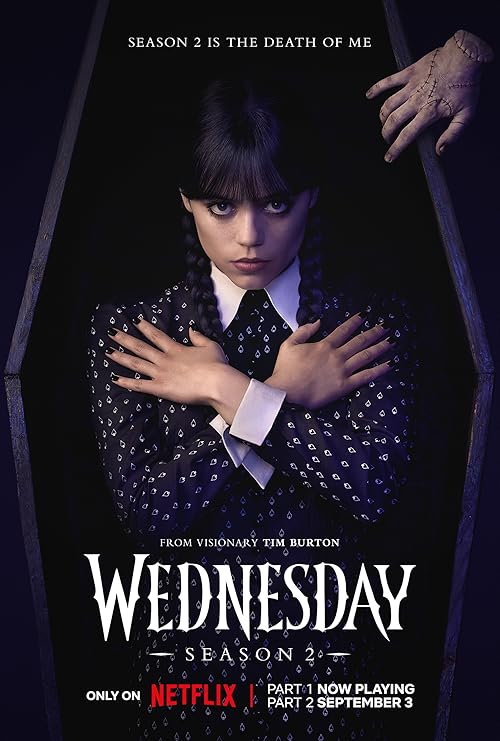
This film draws you in for a significant portion of its runtime with traditional or neutral content before springing its woke agenda. Know before you go!
NOT A WOKE TRAP. Wednesday's progressive elements are front-loaded. The race-swapped protagonist, the outcast-as-hero identity politics, and the LGBTQ-adjacent Enid storyline are all visible in the first two episodes. The show's progressive DNA is in its premise, not hidden until the third act. Conservative viewers knew from the casting announcement what kind of show this was.
Wednesday is the Netflix show that everyone watched. 252 million households in its first 28 days. The most-watched English-language Netflix series at its release. Jenna Ortega as the new Wednesday Addams became a genuine pop-culture moment. The viral dance scene is something people who never saw the show can describe in detail. None of that is in dispute.
What is in dispute is what the show is actually doing beneath all that gothic atmosphere and Ortega's spectacular deadpan.
The premise: Wednesday Addams is expelled from her regular school for dropping piranhas on the water polo team that bullied her brother. Her parents enroll her at Nevermore Academy, the boarding school for 'outcasts': werewolves, sirens, vampires, psychics, and other supernatural beings who do not belong in the normie world. Wednesday discovers she has inherited her mother's psychic powers and sets about solving a murder mystery involving a monster called the hyde that is killing people in the surrounding town.
As a teen mystery, it works. The pacing is solid. The reveals land. The performances are committed across the board. Ortega is not doing a Ricci impression; she is creating something new with the character while honoring the core, a girl so thoroughly at peace with darkness that she genuinely cannot fathom why anyone would choose to be ordinary. The scenes between Wednesday and her parents, played with bemused warmth by Luis Guzman and Catherine Zeta-Jones, are the show's most purely pleasurable moments.
The gothic visuals are excellent. Tim Burton's four episodes are noticeably more stylized than the others. The Nevermore Academy set design is doing significant work. The Ross brothers score is atmospheric and effective. This is a genuinely well-crafted show.
Now for the honest accounting.
The race-swap of Wednesday Addams is the first significant issue. Wednesday Addams, in every prior incarnation from the New Yorker cartoons to the Ricci films, is ethnically white. Pale, specifically. Her pallor is part of her visual identity. The show does not ignore this change; it explicitly reframes the family as 'Latin Goth,' with Gomez's Mexican heritage mentioned. This is a creative choice rather than a silent revision, and that matters. But it is still a choice that prioritizes contemporary diversity metrics over fidelity to source material. Fans of the original character can legitimately feel that the character's ethnic identity has been changed. The show's quality does not retroactively justify that trade-off; quality and fidelity are separate questions.
The show's foundational ideology is outcast identity politics. Nevermore is not just a school for people with supernatural powers; it is a metaphor for every person who has been told they are wrong for being what they are. The normies are not quite villains, but they are coded as shallow, fearful, and often cruel. The Nevermore students are coded as authentic, interesting, and deserving of dignity. This is not neutral terrain. The show is making an argument: that the people society calls freaks or outcasts are the real heroes, and mainstream culture is something to resist rather than join.
This is Tim Burton's foundational theme from Edward Scissorhands through Big Eyes, so it is not surprising. But in the context of a Netflix teen show with 252 million viewers, it carries more ideological weight. The show is saying to teenagers who feel outside the mainstream that their outsider status is identity, that it makes them interesting, that the people who want them to conform are the real threat. This is progressive therapeutic culture in gothic drag.
The conversion camp subplot is the most pointed example. Enid's parents, concerned that she has not yet 'wolfed out' (transformed into a werewolf), want to send her to a camp that will help her learn to do it. The show frames this as a horror: parents trying to force a teenager to suppress or change something essential about her nature. The werewolf transformation is never used as a metaphor for puberty or maturity in the straight-forward sense. The subtext is conversion therapy, and the show is not ambiguous about treating it as abusive. This is progressive youth politics in a fantasy framework, and it will land differently depending on where you stand on conversion therapy.
What the show does right from a traditional perspective is worth noting.
Wednesday herself is the show's best counter-argument to the progressive reading. She is not a team player. She is not warm. She does not want community or belonging. She is an individual who pursues her goals through individual excellence, wit, and ruthlessness. She does not need validation. She does not care about approval. The show does not punish her for this. It celebrates it. In a media landscape full of protagonists whose journey is learning to open up and let people in, Wednesday's arc is more complicated: she lets people in slightly, grudgingly, on her own terms, without becoming someone who needs them. That is a rare and genuinely individualistic hero.
Gomez and Morticia Addams are presented as a genuinely loving married couple. Their relationship is warm, mutually respectful, and affectionate. Gomez is devoted to Morticia. Morticia is devoted to Gomez. They are both devoted to their children, including Wednesday, even when she drives them crazy. The show does not treat this marriage as a joke or a relic. It treats it as the stable foundation Wednesday pushes against. This is one of the most positively depicted married couples in recent teen drama.
Wednesday is consistently rewarded for hard work, discipline, and intellectual rigor. She solves the murder mystery not through feelings or teamwork primarily but through sustained individual effort. The show values her competence and respects it. This is not nothing.
Overall: Wednesday is a WOKE LEAN by the numbers, and the numbers are accurate. The race-swap, the outcast identity politics, the conversion therapy subplot, and the anti-normie framing outweigh the individualism, the positive marriage depiction, and the competence-rewarded framework. The margin is not wide because the show genuinely has traditional elements and because some of the woke elements, the race-swap especially, are structural choices rather than active ideology. But the balance tilts left.
The show is also enormously entertaining, which is a separate fact. Both things are true.
Formula: Weighted Score = Severity × Authenticity Multiplier × Centrality Multiplier
🔴 Woke Tropes
| Trope | Severity | Authenticity | Centrality | Score |
|---|---|---|---|---|
| Race-Swapped Iconic Character (Wednesday as Latina) | 3 | 1 | 1.8 | 5.4 |
| Outcast Identity Politics (Monsters vs. Normies) | 3 | 0.7 | 1.8 | 3.78 |
| LGBTQ-Adjacent Conversion Therapy Metaphor (Enid's Arc) | 3 | 1 | 1 | 3 |
| Normalization of Occult / Monster Identity as Positive | 2 | 0.7 | 1.8 | 2.52 |
| Anti-Establishment / Anti-Normie Framing | 2 | 0.7 | 1 | 1.4 |
| TOTAL WOKE | 16.1 | |||
🟢 Traditional Tropes
| Trope | Severity | Authenticity | Centrality | Score |
|---|---|---|---|---|
| Individual Excellence Over Collective (Radical Self-Reliance) | 4 | 0.7 | 1.8 | 5.04 |
| Positive Marriage Depiction (Gomez and Morticia) | 3 | 0.7 | 1 | 2.1 |
| Competence and Hard Work Rewarded | 3 | 0.7 | 1 | 2.1 |
| Justice and Truth-Seeking as Moral Driver | 2 | 0.7 | 1 | 1.4 |
| TOTAL TRADITIONAL | 10.6 | |||
Score Margin: -5 WOKE
Director: Tim Burton (4 episodes); various directors
LEFT with independent streak. Tim Burton's sensibility is fundamentally about outsiders, freaks, and misfits finding dignity in their weirdness, a liberal romantic vision of non-conformity. His participation was primarily aesthetic; he directed 4 of the 8 episodes and served as executive producer, establishing the show's gothic visual identity. The showrunners (Gough and Millar) are more commercially minded and less ideologically consistent than Burton's personal films.Tim Burton developed the concept alongside showrunners Alfred Gough and Miles Millar (Smallville). Burton's involvement was described as transformative for the visual identity: the Nevermore Academy sets, the color palette (desaturated except for moments of magic), and the Gothic horror aesthetics are distinctly Burton-coded. Gough and Millar, known for Smallville and Into the Badlands, brought structural discipline and teen-mystery plotting. The combination produced a show that is more commercially polished than Burton's personal films but more visually distinctive than typical YA Netflix fare.
Adult Viewer Insight
Wednesday is worth watching, and the political concerns are real but not deal-breakers for most conservative parents. The conversion camp subplot is the element most likely to generate friction, because it is not metaphorical: it is a specific critique of a specific practice associated with conservative Christian communities. Parents who disagree with the show's framing of that issue should watch the relevant episodes with their teenagers. The race-swap of the title character is a legitimate fidelity complaint that quality does not resolve. Ortega is excellent. The character she is playing is not quite the Wednesday Addams of the Ricci films. Both of those things can be true simultaneously. The show's biggest flaw is not ideological but creative: the mystery plot is generic compared to the character work, and the season finale's reveal is predictable. For teenagers, Wednesday is compulsively watchable and relatively harmless by contemporary teen entertainment standards. The gothic atmosphere is genuinely fun. The dance scene is legitimately great. The Addams family marriage is a warm thing in a cold show. Watch it knowing what it is.
Parental Guidance
Find Wednesday on Amazon Prime Video, rent, or buy:
▶ Stream or Buy on AmazonAs an Amazon Associate, VirtueVigil earns from qualifying purchases.
Community Discussion 0
Subscribe to comment.
Join the VirtueVigil community to share your perspective on this review.