
Wonka
Wonka is the rare prequel that earns its existence. Where most origin stories exist to explain away the mystery of beloved characters, Wonka does something different: it deepens the mystery by showing you where the magic came from.
Full analysis below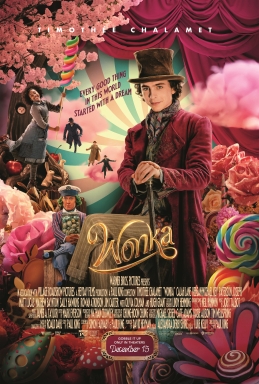
NOT A WOKE TRAP. Wonka is exactly what it presents itself as: a wholesome, sweet-natured origin story about imagination, perseverance, and keeping promises to the people who loved you. The villains are greedy businessmen who corrupt institutions, not capitalism as a system. The ensemble is diverse, but nobody gives a speech about it. Parents and conservative viewers can bring their kids to this one without any hesitation.
Wonka is the rare prequel that earns its existence. Where most origin stories exist to explain away the mystery of beloved characters, Wonka does something different: it deepens the mystery by showing you where the magic came from.
The film introduces us to Willy Wonka (Timothee Chalamet) as a young man arriving in an unnamed European city with a top hat, a battered suitcase full of magical chocolates, and an unshakeable belief that he can open the world's greatest chocolate shop. The city's chocolate trade is controlled by a cartel of three villainous chocolatiers, Slugworth (Paterson Joseph), Prodnose (Matt Lucas), and Fickelgruber (Mathew Baynton), who have bribed the corrupt Chief of Police (Keegan-Michael Key) and even a priest (Rowan Atkinson) to maintain their monopoly. When Wonka's first magical chocolate causes a sensation in the town square, the cartel moves to crush him.
Wonka ends up trapped in a boarding house run by the magnificently villainous Mrs. Scrubitt (Olivia Colman), working off a fabricated debt alongside a group of fellow captives who become his unlikely family. Among them is Noodle (Calah Lane), a young girl who was left at the laundry as a baby and has never known where she came from. Wonka and Noodle form the film's emotional core: two people without families of their own, building something together.
The emotional engine of the film, and the element that elevates it from pleasant to genuinely moving, is Wonka's relationship with his deceased mother (Sally Hawkins). She appears only in flashback and in one extended memory sequence, but everything Wonka does is motivated by a promise he made to her and a dream they shared. When Chalamet sings 'Pure Imagination' at the film's climax, he is not just being whimsical. He is keeping a promise to a dead woman who believed in him. That is a profoundly traditional emotional foundation for a story, and the film earns it.
Paul King directs with the same visual warmth and emotional precision he brought to the Paddington films. The film is not as tight as Paddington 2 (which is a near-perfect family movie), but it comes close. The production design is gorgeous. The songs are better than most recent Hollywood musicals. Hugh Grant playing a miniaturized, aggrieved Oompa Loompa is one of the better comedic ideas of 2023 and Grant commits to it completely.
The villain structure is worth addressing directly. The chocolate cartel has corrupted the local police and the local church through bribery. This could be read as an anti-establishment or anti-capitalist critique. But the film is careful about this. The problem is not that these are powerful men or wealthy businessmen. The problem is that they are dishonest and greedy, virtues gone sour. The film celebrates Wonka's small-scale artisanal chocolate shop not as a socialist collective but as an expression of individual craft and love. The distinction matters.
Wonka grossed $632 million worldwide on a $125 million budget. It works as entertainment. It works as emotion. It works as a film about keeping promises to your mother.
Formula: Weighted Score = Severity × Authenticity Multiplier × Centrality Multiplier
🔴 Woke Tropes
| Trope | Severity | Authenticity | Centrality | Score |
|---|---|---|---|---|
| Corrupt Corporate Monopoly as Central Villain | 2 | High | Moderate | 1.4 |
| Institutional Corruption (Police and Church) | 2 | Moderate | Low | 1 |
| Diverse Ensemble Cast | 1 | High | Low | 0.35 |
| TOTAL WOKE | 2.8 | |||
🟢 Traditional Tropes
| Trope | Severity | Authenticity | Centrality | Score |
|---|---|---|---|---|
| Dream Pursued Through Individual Perseverance | 4 | High | High | 5.04 |
| Mother's Love as Sacred Motivating Force | 4 | High | High | 5.04 |
| Generosity and Kindness as the Highest Virtues | 3 | High | Moderate | 2.1 |
| Found Family Through Shared Struggle | 3 | High | Moderate | 2.1 |
| TOTAL TRADITIONAL | 14.3 | |||
Score Margin: +12 TRAD
Director: Paul King
NEUTRAL to TRADITIONAL LEAN. King made both Paddington films, which are among the most wholesomely traditional family movies of the past decade. His instincts favor warmth, sincerity, and characters who are genuinely kind. No ideological agenda is visible in his filmography.King came from British television comedy (The Mighty Boosh) and transitioned to film with the Paddington series, which achieved the rare feat of being beloved by children, parents, critics, and cultural commentators across the political spectrum. His films are built around the premise that goodness is real, kindness is powerful, and strangers can become family. Wonka continues exactly that tradition. He is one of the most reliably non-ideological directors working in mainstream family film.
Writer: Paul King & Simon Farnaby
King and Farnaby also co-wrote Paddington 2, widely considered one of the best family films of the 2010s. Their collaboration produces scripts that are structurally clever, emotionally sincere, and completely free of political grandstanding. The Wonka script takes the spirit of Roald Dahl without Dahl's occasional darkness and builds a warm, funny, genuinely moving story around a young man whose love for his deceased mother drives everything he does. The villain structure (a chocolate cartel that has corrupted law enforcement and the church) could read as anti-establishment, but the film frames it as simple human greed rather than systemic critique.
Producers
- David Heyman (Heyday Films)
- Alexandra Derbyshire (Heyday Films)
- Luke Kelly (The Roald Dahl Story Company)
Full Cast
Adult Viewer Insight
Conservative adults will find Wonka a genuinely wholesome film with a strong traditional emotional core. The central message, that a dream sustained by love for a parent can carry you through adversity and eventually triumph over corruption, is as traditional as it gets. Chalamet is a charismatic, disarming presence who plays the role straight rather than weird, which is the right call. The film's villains are corrupt rather than ideologically coded. The romantic subplot is nonexistent. This is a family film that respects its audience of all ages.
Parental Guidance
Recommended age: 5 and up without reservations. PG rated. No sexual content, no strong language, no drug use, no gender ideology. Mild comedic peril and some cartoonish villainy. The most emotionally intense content is Wonka's grief for his deceased mother, which is handled with great care and could open meaningful conversations with children about loss and keeping promises to loved ones. The bribery and corruption subplot may require brief explanation for very young children but is depicted simply. One of the cleanest major studio releases of the past few years. Bring the whole family.
Find Wonka on Amazon Prime Video, rent, or buy:
▶ Stream or Buy on AmazonAs an Amazon Associate, VirtueVigil earns from qualifying purchases.
Community Discussion 0
Subscribe to comment.
Join the VirtueVigil community to share your perspective on this review.