
Wuthering Heights (2026)
Emily Brontë's Wuthering Heights survived 179 years, multiple adaptations, and the entire twentieth century with its reputation intact.…
Full analysis below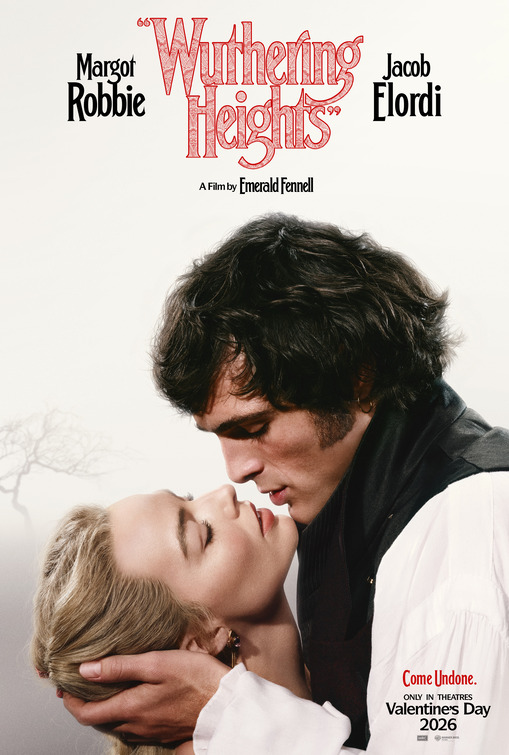
This film draws you in for a significant portion of its runtime with traditional or neutral content before springing its woke agenda. Know before you go!
WOKE TRAP WARNING The Brontë name sells the ticket. Emerald Fennell's agenda fills the seat. The trailers sold gothic romance. The film delivers explicit BDSM, a masturbation scene, and degradation content not in Emily Brontë's source novel.
Emily Brontë's Wuthering Heights survived 179 years, multiple adaptations, and the entire twentieth century with its reputation intact. Heathcliff and Cathy remain two of literature's most electrically rendered figures - wild, selfish, cosmically intertwined, and ultimately destroyed by the gap between what they want and what the world permits. So there's a real question worth asking about Emerald Fennell's adaptation: is she bringing out what's already in the text, or importing her own fixations into it? After 136 minutes, the answer is mostly the second one.
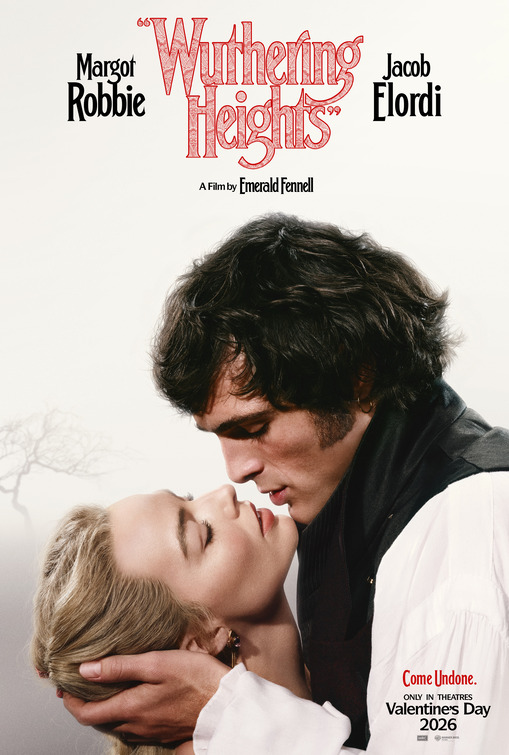
Set in 1771, Wuthering Heights follows Catherine "Cathy" Earnshaw (Margot Robbie) and Heathcliff (Jacob Elordi), a foundling boy rescued from the Liverpool streets by Cathy's father and brought to their windswept Yorkshire estate. The children form an inseparable bond that outlasts Earnshaw's death, the estate's decline, Cathy's socially strategic marriage to wealthy neighbor Edgar Linton (Shazad Latif), and Heathcliff's eventual mysterious return with a fortune and a consuming desire for revenge. The story ends in death, grief, and the hollow victory of a man who wanted everything and ended up with nothing.
The bones of Brontë's novel are present and mostly intact. The emotional architecture works. The tragedy lands. The problem is what Fennell builds on top of the bones.
Fennell opens with a public hanging in 1771. The condemned man has a visible erection. The crowd - including young Cathy and her companion Nelly Dean - watches with what the film frames as something between horror and arousal. It's designed to announce, loudly, what kind of film this is going to be. It's also not in the novel.
That pattern holds throughout. A BDSM encounter between servants Joseph and Zillah in the barn (not in Brontë). An extended masturbation sequence on the moors (not in Brontë). The explicit degradation of Isabella at Heathcliff's hands, rendered in graphic detail with careful attention to Isabella's apparent enjoyment (not in Brontë - Heathcliff's cruelty to Isabella in the novel is implied and reported secondhand). Fennell shoots it as something adjacent to erotic performance art.
None of this makes the film without power. Margot Robbie is ferociously good as Cathy. She finds the character's essential contradiction - genuinely loving Heathcliff, genuinely choosing social advancement over him, genuinely not fully understanding that those two things cannot coexist - and plays all three registers at once. Jacob Elordi's Heathcliff is slower to ignite but lands hard once he does. The reunion scene is electric. The final death scene is heartbreaking in the way the novel intended. When Fennell is adapting Brontë faithfully, the film earns its existence.
The problem is Fennell doesn't trust the source material to be provocative enough on its own.
Trope Analysis - VVWS Weighted Scoring
🔴 Woke Tropes
| Trope | Severity (1-5) | Authenticity | Centrality | Weighted Score |
|---|---|---|---|---|
| Female sexuality as liberation / self-discovery (Cathy's moors masturbation scene, framed as awakening) | 3 | Injected (1.5) | Supporting (1.0) | 9.0 |
| Transgressive sexuality normalized (BDSM barn scene; Isabella/Heathcliff degradation arc as consensual performance) | 3 | Injected (1.5) | Supporting (1.0) | 9.0 |
| Provocation as artistic statement (opening hanging scene - shock positioning, no narrative purpose) | 3 | Injected (1.5) | Supporting (1.0) | 4.5 |
| Diversity casting in period-incongruent roles (Hong Chau, Shazad Latif in 1770s Yorkshire with no in-world explanation) | 2 | Injected (1.5) | Supporting (1.0) | 6.0 |
| Anti-traditional institution framing (marriage as cage; Edgar as sterile establishment vs. authentic desire) | 2 | Natural (0.75) | Supporting (1.0) | 3.0 |
| The Marginalized Savant (Heathcliff as dark outsider whose passion exceeds the establishment) | 3 | Organic (0.5) | Central (1.5) | 4.5 |
| WOKE TOTAL | 36.0 |
🟢 Traditional Tropes
| Trope | Severity (1-5) | Authenticity | Centrality | Weighted Score |
|---|---|---|---|---|
| All-consuming romantic love as life's defining force (Heathcliff/Cathy bond - faithfully rendered) | 5 | Organic (0.5) | Defining (2.0) | 15.0 |
| Moral consequences - tragedy follows moral failure (Cathy's death, Heathcliff's hollow victory) | 4 | Organic (0.5) | Central (1.5) | 9.0 |
| Class distinctions depicted as real and consequential (not villainized but as structural reality Cathy must navigate) | 2 | Organic (0.5) | Supporting (1.0) | 2.0 |
| TRAD TOTAL | 26.0 |
Director / Writer Ideological Track Record
Emerald Fennell has made three feature films. All three center transgressive sexuality as a primary aesthetic tool. Promising Young Woman (2020) is an explicitly feminist rape-revenge thriller that won the Academy Award for Best Original Screenplay. Saltburn (2023) uses class horror as a vehicle for increasingly explicit transgressive content (the bathtub scene, the grave scene became cultural flashpoints). Now Wuthering Heights applies the same toolkit to a canonical 19th-century text.
Fennell is a genuine filmmaker - technically accomplished, emotionally intelligent, capable of sustained craft. She is also a filmmaker with a consistent ideological project: provocation through sexuality, with feminist re-reading of female desire as the underlying thesis. Audiences who don't know her prior work will be blindsided by Wuthering Heights. Audiences who do know it will recognize the blueprint immediately.
LuckyChap Entertainment, Margot Robbie's production company, has now produced Promising Young Woman, Barbie, and Wuthering Heights - a clean triple of feminist-adjacent prestige provocations. This is not coincidence. LuckyChap has a thesis. Knowing that thesis helps audiences understand what product they're being sold.
Adult Viewer Insight
Wuthering Heights is genuinely worth seeing if you know what you're walking into. Robbie gives one of the performances of her career. Elordi grows into Heathcliff in ways that earn the film's final act. Linus Sandgren's cinematography is stunning - the moors are shot with a cold, bruised beauty that matches the novel's emotional landscape perfectly. The tragedy, when Fennell stops intervening in it, is powerful.
The practical question for conservative adults: is the film anti-conservative in a political sense? Not directly. There are no lectures, no contemporary social messaging, no diversity speeches. The politics are embedded in the aesthetic choices - what Fennell adds to Brontë's story, and what those additions communicate about female sexuality and desire. A viewer who doesn't engage with those layers can watch the surface film (doomed love, beautiful photography, tragic ending) and find it worthwhile. A viewer paying closer attention will see the machine running underneath it.
Director: Emerald Fennell
STRONGLY WOKEFennell has made three films - all center transgressive sexuality as primary aesthetic tool. Promising Young Woman (2020) won the Oscar for Best Screenplay with an explicitly feminist rape-revenge thesis. Saltburn (2023) uses class horror and transgressive sexuality. Wuthering Heights continues the pattern. Ideological tendency: CONSISTENTLY WOKE-TRANSGRESSIVE.
Writer: Emerald Fennell
Sole credited writer. Same as director. No collaborating voice to moderate or redirect her choices. Every addition to Brontë's text is Fennell's decision.
Adult Viewer Insight
Wuthering Heights is genuinely worth seeing if you know what you're walking into. Robbie gives one of the performances of her career. Elordi grows into Heathcliff in ways that earn the film's final act. Linus Sandgren's cinematography is stunning. The tragedy, when Fennell stops intervening in it, is powerful. The practical question for conservative adults: the film is not anti-conservative in a political sense - no lectures, no diversity speeches. The politics are embedded in aesthetic choices - what Fennell adds to Brontë's story and what those additions communicate about female sexuality. A viewer who doesn't engage with those layers can watch the surface film (doomed love, beautiful photography, tragic ending) and find it worthwhile. A viewer paying closer attention will see the machine running underneath it.
Parental Guidance
Ages 17+ - Hard R: - Sexual Content: HIGH - masturbation sequence; BDSM barn scene; explicit Isabella/Heathcliff degradation relationship (consensual, graphically framed); opening scene depicts a hanged man with visible sexual response - Violence: Moderate - public hanging; whipping scene (Heathcliff as a child, scarring shown); Cathy's final illness depicted with physical deterioration - Language: Mild - period insults, no modern profanity - Substance Use: Moderate - Mr. Earnshaw's alcoholism is a key plot driver - Scary/Intense: Moderate - Gothic atmosphere; child abuse; death of a main character The Brontë name and period setting will give parents false confidence. This is not the 1939 Olivier version. This is not the 1992 Fiennes version. This is Emerald Fennell's Wuthering Heights, which is a substantially different product. Read content warnings above carefully. Not appropriate for children, young teenagers, or anyone expecting a traditional literary adaptation appropriate for school reading. VirtueVigil Editorial Team Review Date: February 2026
Find Wuthering Heights (2026) on Amazon Prime Video, rent, or buy:
▶ Stream or Buy on AmazonAs an Amazon Associate, VirtueVigil earns from qualifying purchases.



Community Discussion 0
Subscribe to comment.
Join the VirtueVigil community to share your perspective on this review.