Is Wuthering Heights (2026) Woke? | VirtueVigil Review
Emerald Fennell's Wuthering Heights is a bold, frequently beautiful, and ultimately frustrating adaptation of Emily Bronte's novel.…
Full analysis below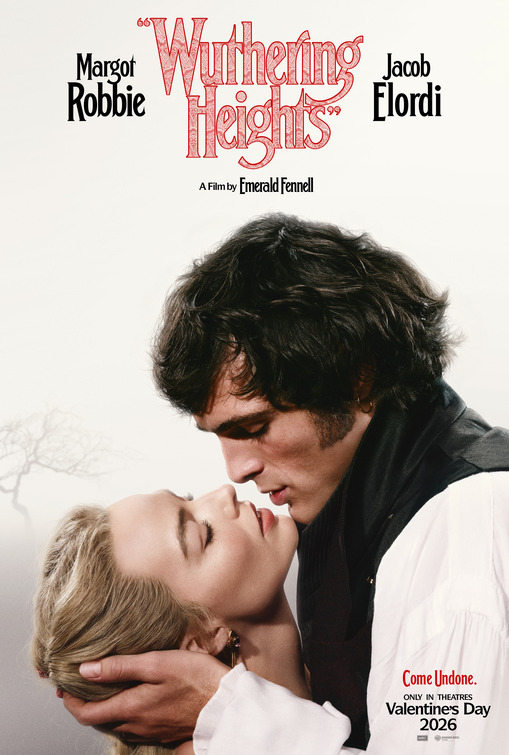
This film draws you in for a significant portion of its runtime with traditional or neutral content before springing its woke agenda. Know before you go!
NOT A WOKE TRAP. Wuthering Heights (2026) earns a WOKE LEAN verdict, but it is not a bait-and-switch. Fennell's sensibility is baked into the premise and advertised openly. Critics and conservative commentators flagged the film's approach before it opened. Parents who walk in unaware have not been deceived by the marketing. The woke content is not hidden.
Emerald Fennell's Wuthering Heights is a bold, frequently beautiful, and ultimately frustrating adaptation of Emily Bronte's novel. It arrives with the full force of prestige filmmaking behind it: gorgeous Yorkshire moors cinematography, two movie stars at the height of their physical appeal, composer Carter Burwell finding the ache in every scene, and a director whose commitment to her vision is never in question. The problem is the vision itself.
Fennell has stated she wanted to recreate the feeling of a teenage girl encountering Bronte for the first time, that rush of forbidden wanting, the sense that Heathcliff is somehow both monster and magnetic north. As a stated goal it is not without merit. The novel does operate on that frequency. But translating the feeling of adolescent literary fantasy into a two-hour film for adult audiences requires more than beautiful photography of brooding faces on windswept hills.
Jacob Elordi gives a performance that partially justifies the enterprise. His Heathcliff is physically imposing, emotionally coiled, and capable of projecting the kind of specific damage that makes a romantic obsessive plausible rather than cartoonish. When the film rests on him, it breathes. Margot Robbie is not badly cast so much as she is badly written. The script gives Catherine enormous wants and almost no inner life. She desires, she rages, she suffers, but the film never locates what she actually believes about anything beyond Heathcliff. Without that interiority, her choices register as passion without consequence, which flatters the character in ways Bronte never intended.
The hyper-sexual presentation generated the most controversy. The film earned its R rating, and the content is genuinely heavy: multiple explicit scenes, physical violence between lovers treated as erotic rather than alarming, and a tonal refusal to judge anything Catherine wants. Parents should treat the R rating with full seriousness. This is not an adaptation to casually hand to a teenager who loved the novel in English class.
Fennell's feminist reframing also runs into a structural problem that no amount of craft can solve. Wuthering Heights endures because Bronte treats Heathcliff's toxicity as genuinely toxic. He destroys everyone he touches, including himself. The novel offers no romantic exit from that. Fennell's version wants to honor the want while gesturing at the danger, which produces a film that neither fully condemns the relationship nor earns the right to celebrate it. The result is beautiful and empty.
Martin Clunes as Mr. Earnshaw and Ewan Mitchell as the destructive Hindley earn the film's best reviews in supporting roles, bringing behavioral specificity to characters the script mostly treats as plot machinery. Hong Chau as Nelly Dean is a calm center in scenes that need one.
The film made real money: $77 million globally in its opening weekend, which suggests the target audience of readers who grew up with the novel responded to something here even if critics did not. That audience knows what they are buying. The VirtueVigil concern is not that the film is bad, though it is more miss than hit, but that it presents a relationship defined by mutual destruction as the most alive thing its protagonists ever experience, without providing the moral architecture to contextualize that claim.
Director: Emerald Fennell
WOKE. Fennell is a self-described feminist filmmaker who uses transgressive content to interrogate gender dynamics, class, and desire. Her prior films Promising Young Woman (2020) and Saltburn (2023) both deploy provocateur aesthetics in service of progressive thematic agendas. Wuthering Heights continues that pattern.Fennell is one of the most ideologically purposeful directors working in prestige Hollywood. Her debut Promising Young Woman won the Academy Award for Best Original Screenplay and was explicitly framed as a rape-revenge meditation on male accountability. Saltburn divided audiences with its class-war psychosexual thriller structure and deliberately shocking ending. Wuthering Heights is her most commercially ambitious project, but her instincts remain the same: maximize sensory provocation, privilege female subjectivity, and subvert genre expectations. She stated in press interviews that she wanted the film to recreate the feeling of a teenage girl reading this book for the first time, which telegraphs her intent to center Catherine's desire rather than the novel's moral architecture.
Writer: Emerald Fennell
Fennell wrote the screenplay herself, which means the adaptation's departures from Emily Bronte's novel are deliberate and intentional rather than collaborative compromises. Her script reportedly amplifies the novel's sexual tension, introduces modern anachronisms in dialogue and sensibility, and reframes Catherine as a woman whose desire is thwarted by social convention rather than internal moral conflict. The fidelity to Bronte's plot is selective.
Producers
- Margot Robbie (LuckyChap Entertainment)
- David Heyman (Heyday Films)
Adult Viewer Insight
Conservative adults will find Wuthering Heights (2026) to be the most pointed illustration of what happens when a prestige literary adaptation is filtered entirely through modern feminist theory. Bronte's Heathcliff is not a romantic hero. He is a warning. Fennell's film understands this intellectually but refuses it emotionally, which produces a fundamentally dishonest relationship with the source material. The woke fingerprints are in the framing, not the plot: nothing is inserted that was not in the novel, but the moral architecture is gutted. Elordi is worth seeing. The film as a whole is a disappointment.
Parental Guidance
Recommended age: 18 and up. Rated R for strong sexual content, nudity, and violence. Multiple explicit sexual scenes. Physical violence between romantic partners treated without moral condemnation. Strong language throughout. No drug or alcohol subplot, though alcohol is present in period-appropriate context. Thematic concerns include glorification of an abusive relationship structure, female desire framed as self-justifying, and a complete absence of moral or religious framework. Prior screen adaptations of this novel were appropriate for teens. This one is not.
Find Is Wuthering Heights (2026) Woke? | VirtueVigil Review on Amazon Prime Video, rent, or buy:
▶ Stream or Buy on AmazonAs an Amazon Associate, VirtueVigil earns from qualifying purchases.
Community Discussion 0
Subscribe to comment.
Join the VirtueVigil community to share your perspective on this review.