
Zootopia 2 (2025)
Zootopia 2 is exactly what it looks like. It is a Disney animated buddy cop sequel with gorgeous animation, sharp voice performances, a cracking mystery plot, and a progressive allegory that does not hide behind the fur. The franchise was never pretending to be neutral.…
Full analysis below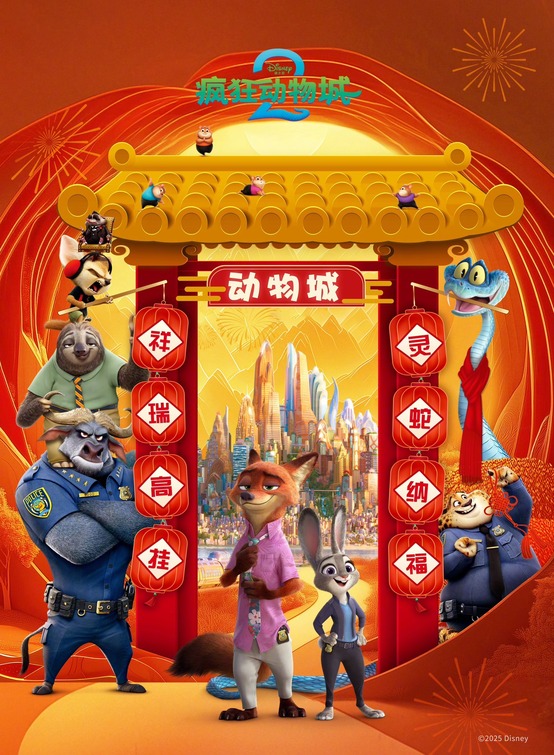
This film draws you in for a significant portion of its runtime with traditional or neutral content before springing its woke agenda. Know before you go!
Zootopia 2 wears its ideology openly. The prejudice allegory that defined the first film is expanded into systemic exclusion and historical revisionism in the sequel. There is no bait-and-switch. Conservative families know what they are getting. The traditional law enforcement heroism, sacrifice, family warmth, and institutional reform themes coexist openly with the progressive messaging rather than being used to lure viewers in before the film pivots.
Zootopia 2 is exactly what it looks like. It is a Disney animated buddy cop sequel with gorgeous animation, sharp voice performances, a cracking mystery plot, and a progressive allegory that does not hide behind the fur. The franchise was never pretending to be neutral. The original Zootopia was described by its own directors as being about racism, sexism, and governing through fear. The sequel turns the dial up. This time the allegory is systemic exclusion, historical revisionism, and wealth built on theft and oppression. Nobody who paid attention to the first film should be surprised by a word of it.
What they might be surprised by is how well the movie still works as a movie.
The story picks up one week after Judy Hopps and Nick Wilde become official ZPD partners. The partnership is a mess. Judy is type-A and relentless. Nick is sarcastic and untrusting. Chief Bogo is already threatening to split them up. Their supervisor ships them to a quokka psychotherapist named Dr. Fuzzbee, who runs a program called Partners in Crisis. This is probably the most groan-inducing scene in the film, and the Federalist was not wrong to call it therapist slop. The mandatory couples counseling framing is modern progressive culture imported wholesale into a fictional animal city. It does not feel organic to Zootopia's world. It feels like a message.
From there the film picks up momentum fast. At the Zootennial Gala, a pit viper named Gary De'Snake shows up in a city that hasn't seen a reptile in a century. Gary steals an antique journal belonging to Milton Lynxley, patriarch of Zootopia's most powerful dynastic family. Judy corners Gary, who tells her the journal contains evidence to prove his family's innocence of something old and terrible. Before she can decide what to do with that, Gary accidentally bites Chief Bogo with his venom. The Lynxleys frame Judy and Nick for the incident. Our heroes go from cops to fugitives inside of thirty minutes.
The investigation takes them to Marsh Market, a hidden district where reptiles have lived underground for decades. There they meet Jesus, a plumed basilisk played by Danny Trejo with exactly the voice casting you would expect and exactly the presence the film needs. They piece together the truth: Gary's great-grandmother Agnes De'Snake was the architect who designed Zootopia's weather walls. Ebenezer Lynxley stole her work, framed her for murder, and used the resulting anti-reptile hysteria to exile an entire population and bury their original district under Tundratown.
The villain reveal is Pawbert Lynxley, the seemingly sympathetic youngest son who has been helping Judy and Gary. He injects Judy with snake venom, throws Gary into the snow, and steals the antivenom to impress his father. Nick fights Pawbert on the weather wall, throws the antivenom to Gary, and falls. He and Judy survive. Pawbert barely survives. The Lynxleys are arrested. Agnes gets her name back. The reptiles come home.
Trope Analysis - VVWS Weighted Scoring
Woke Tropes
| Trope | Severity (1-5) | Authenticity | Centrality | Weighted Score |
|---|---|---|---|---|
| Institutional Evil / Systemic Exclusion (reptile exile via manufactured fear and legal corruption; defining plot engine) | 5 | Emphasized (1.25) | Defining (2.0) | 37.5 |
| Anti-Western Revisionism / Historical Erasure (Zootopia's founding myth exposed as a lie; great inventor's legacy stolen by wealthy patriarch) | 4 | Emphasized (1.25) | Central (1.5) | 22.5 |
| The Colonialist Villain (Lynxley family as old money built on theft and displacement of a minority population) | 4 | Emphasized (1.25) | Central (1.5) | 15.0 |
| Therapy Culture Normalized (mandatory Partners in Crisis couples counseling treated as productive and correct) | 3 | Injected (1.5) | Supporting (1.0) | 4.5 |
| The Marginalized Savant (Agnes De'Snake as the true inventor whose work was stolen by a white-coded power family) | 3 | Natural (0.75) | Supporting (1.0) | 4.5 |
| Victimhood as Moral Authority (Gary feared on sight by an entire city; innocence is the source of his moral standing) | 3 | Natural (0.75) | Supporting (1.0) | 4.5 |
| Globalist Utopia (reptile reintegration as triumphant resolution; multicultural unity as the happy ending) | 3 | Natural (0.75) | Supporting (1.0) | 2.25 |
| Coded LGBTQ+ Representation (Bucky and Pronk confirmed gay couple by directors; background only) | 1 | Emphasized (1.25) | Background (0.5) | 0.6 |
| WOKE TOTAL | 91.35 |
Traditional Tropes
| Trope | Severity (1-5) | Authenticity | Centrality | Weighted Score |
|---|---|---|---|---|
| Defense of the Innocent / Law Enforcement Heroes (Judy and Nick as brave, self-sacrificing cops throughout; law enforcement treated with full heroic dignity) | 5 | Organic (0.5) | Defining (2.0) | 10.0 |
| Partnership and Loyalty (the entire film is about building and preserving a worthy partnership; earned trust as the emotional core) | 5 | Organic (0.5) | Defining (2.0) | 10.0 |
| Truth and Justice Prevail via Institutions (heroes expose fraud through evidence; legal system arrests the villains; reform within the system, not destruction of it) | 4 | Organic (0.5) | Central (1.5) | 9.0 |
| The Self-Sacrificing Hero (Nick falls off the weather wall to save Judy; physical sacrifice to protect a partner at personal cost) | 4 | Organic (0.5) | Central (1.5) | 9.0 |
| Industry and Perseverance (Judy grinds through the case relentlessly; Nick overcomes deep personal distrust; neither quits) | 4 | Organic (0.5) | Central (1.5) | 6.0 |
| Homecoming / Restored Community (reptiles return to their district; Gary reunites with his family; broken communities mended) | 3 | Natural (0.75) | Supporting (1.0) | 4.5 |
| Traditional Family (Hopps family portrayed with warmth and genuine love; Gary's family is the motivation for everything he does) | 3 | Organic (0.5) | Supporting (1.0) | 3.0 |
| Faith in Adversity (Grandma Hopps prays daily for Judy's safety; presented without mockery or irony) | 2 | Organic (0.5) | Background (0.5) | 1.5 |
| TRAD TOTAL | 53.0 |
Composite: TRAD 53.0 - WOKE 91.35 = -38.35 (WOKE)
Director / Creative Team Ideological Track Record
Jared Bush is the chief creative force on both Zootopia films. He has been at Disney Animation since 2011. His writing credits tell a clear and consistent story: Zootopia (prejudice allegory), Moana (indigenous identity and anti-colonialist myth), Encanto (multi-generational family trauma and institutional expectations). Every project foregrounds a marginalized community finding its voice against a system that has diminished it. Bush is not hiding this pattern. He speaks openly in press about wanting his films to say something about the world.
What separates Bush from a pure ideological filmmaker is craft. He writes emotionally effective stories. The prejudice allegory in Zootopia worked because it was embedded in a genuinely fun buddy cop movie. Encanto worked because the family dynamics were real regardless of the social message. Zootopia 2 follows the same template: the colonialism parallel is explicit, but it is also embedded in a tightly plotted mystery with real stakes and real characters. You can disagree with the thesis and still admire the execution.
Byron Howard directed Bolt (2008) and Tangled (2010) before Zootopia. His solo work is conventional crowd-pleasing Disney. Tangled is one of the most traditionally constructed Disney princess films of the modern era: a resourceful heroine, a charming rogue with a good heart, a clear villain, a romantic resolution. Howard is not an ideological filmmaker by default. He is a craftsman who makes energetic, accessible stories. His co-direction of Zootopia 2 is visible in the film's pacing and action sequences, which are the most traditionally crowd-pleasing elements.
Yvett Merino as lead producer is a Disney Animation lifer. She produced Strange World (2022) and Wish (2023), two of the studio's more aggressively progressive recent films. Her involvement does not moderate the ideological signal; it confirms it.
Michael Giacchino carries no political signal. He composes for blockbusters across the ideological spectrum. The Zootopia 2 score is warm, propulsive, and callbacks-rich. It serves the film without editorializing.
PRE-VIEWING PREDICTION: Bush's writing pattern gave a near-certain woke lean. Howard's co-direction suggested the traditional elements would be stronger than a solo Bush project. Prediction: WOKE with meaningful traditional resistance. Prediction confirmed.
Adult Viewer Insight
Conservative adults should go into this film clear-eyed, which means going in knowing two things simultaneously.
First, this is a genuinely progressive film. The systemic exclusion allegory is explicit. The wealthy founding family built their dynasty on theft and propaganda. Historical truth was buried to preserve their power. The marginalized community has a hidden genius whose work was stolen. These are standard progressive frameworks and they are the load-bearing structure of the plot. They are not subtle. Bush has spoken about them openly.
Second, the traditional elements are real. Not window dressing. Not bait. Real.
Judy Hopps and Nick Wilde are police officers and they are heroes. The film does not equivocate about this. They are brave, loyal, and willing to sacrifice themselves for each other and for justice. The entire resolution of the film is achieved through evidence gathering and legal process. The Lynxleys are arrested by the system they corrupted. The film trusts that the system, when fed the truth, can correct itself. That is a classically conservative position. It is reform within institutions, not tear-it-down radicalism.
The partnership between Judy and Nick is the heart of the film and it is built on earned trust, demonstrated sacrifice, and loyalty through adversity. These are traditional values. Nick tells Judy he loves her at the end of the film. Not as a political statement. As two partners who came through something genuinely hard together.
The Hopps family is warm, loving, and present. Grandma Hopps prays. This gets a brief, gentle scene that plays it completely straight. Nobody mocks it.
Watch it knowing what it is. Talk about it afterward. The conversation about why the film frames its story the way it does is worth having with your kids.
Review by VirtueVigil Editorial Team
Formula: Weighted Score = Severity × Authenticity Multiplier × Centrality Multiplier
🔴 Woke Tropes
| Trope | Severity | Authenticity | Centrality | Score |
|---|---|---|---|---|
| Institutional Evil / Systemic Exclusion | 5 | Emphasized | Defining | 37.5 |
| Anti-Western Revisionism / Historical Erasure | 4 | Emphasized | Central | 22.5 |
| The Colonialist Villain | 4 | Emphasized | Central | 15 |
| Therapy Culture Normalized | 3 | Injected | Supporting | 4.5 |
| The Marginalized Savant | 3 | Natural | Supporting | 4.5 |
| Victimhood as Moral Authority | 3 | Natural | Supporting | 4.5 |
| Globalist Utopia / Multicultural Integration | 3 | Natural | Supporting | 2.25 |
| Coded LGBTQ+ Representation | 1 | Emphasized | Background | 0.625 |
| TOTAL WOKE | 91.4 | |||
🟢 Traditional Tropes
| Trope | Severity | Authenticity | Centrality | Score |
|---|---|---|---|---|
| Defense of the Innocent / Law Enforcement Heroes | 5 | Organic | Defining | 10 |
| Partnership and Loyalty | 5 | Organic | Defining | 10 |
| Truth and Justice Prevail via Institutions | 4 | Organic | Central | 9 |
| The Self-Sacrificing Hero | 4 | Organic | Central | 9 |
| Industry and Perseverance | 4 | Organic | Central | 6 |
| Homecoming / Restored Community | 3 | Natural | Supporting | 4.5 |
| Traditional Family | 3 | Organic | Supporting | 3 |
| Faith in Adversity | 2 | Organic | Background | 1.5 |
| TOTAL TRADITIONAL | 53.0 | |||
Score Margin: -38 WOKE
Director: Jared Bush & Byron Howard
Moderately ProgressiveDisney Animation veterans. Bush writes every project through a lens of prejudice, exclusion, and institutional failure. Howard is a more crowd-pleasing traditional storyteller whose influence is visible in the film's energy and pacing. Together they produced a film that is ideologically progressive but still broadly entertaining.
Writer: Jared Bush
Sole screenplay credit. Also wrote Zootopia (2016), Moana (2016), and Encanto (2021). Progressive themes consistently delivered through emotionally resonant, family-friendly storytelling frameworks.
Producers
- Yvett Merino (Walt Disney Animation Studios)
- Walt Disney Animation Studios (Disney)
Full Cast
Fidelity Casting Analysis FAITHFUL
Animated sequel with anthropomorphic animal characters. All returning voice actors from the original Zootopia (2016) reprise their roles. One minor recast: Higgins (hippo officer) voiced by Wilmer Valderrama instead of Raymond S. Persi. New characters are original to this film with no source material to compare against.
Zootopia 2 is a sequel to an animated film featuring anthropomorphic animal characters. Traditional race-based fidelity casting metrics do not apply in the same manner as live-action adaptations of source material with human characters.
Returning characters and voice actors:
- Ginnifer Goodwin returns as Judy Hopps: FAITHFUL
- Jason Bateman returns as Nick Wilde: FAITHFUL
- Idris Elba returns as Chief Bogo: FAITHFUL
- Shakira returns as Gazelle: FAITHFUL
- Nate Torrence returns as Clawhauser: FAITHFUL
- Bonnie Hunt returns as Bonnie Hopps: FAITHFUL
- Don Lake returns as Stu Hopps: FAITHFUL
- Jenny Slate returns as Dawn Bellwether: FAITHFUL
- Alan Tudyk returns as Duke Weaselton: FAITHFUL
- Tommy Chong returns as Yax: FAITHFUL
- Raymond S. Persi returns as Flash Slothmore: FAITHFUL
- Maurice LaMarche replaces John DiMaggio as Mr. Big: MINOR DEVIATION
- Wilmer Valderrama replaces Raymond S. Persi as Higgins: MINOR DEVIATION
- Tiny Lister appears posthumously as Finnick through unused recordings from the original film: FAITHFUL
All major lead characters are voiced by their original actors. New characters (Gary De'Snake, Nibbles Maplestick, Pawbert Lynxley, Milton Lynxley, Mayor Winddancer, Dr. Fuzzbee, Jesus, Captain Hoggbottom, the Lynxley siblings) are original to this film with no prior casting to compare against.
FIDELITY CASTING SCORE: FAITHFUL. The sequel correctly maintains its established cast. Two minor support role recasts do not constitute a fidelity concern. As an animated franchise sequel rather than a live-action adaptation of source material, this scoring category has limited applicability.
Adult Viewer Insight
Conservative adults should go in clear-eyed and know two things. First, this is a genuinely progressive film. The systemic exclusion allegory is explicit. The wealthy founding family built their dynasty on theft and propaganda. Historical truth was buried to preserve their power. These frameworks are load-bearing, not incidental. Second, the traditional elements are real. Judy and Nick are heroic cops treated with full heroic dignity. The resolution comes through evidence and legal process. The system, when given the truth, corrects itself. That is a classically conservative institutional position. The partnership is built on earned trust and sacrifice. The Hopps family is warm and present. Grandma Hopps prays in a brief scene that plays it completely straight. Watch it knowing what it is. Talk about it afterward.
Parental Guidance
Ages 7+ (primary sweet spot: 7-12) Content Warnings: - Violence: Moderate for PG animation. Character injected with snake venom and nearly dies. Nick falls off a weather wall. Chief Bogo bitten by venomous fang. Combat sequences in the climax. Criminals order assassinations discussed. - Sexual Content: None explicit. Background confirmed gay couple (Bucky and Pronk antelope neighbors from the original film) with minimal screen time and no display of affection. One joke by Nibbles about teamwork that has a double meaning adults will catch and kids won't. - Language: Clean. Nothing notable. - Substance Use: Gala scene features cocktail glasses. One background character appears intoxicated. - Scary/Intense Content: Pawbert's betrayal sequence is intense and involves deliberate poisoning of Judy. Weather wall climax has genuine peril. The Lynxley family ordering deaths may disturb younger viewers. The venom injection scene is the most intense moment. Ideological Content: - Progressive Messaging: Heavy. Systemic exclusion allegory, colonialist villain family, historical revisionism theme, therapy culture normalization. - Faith Content: Minimal but positive. Grandma Hopps prays for Judy's safety. Presented without mockery. - Family Values: Strong. Judy's family is loving and supportive. Gary's entire arc is about restoring his family's honor and coming home. Age Recommendations: - Minimum Age: 6 (for the story; some peril) - Recommended Age: 7+ - Primary Audience: 7-12 - Adult/Teen: Enjoyable but messaging more visible at older ages Family Discussion Starters: 1. The film says the Lynxley family built their power by stealing someone else's work and covering it up. Do you think families can really pass down guilt for what their ancestors did? 2. Judy and Nick fight a lot at first but become genuine partners by the end. What did they have to learn to make that work? 3. The reptiles lived hidden underground for generations because of something one snake did long ago. Does that seem fair? What would be the right way to fix it? 4. Grandma Hopps prays every day for Judy's safety. What role does faith play in your own family when things get scary? 5. The film uses therapy as a way to help Judy and Nick work through their issues. What do you think about that as an approach? Not recommended for children under 6 due to venom sequence and climactic peril intensity. VirtueVigil Editorial Team Review Date: February 2026
Find Zootopia 2 (2025) on Amazon Prime Video, rent, or buy:
▶ Stream or Buy on AmazonAs an Amazon Associate, VirtueVigil earns from qualifying purchases.


Community Discussion 0
Subscribe to comment.
Join the VirtueVigil community to share your perspective on this review.