Andor - Season 2
Andor Season 2 is probably the finest piece of television Disney has produced under the Star Wars banner - and it is, without reservation, the most explicitly political. These two facts are related.…
Full analysis below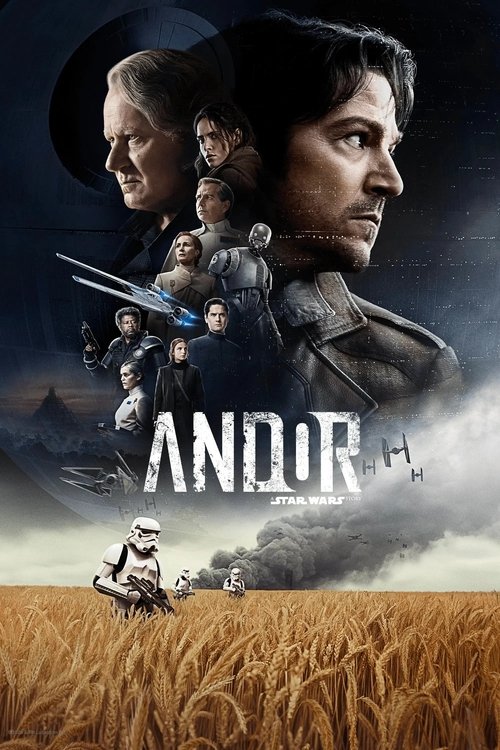
This film draws you in for a significant portion of its runtime with traditional or neutral content before springing its woke agenda. Know before you go!
The anti-fascist allegory has been front-and-center since Season 1. Conservative viewers should enter Andor Season 2 knowing they're watching a show that explicitly frames authoritarian government as the enemy and grass-roots resistance as heroic - with contemporary political resonance that Gilroy has not denied. Not a trap; the ideology is declared.
Andor Season 2 is probably the finest piece of television Disney has produced under the Star Wars banner - and it is, without reservation, the most explicitly political. These two facts are related. Tony Gilroy and his writers have made a show about the birth of a rebellion against an authoritarian empire, and they have made it with the kind of narrative rigor and moral seriousness that franchise television rarely achieves. The show also makes no secret about the contemporary resonances it intends. This is a story about people who decide that compliance with oppression is not an option - that there is a moral cost to silence, and that the cost of resistance is something you pay with your life.
The season covers the final years before the events of Rogue One, moving through four distinct time arcs as Cassian Andor (Diego Luna) completes his transformation from cynical mercenary to committed revolutionary. Stellan Skarsgård as Luthen Rael is the season's moral conscience - a man who has made himself into a weapon for the cause and who understands, with bleak clarity, that he will not survive to see what he is building. Genevieve O'Reilly's Mon Mothma is given the season's most politically rich storyline, navigating the collapsing imperial Senate while using her wealth to fund the rebellion through channels her husband and the Empire cannot trace. The institutional architecture of how resistance movements actually function - the funding, the compromises, the people who can never be publicly credited - is Andor's real subject, and no other Star Wars project has come close to exploring it at this level.
The anti-authoritarian allegory is explicit and sustained. The Empire under Gilroy is not a cartoonish villain factory but a recognizable bureaucratic tyranny - staffed by careerists who tell themselves they're just doing their jobs, administrators who track dissidents through algorithmic surveillance, and true believers who have convinced themselves that order is worth any price. Cassian tells a newly-minted rebel in the season's first episode: 'The Empire cannot win. You'll never feel right unless you are doing what you can to stop them. You're coming home to yourself.' Gilroy has not been coy about the fact that this show was conceived as a response to contemporary political events. Conservative viewers will correctly identify the Empire as carrying Trump-era American authoritarian resonances. That identification is intended.
Where the season earns genuine traditional credit: the show's vision of what makes resistance meaningful is deeply traditional in its values. Characters sacrifice themselves not for abstract ideology but for specific people they love and specific communities they are defending. The rebellion is not driven by DEI committees or identity politics - it is driven by people who have been personally wronged by power and who refuse to accept that wrong as permanent. Luthen's operational philosophy is Burkean in its cold realism: freedom requires sacrifice by individuals who will never be celebrated for it. Mon Mothma's arc is about the cost of doing what is right when the institutional channels have been corrupted. Forest Whitaker's Saw Gerrera represents the danger of letting resistance harden into fanaticism - a conservative warning about ideological purity at the expense of judgment.
One specific scene in the season drew sharp criticism from conservative reviewers as a moment of inserted progressive ideology - a scene addressing gender and pronouns in a future-galaxy context that felt jarring against the show's otherwise grounded tone. The criticism is fair. That scene reads as a concession to Disney's DEI priorities rather than an organic story element. It is brief, but it is notable precisely because it is the one place where the show's carefully constructed realism buckles under external pressure.
For conservative viewers who believe that resistance to tyranny is a timeless virtue rather than a partisan one, Andor offers an extraordinary case study in how great art can simultaneously carry an ideological argument and transcend it. The show makes its anti-authoritarian case with such moral intelligence that the argument outlasts any single contemporary referent. Watch it knowing what it is. Watch it critically. The craft will reward you regardless.
| Trope | Category | Location | Authenticity |
|---|---|---|---|
| Anti-Western Revisionism / Anti-Authoritarian Allegory | WOKE | Throughout all 12 episodes - structural premise; the Empire is a recognizable authoritarian bureaucracy | Emphasized. Gilroy has confirmed the contemporary political intent. |
| Institutional Evil | WOKE | Imperial Security Bureau plotlines - surveillance, disappearances, torture of dissidents | Natural. The Star Wars Empire was always authoritarian. Gilroy's contribution is making it realistic rather than cartoonish. |
| Gender Ideology Insertion | WOKE | One specific scene involving pronoun usage that reads as Disney DEI insertion | Injected. The scene stands out as inconsistent with the show's otherwise grounded political drama. |
| Women in Combat / Leadership | WOKE | Mon Mothma's Senate leadership; Dedra Meero's Imperial rise; multiple female rebel fighters | Natural. Star Wars has always featured women in leadership since 1977. Not a new insertion. |
| Self-Sacrificing Hero | TRAD | Multiple characters die in service of the rebellion; Luthen's entire arc is sacrificial | Organic. The show's emotional architecture is built on the concept of meaningful sacrifice. |
| Duty and Personal Honor | TRAD | Cassian's transformation arc - from self-interest to duty; Luthen's cold commitment to principle | Organic. The central character arc is a traditional hero's journey from selfishness to sacrifice. |
| The Wise Elder | TRAD | Luthen Rael - the gray-bearded strategist who sees what others cannot and pays the price | Organic. Skarsgård's character is one of the most compelling wise-elder portrayals in recent television. |
| Defense of the Innocent | TRAD | The rebellion's moral motivation - protecting ordinary people from imperial violence | Organic. The show's moral engine is protection of the vulnerable, not progressive identity politics. |
| Warning Against Ideological Fanaticism | TRAD | Saw Gerrera's arc - resistance corrupted by purity obsession becomes indistinguishable from tyranny | Organic. The show explicitly critiques the tendency of revolutionary movements to become what they oppose. |
Director: Multiple directors (Tony Gilroy supervising)
PROGRESSIVE - anti-authoritarian, anti-fascist allegory with contemporary political intentTony Gilroy serves as creator, showrunner, and primary writer. Individual episodes are directed by Ariel Kleiman, Janus Metz, Alonso Ruizpalacios, and others. Gilroy is a veteran Hollywood writer-director whose filmography (Michael Clayton, Duplicity, the Bourne franchise) skews toward institutional skepticism and morally complex protagonists. His politics are liberal-progressive, and Andor is his most explicitly political work. He has said publicly that the show was conceived in response to the political climate following Trump's first election.
Writer: Tony Gilroy, Dan Gilroy, Beau Willimon, Tom Bissell
Tony Gilroy leads the writing room. Dan Gilroy (Nightcrawler) is his brother and collaborator. Beau Willimon is the creator of House of Cards - a politically sophisticated writer with leftist credentials. Tom Bissell joined for Season 2. This is a sophisticated writers room that prioritizes political allegory alongside character depth. The anti-authoritarian thesis of the season is a shared creative commitment, not an accident.
Producers
- Kathleen Kennedy (Lucasfilm) — Lucasfilm president and executive producer. Kennedy has been the steward of Star Wars since Disney's acquisition and has drawn sustained criticism from traditionalist Star Wars fans for the franchise's progressive casting and storytelling choices across multiple projects. Signal: PROGRESSIVE.
- Tony Gilroy — Creator and showrunner. Ideological fingerprint is total. See director/writer profiles.
- Sanne Wohlenberg — Producing partner. No independent ideological signal.
Full Cast
Fidelity Casting Analysis FAITHFUL
Returning characters are faithful to established canon. No significant canon-swap casting issues.
Andor Season 2 returns all established Season 1 characters with their original cast. Diego Luna's Cassian Andor was introduced in Rogue One (2016) as a Mexican-Latino rebel, played by Luna, and the show is fully consistent with that canon. Mon Mothma (Genevieve O'Reilly) has been the character's canonical actor since Revenge of the Sith (2005). Luthen Rael and the Season 1 original characters have no prior canon to violate. The show introduces new supporting characters consistent with the diverse galaxy of Star Wars. No canon-swap casting concerns. The diverse cast reflects the established Star Wars universe rather than any revision of it.
Adult Viewer Insight
Conservative viewers who believe in the founding American principle that citizens have both the right and the obligation to resist governmental tyranny will find Andor's central argument more resonant than its creators perhaps intend. The show is not arguing for leftist politics - it is arguing that no government has the right to become a surveillance empire that disappears its critics and breaks the law at will. That is a conservative argument too, even when a Hollywood writer is making it through a Star Wars allegory. Watch it with that frame and the show becomes genuinely valuable.
Parental Guidance
Ages 14+ recommended. - Violence: Moderate - war violence, torture scenes (non-graphic), characters die meaningfully - Language: Mild - this is Disney+ after all - Thematic content: Political oppression, torture, martyrdom, the ethics of revolutionary violence, sacrifice - Sexual content: Minimal - some romantic relationships but nothing explicit - The show is genuinely intense in its political content. Teens who can engage with political philosophy will find it stimulating. Younger children will find it too slow and too dark. - One brief scene involving gender/pronouns may require parental discussion with conservative families
Find Andor - Season 2 on Amazon Prime Video, rent, or buy:
▶ Stream or Buy on AmazonAs an Amazon Associate, VirtueVigil earns from qualifying purchases.


Community Discussion 0
Subscribe to comment.
Join the VirtueVigil community to share your perspective on this review.