Beast
Beast is the kind of film that used to be a Hollywood staple and is now almost extinct: a gritty, no-apologies MMA story about a man who gave up fighting to live a quiet life, only to be dragged back into the cage when the people he loves are threatened.…
Full analysis below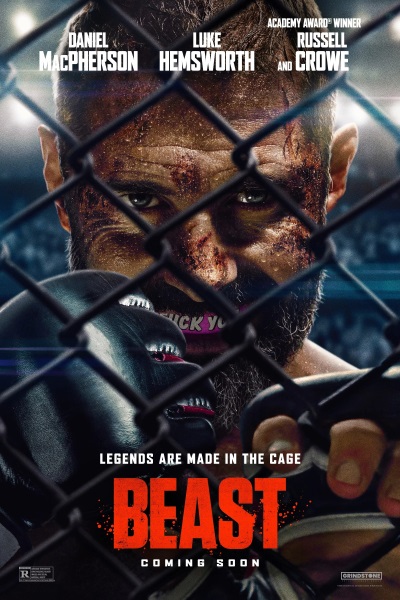
NOT A WOKE TRAP. Beast markets itself as a gritty MMA comeback story built on family obligation and masculine redemption. The creative team, led by first-time feature director Tyler Atkins and co-written by Russell Crowe himself, has no track record of ideological bait-and-switch. The cast is built around Australian action talent: Daniel MacPherson, Bren Foster, Luke Hemsworth, Mojean Aria. Russell Crowe's involvement as both writer and actor signals a film made by people who want to tell a visceral combat story, not deliver a lecture. Conservative audiences who enjoy Rocky, Warrior, or Redbelt will recognize the DNA immediately.
Beast is the kind of film that used to be a Hollywood staple and is now almost extinct: a gritty, no-apologies MMA story about a man who gave up fighting to live a quiet life, only to be dragged back into the cage when the people he loves are threatened. It stars Daniel MacPherson as Patton James, an MMA legend who walked away from the sport and became a commercial fisherman. He is not running from his past out of weakness. He made a choice. Then the choice is made for him.
When his brother's life is put in danger, Patton has no option. He calls his old coach Sammy, played by Russell Crowe in what looks like a role written with genuine love for the mentor archetype. Crowe co-wrote the screenplay with David Frigerio, and his fingerprints are all over the material: the respect for masculine duty, the weight of earned wisdom passed from older man to younger, the understanding that some fights cannot be walked away from. This is not a story about toxic masculinity. It is a story about masculine virtue, and the film appears to know the difference.
The antagonist is Xavier Grau, played by Bren Foster. Grau is the current MMA champion, and he is everything Patton used to be at the top of the sport. The matchup is not random. It is the entire architecture of the story: a man who walked away from greatness must reclaim it, not for glory, but for blood. Patton is not fighting because he wants the belt. He is fighting because his brother's life depends on it. The combat sport becomes the vehicle for a story that is fundamentally about obligation, sacrifice, and the kind of loyalty that cannot be reasoned away.
Director Tyler Atkins is making his feature debut here. That is a risk in any production, but the presence of Russell Crowe as both creative collaborator and lead actor mitigates it considerably. Crowe does not attach himself to projects carelessly at this stage of his career. The fact that he developed this material over years and then stepped in front of the camera to play the mentor role suggests he believed in what the story was trying to say.
What is the film trying to say? Based on all available pre-release material, it is trying to say several things that rarely get said in modern cinema. It says that a man's duty to his family supersedes his personal comfort. It says that the skills and sacrifices of a lifetime are not wasted even if you walk away from them, because they define who you are when circumstances demand you rise again. It says that a real mentor does not coddle his student but pushes him through the pain because he knows what his student is capable of. It says that in the world of combat sport, there are no shortcuts, no diversity quotas, no participation trophies. You perform or you lose.
MMA as a setting is almost perfectly calibrated for traditional values storytelling. The sport is a pure meritocracy. The cage does not care about your politics, your identity, or your credentials. It cares about preparation, technique, conditioning, and will. Films set in MMA typically reflect this reality: you cannot fake competence, and the story's dramatic stakes depend entirely on the audience believing that the protagonist earned his place in that cage through real sacrifice. Beast appears to understand this completely.
The supporting cast around MacPherson and Crowe is built from Australian talent with genuine physical credibility. Luke Hemsworth, Mojean Aria, Kelly Gale, and Amy Shark fill out the world. Bren Foster, a legitimate martial arts champion, plays the villain with authentic menace. This is not an action film where the fights are choreographed dance routines. The physical credibility of the cast suggests the combat will feel earned and real.
One legitimate pre-release uncertainty: the film is independent with limited theatrical release. That could mean it was made with genuine artistic freedom or that it simply could not attract mainstream distribution. The trailers suggest the former: this is a film with a clear vision, not a compromised product. But limited release also means limited reviews before opening day, which makes ideological assessment harder than with a major studio picture.
There are no red flags in the creative team profile. Tyler Atkins has no history of political messaging in his work. Russell Crowe is famously apolitical in his public persona, focused on craft and farming rather than activism. The film's marketing leans entirely into the physical and emotional stakes of the story, with no detectable woke signaling. No diversity-insert supporting characters. No scenes in the trailer suggesting the film will pause to lecture the audience about any social issue.
For audiences looking for a visceral, emotionally grounded action film built on traditional values, Beast looks like exactly what it promises to be. A man, his brother, his mentor, and an opponent he must destroy. The formula is as old as combat storytelling itself, and when it is executed with genuine conviction, it remains one of the most satisfying things cinema can offer. Based on everything available before release, Beast intends to execute it with conviction.
Formula: Weighted Score = Severity × Authenticity Multiplier × Centrality Multiplier
🔴 Woke Tropes
| Trope | Severity | Authenticity | Centrality | Score |
|---|---|---|---|---|
| Female characters in supporting action context | 2 | Medium | Low | 1.125 |
| Multicultural ensemble without racial explanation | 1 | Low | Low | 0.375 |
| TOTAL WOKE | 1.5 | |||
🟢 Traditional Tropes
| Trope | Severity | Authenticity | Centrality | Score |
|---|---|---|---|---|
| MMA redemption arc | 4 | High | High | 6 |
| Masculine duty to family as non-negotiable obligation | 4 | High | High | 6 |
| Male brotherhood and loyalty | 4 | High | High | 6 |
| Combat sport as pure meritocracy | 3 | High | High | 4.5 |
| Mentor-protege transmission of masculine wisdom | 3 | High | Moderate | 3 |
| Personal sacrifice as the price of integrity | 3 | High | Moderate | 3 |
| Absence of progressive social commentary | 2 | High | Low | 1.5 |
| TOTAL TRADITIONAL | 30.0 | |||
Score Margin: +25 TRAD
Director: Tyler Atkins
Australian filmmaker with no notable political activism. His background is in independent action and drama. No ideological red flags in his prior work.Tyler Atkins is an Australian writer-director making his feature debut with Beast. He has worked in the Australian independent film and television space. His background is in grounded, character-driven action rather than prestige drama. Atkins reportedly developed the project with Crowe over several years, building the story around themes of masculine redemption and family duty. No prior features to assess ideological track record, but the project's DNA and collaborators point firmly toward traditional genre filmmaking.
Writer: Russell Crowe and David Frigerio
Russell Crowe is a two-time Oscar winner (Gladiator, 2000) and one of the most respected actors of his generation. His public profile is that of an old-school working man, known for his intensity, his farming interests in Australia, and his willingness to play morally complex figures. Crowe is not an activist. He does not tweet ideology. He makes movies. His co-writer David Frigerio is a lesser-known Australian screenwriter with no public ideological footprint. The fact that Crowe is credited as writer signals this is a passion project built around values he believes in, not a studio assignment.
Adult Viewer Insight
Beast represents a category of film that has become increasingly rare: an unambiguous celebration of masculine duty, sacrifice, and the bond between men who have fought alongside each other. Russell Crowe's involvement as co-writer is the clearest signal of the film's values. Crowe has spent his career playing men who are defined by their obligations, their willingness to absorb punishment in service of something larger than themselves, and their complicated relationships with violence as both a curse and a gift. Gladiator, Cinderella Man, The Insider: these are films about men who endure. Beast appears to be a continuation of that artistic worldview, just in the present tense and in the MMA cage. For adult viewers who have grown frustrated with Hollywood's tendency to interrogate and deconstruct masculine archetypes rather than simply embody them, this film may be a genuine relief. The mentor-protege relationship between Crowe and MacPherson is the emotional spine of the story, and that relationship, the transmission of earned wisdom from an older man to a younger one, is one of the most foundational and underserved narratives in contemporary cinema.
Parental Guidance
Rated R (expected). This is a film built around mixed martial arts combat, and the violence will be intense and realistic. Expect significant fight sequences showing blood, strikes, ground-and-pound, and submission attempts. The premise involves a man's family being threatened, which may include criminal violence outside the cage as well. Language will likely be strong throughout. There is no indicated sexual content in available pre-release material, though supporting characters including Kelly Gale and Amy Shark are present. This is an adult film intended for audiences who understand the physical and emotional weight of combat sport. Not appropriate for children. Teenagers 16+ with parental guidance may engage with the film's themes of duty and sacrifice productively, but the violence level is significant.
Find Beast on Amazon Prime Video, rent, or buy:
▶ Stream or Buy on AmazonAs an Amazon Associate, VirtueVigil earns from qualifying purchases.

Community Discussion 0
Subscribe to comment.
Join the VirtueVigil community to share your perspective on this review.