Black Mirror - Season 7
Black Mirror returns for its seventh season with six new episodes that collectively demonstrate both why the show has endured and why it has never been fully co-opted by any one ideological tendency.…
Full analysis below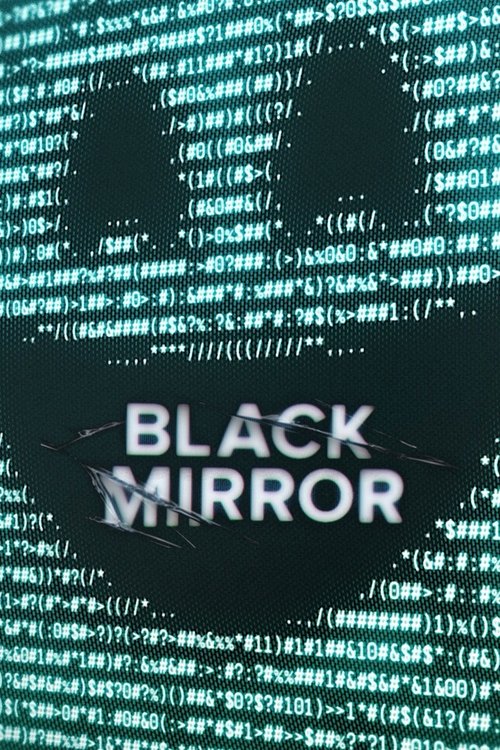
This film draws you in for a significant portion of its runtime with traditional or neutral content before springing its woke agenda. Know before you go!
Black Mirror's dystopian worldview is genuinely bipartisan in its pessimism. Season 7 critiques AI-enabled corporate power, the commodification of grief, and the horrors of unchecked military technology - anxieties that cross political lines. Conservative viewers will find some episodes frustrating and others genuinely resonant.
Black Mirror returns for its seventh season with six new episodes that collectively demonstrate both why the show has endured and why it has never been fully co-opted by any one ideological tendency. Charlie Brooker's anthological format is its own protection: no single thematic agenda can dominate when each episode is a discrete story, and Season 7 uses that flexibility to probe several distinct corners of the technologically anxious present.
The season's most talked-about episodes are its best arguments for why Black Mirror resists simple ideological classification. 'Common People,' written by Rashida Jones (who also stars), follows a couple navigating a healthcare system that has been fully gamified and monetized - a story whose targets include corporate healthcare capitalism in ways that resonate with both left and right critiques of the medical industry. 'Bête Noire' features Paul Giamatti as a corporate executive caught in an AI-assisted gaslighting campaign at his workplace - a scenario whose horror is not ideological but existential, targeting the surveillance and manipulation enabled by algorithmic management systems that exploit people across political categories. 'Hotel Reverie' explores a technology that allows people to physically enter photographs and inhabit the past, starring Emma Mackey and Ayo Edebiri in what becomes a melancholy study of grief and the ethics of simulated intimacy.
The season includes a direct sequel to one of the show's most beloved earlier episodes, 'USS Callister: Into Infinity,' which continues the story of the digital clone crew introduced in Season 4. Will Poulter and Jimmi Simpson return, and the episode grapples with questions about personhood, consent, and what obligations we owe to minds we create - questions that are philosophically rich rather than politically prescriptive.
Where Season 7 picks up some progressive freight: 'Common People' includes a healthcare critique that skews toward single-payer advocacy in its emotional logic. Several episodes feature diverse casts in lead roles presented with a matter-of-factness that reflects Netflix's demographic priorities. But Brooker is too skeptical and too British to produce genuine American progressive propaganda. His dystopias are about human weakness and corporate power, not about social justice warriors or conservative villains. The closest thing to an explicitly political episode is the season's examination of military drone technology, which arrives at antiwar conclusions that have historically been as comfortable on the right as the left.
Conservative viewers who have avoided Black Mirror on ideological grounds should reconsider, at least for Season 7. This is not a show with a uniform political agenda. It is a show with a uniform anxiety about technology's capacity to dehumanize. That anxiety belongs to everyone.
| Trope | Category | Location | Authenticity |
|---|---|---|---|
| Corporate Evil / Surveillance State | WOKE | Bête Noire - AI-enabled corporate gaslighting; multiple episodes involve algorithmic control | Natural. Corporate surveillance critique is the show's core DNA. Not ideologically injected. |
| Healthcare System Critique | WOKE | Common People - gamified healthcare system exploits couple's desperation | Emphasized. The episode's emotional logic favors systemic healthcare reform, though the horror is human rather than purely partisan. |
| Anti-Military Technology | WOKE | Plaything - drone warfare and dehumanization of combatants | Natural. Antiwar critique of autonomous weapons has bipartisan roots. |
| Grief and Loss as Human Universal | TRAD | Hotel Reverie, Eulogy - both episodes center grief and the desire to reconnect with the lost | Organic. The emotional core of both episodes is deeply human and not politically inflected. |
| Defense of Personhood | TRAD | USS Callister: Into Infinity - fight for dignity and freedom of created consciousness | Natural. The episode raises genuine questions about the moral status of minds, consistent with traditional respect for human dignity. |
| Marital Bond Under Pressure | TRAD | Common People - couple faces impossible situation together; love as the reason to fight | Organic. The central couple's devotion to each other drives the emotional engine of the episode. |
| Personal Responsibility vs. Systemic Determinism | TRAD | Multiple episodes - characters make choices that determine their fates; agency matters | Natural. Brooker's characters typically carry real moral agency. |
Director: Multiple directors (anthology)
MIXED - anthology format prevents single director dominanceSeason 7 features different directors per episode: Uta Briesewitz, Euros Lyn, Toby Haynes, and others direct individual installments. The anthology structure means no single director's ideology shapes the whole. This is a key differentiator from single-creator shows.
Writer: Charlie Brooker
Brooker is the creator and primary writer of Black Mirror. He is a British leftist humorist by background - he emerged from Brass Eye and satirical media criticism - but his Black Mirror work is more technologically focused than politically prescriptive. Brooker is not an American-style progressive ideologue; he is a British cynic who finds horror in corporate power, surveillance, and human tribalism regardless of which political tribe is doing it. Season 7 co-writers include Rashida Jones on 'Common People,' which she co-wrote and stars in.
Producers
- Charlie Brooker / Annabel Jones (House of Tomorrow) — Founding production partnership. Brooker writes; Jones produces. No strong independent ideological signal beyond Brooker's own.
- Netflix (Netflix) — Platform funder and distributor. Netflix's content philosophy has leaned progressive but the company has pushed back against activist content following subscriber pressure. No direct editorial imprint on Black Mirror's creative choices.
Full Cast
Fidelity Casting Analysis FAITHFUL
Original anthology IP - no source material for fidelity comparison.
Black Mirror is an entirely original anthology series. Each episode tells a standalone story with no established character canon. As original IP, there is no fidelity concern. The show's diverse cast reflects Netflix's casting approach and Brooker's preference for prestige British and American actors across the ensemble.
Adult Viewer Insight
Black Mirror Season 7 is the show's most emotionally accessible season since Season 3. The 'USS Callister' sequel and 'Bête Noire' are the season's strongest entries and both operate on primarily existential rather than political terms. Conservative viewers will find the healthcare critique in 'Common People' frustrating, but the episode's emotional core - a couple facing an impossible situation together - is deeply human. Brooker is not your ideological enemy. He is a pessimist who distrusts all power, which is a conservative instinct even if Brooker himself doesn't identify it that way.
Parental Guidance
Ages 16+ recommended; some episodes 18+. - Violence: Moderate to strong depending on episode. Military drone episode contains war violence. - Sexual content: Minimal but some adult intimacy in 'Hotel Reverie' - Language: Adult language throughout - Thematic content: AI consciousness, death, grief, corporate surveillance, simulated reality - Not all episodes are equally intense - the anthology format means parents should review individual episode summaries - The show's nihilistic premises can be psychologically unsettling; not recommended for sensitive teens
Find Black Mirror - Season 7 on Amazon Prime Video, rent, or buy:
▶ Stream or Buy on AmazonAs an Amazon Associate, VirtueVigil earns from qualifying purchases.




Community Discussion 0
Subscribe to comment.
Join the VirtueVigil community to share your perspective on this review.