Stranger Things
There was a time when Stranger Things felt like a miracle. In the summer of 2016, Netflix dropped this weird little show about a missing kid in small-town Indiana, and it captured something audiences had been starving for.…
Full analysis below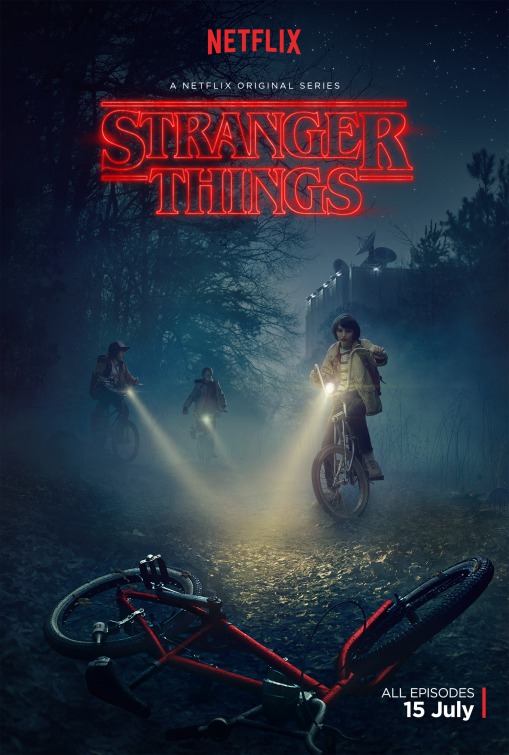
Want to know what's safe to watch? Get our weekly guide to new reviews and woke-free picks. No spam, ever.
This film draws you in for a significant portion of its runtime with traditional or neutral content before springing its woke agenda. Know before you go!
Woke elements increase over seasons but are present from S1 (diverse cast, female empowerment). Audience sees it building gradually, not suddenly.
Our Verdict on Stranger Things
There was a time when Stranger Things felt like a miracle. In the summer of 2016, Netflix dropped this weird little show about a missing kid in small-town Indiana, and it captured something audiences had been starving for. It was nostalgia for a kind of storytelling that Hollywood had largely abandoned. Kids solving problems. Fathers protecting families. Communities pulling together. Good and evil clearly defined.
Season 1 is a near-perfect piece of television from a traditional values perspective. Joyce Byers is a mother whose entire existence collapses into a single primal mission: find her son. Jim Hopper channels his grief into protecting someone else's child. Mike, Dustin, and Lucas are brave, loyal, and resourceful in the way that boys in adventure stories used to be. And Eleven earns her strength through suffering and sacrifice, not through a girlboss speech.
Then comes Season 3, and the ground starts to shift. Robin Buckley comes out as a lesbian in the finale. Season 4 leans harder into Robin's sexuality and Will's unspoken feelings for Mike. By Season 5, the transformation is complete. Will's coming-out scene becomes the emotional centerpiece. His acceptance of his gay identity literally unlocks telekinetic superpowers. The male characters are largely reduced to bumbling sidekicks. The military and government are the real villains.
Here is what makes the Stranger Things woke trap so effective: the traditional elements in Seasons 1 and 2 are genuinely good. They're not cynical bait. The Duffer Brothers clearly have real affection for Spielberg, Stephen King, and the adventure storytelling of the 1980s. But over the course of nine years and five seasons, those traditional elements were slowly hollowed out and replaced. The nuclear family gave way to chosen family. Masculine heroism gave way to female-led action and male buffoonery. The small town went from being a place worth protecting to a place full of bigots.
For conservative viewers who watched this show from the beginning, Stranger Things is a lesson in how long-form storytelling can be weaponized. You invest in the characters. You trust the world. And then, season by season, the world changes around you until you're watching a completely different show than the one you signed up for. Stranger Things started as a celebration of the America conservatives remember. It ended as a lecture about the America progressives want.
Woke Tropes & Content Analysis
Formula: Weighted Score = Severity × Authenticity Multiplier × Centrality Multiplier
🔴 Woke Tropes
| Trope | Severity | Authenticity | Centrality | Score |
|---|---|---|---|---|
| Queer Normalization | 3 | Will's quiet difference was present from S1 but supernatural-powers-through-gay-acceptance is pure progressive fantasy | Medium | 3 |
| The Girl Boss | 3 | Eleven's power was established but broader shift has no narrative justification | Medium | 3 |
| The Bigoted Traditionalist | 3 | Satanic Panic was real but show presents zero townspeople who balance concern with reason | Medium | 3 |
| Institutional Evil | 3 | Government conspiracy is native to the genre but escalation to military-as-primary-antagonist goes beyond convention | Medium | 2.1 |
| Infallible Youth | 3 | Genre convention with progressive amplification | Medium | 2.1 |
| Historical Revisionism | 3 | Universal enthusiastic group acceptance in 1987 rural Indiana strains credulity | Medium | 2.1 |
| Anti-Western Revisionism | 3 | Show's treatment goes beyond complexity into critique | Medium | 3 |
| The Victimhood Meritocracy | 3 | Will's otherness was always present but reframe feels imposed | Medium | 3 |
| The Marginalized Savant | 3 | Queerness equals power, repression equals weakness -- impossible to read as anything other than ideological | Medium | 3 |
| Emasculation Comedy | 3 | All male characters declining while all female characters increase is a pattern | Medium | 2.1 |
| Redeemed Criminal Systemic | 3 | Mixed -- Eddie is well-drawn but used for ideological purposes | Medium | 3 |
| Globalist Utopia | 3 | Presenting found family as ideologically superior to traditional family is an editorial choice | Medium | 2.1 |
| The Therapeutic Resolution | 3 | Prioritizing therapy over heroism is an ideological choice | Medium | 3 |
| TOTAL WOKE | 34.5 | |||
🟢 Traditional Tropes
| Trope | Severity | Authenticity | Centrality | Score |
|---|---|---|---|---|
| Defense of the Innocent | 3 | Genuine and deeply felt, the show cannot function without this traditional foundation | Medium | 2.1 |
| Traditional Femininity | 3 | One of the most honest portrayals of maternal devotion in recent genre television | Medium | 2.1 |
| The Self-Sacrificing Hero | 3 | Genuine -- the show treats these sacrifices with appropriate gravity | Medium | 2.1 |
| Industry and Perseverance | 3 | Genuine and consistent with Spielbergian influences | Medium | 2.1 |
| Wise Elder | 3 | Genuine -- David Harbour's performance is consistently strong | Medium | 2.1 |
| Faith in Adversity | 3 | Genuine in early seasons, completely absent by Season 5 | Medium | 2.1 |
| Restored Home | 3 | Genuine in Seasons 1-2, ideologically reframed by Season 5 | Medium | 2.1 |
| Brotherhood and Loyalty | 3 | Genuine in early seasons, diminished as show progresses | Medium | 2.1 |
| TOTAL TRADITIONAL | 16.8 | |||
Score Margin: -18 WOKE
Director: Matt & Ross Duffer
PROGRESSIVETwin brothers who created and controlled the series across all five seasons. Their progressive content escalates methodically, and they confirmed Will's sexuality was always the planned emotional culmination.
Writer: Matt & Ross Duffer
Also serve as primary writers across all seasons.
Fidelity Casting Analysis FORCED DIVERSITY
Cast diversity increased significantly in later seasons beyond what 1980s rural Indiana demographics would support.
The core cast is appropriate for 1980s Hawkins. Later seasons add characters and expand diversity beyond the demographic reality of rural Indiana in the 1980s. Robin Buckley was specifically created as an LGBTQ vehicle. By Season 5, the cast and ideological framing reflect Netflix progressive content standards more than period accuracy.
Content Breakdown
Adult Viewer Insight
Stranger Things is worth watching, at least the early seasons. Seasons 1 and 2 are genuinely excellent genre television with strong traditional values. Season 3 is the transition point where progressive elements begin but don't yet dominate. Seasons 4 and 5 are where the ideological freight becomes heavy. The most important thing for conservative viewers to understand is the mechanism. This show is the clearest example in modern television of how progressive ideology can be introduced gradually into a fundamentally traditional story. Study it. Notice how the shifts happen. The traditional elements, particularly in the early seasons, are genuinely worth celebrating. The tragedy of Stranger Things is that these genuine strengths were ultimately subordinated to an ideological project the creators valued more.
Parental Guidance
Violence is significant across all seasons with monster attacks, body horror, and character deaths. Season 4 features Vecna killing teenagers by breaking their bones and gouging their eyes. Not appropriate for young children. Increasing LGBTQ content in Seasons 4-5, culminating in Will's coming-out and the explicit linking of gay identity to superpowers. Moderate profanity throughout. Teen drinking, smoking, and marijuana use depicted. Seasons 1-2 are appropriate for 12+ with parental engagement. Seasons 3-4 are 14+ with parental awareness of progressive content. Season 5 is 14+ with active parental discussion about ideological elements.
Is Stranger Things Safe for Kids?
TV-14 for horror violence, language, and thematic elements. The Duffer Brothers' 1980s nostalgia horror series. Monster violence, government conspiracy, and supernatural threat. Language moderate. Recommended for ages 14+. The show celebrates friendship, loyalty, and the courage of kids facing adult horrors. The values are traditional beneath the genre trappings.
Find Stranger Things on Amazon Prime Video, rent, or buy:
▶ Stream or Buy on AmazonAs an Amazon Associate, VirtueVigil earns from qualifying purchases.
Debate Question
Was Stranger Things always drifting toward woke tropes, or did the show change as the cultural moment shifted around it?



Community Discussion 0
Subscribe to comment.
Join the VirtueVigil community to share your perspective on this review.