
Bridgerton: Season 4
Bridgerton Season 4 is a Cinderella story set in a version of Regency England that has no memory of actual Regency England.…
Full analysis below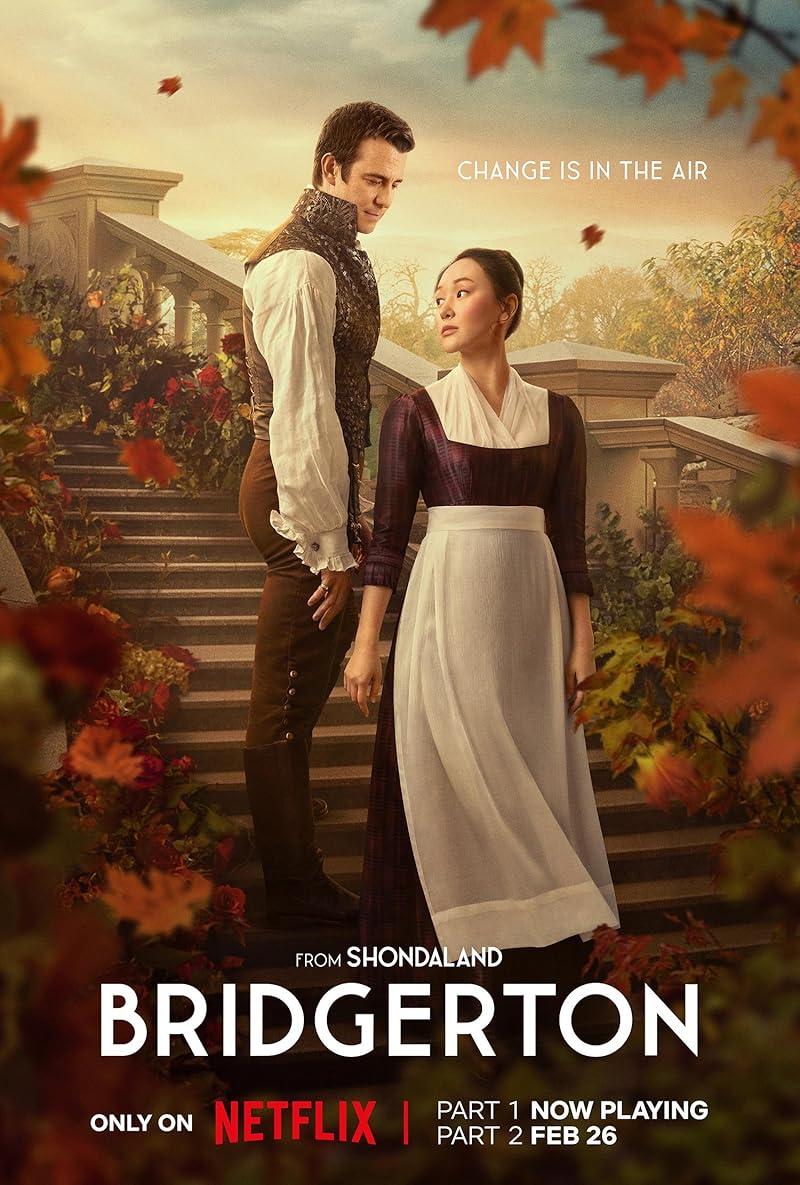
This film draws you in for a significant portion of its runtime with traditional or neutral content before springing its woke agenda. Know before you go!
Bridgerton's progressive reimagining of Regency England has been its defining characteristic since Season 1. Benedict's bisexuality is referenced in the opening episode. The racially integrated, post-racial Regency world is established franchise furniture. No hidden elements deployed after the halfway mark.
Bridgerton Season 4 is a Cinderella story set in a version of Regency England that has no memory of actual Regency England. This has been the franchise's operating premise since Season 1: take the beautiful architecture, the costumes, the balls, and the romantic tension, and strip away the social realities that made that world interesting. The result is a fantasy that works as comfort viewing if you are not asking too many questions.
Benedict Bridgerton (Luke Thompson) is the second son of the family: artistic, romantic, and reluctant to settle down. He meets a mysterious woman in silver at a masquerade ball, dances with her, and loses her when she vanishes at midnight. The Cinderella structure is deliberate and unabashed. The woman is Sophie Baek (Yerin Ha), an illegitimate daughter who has been reduced to a servant in her stepmother's household. When they meet again in society, neither recognizes the other. The deception drives the season's central tension.
Luke Thompson has always been Bridgerton's most interesting lead, and this season proves it. His Benedict is genuinely romantic without being saccharine. He has an artist's interiority that makes his passion for Sophie feel earned rather than scripted. Yerin Ha matches him: Sophie is a harder character to play (she requires simultaneous competence, vulnerability, and moral clarity) and Ha delivers it.
The Cinderella structure has both advantages and limitations. The advantage: there is a romantic architecture here that Shonda Rhimes and her team understand how to build. The masquerade, the lost glove, the midnight departure, the second meeting, the slowly dissolving disguise: these are pleasing mechanical parts that function. The season has genuine romantic scenes that justify the 280 million hours of viewership. The limitation: the class commentary that the show wants to smuggle in does not fit the fantasy framework. If Sophie can move through Regency society as a disguised servant, attend balls, and interact with aristocrats without consequences, then the class system the show claims to be critiquing has no real teeth. You cannot have both the Cinderella fantasy and the serious class analysis.
Benedict's bisexuality is referenced in the season opener and then largely set aside. The Brown Daily Herald correctly identified this as the show's approach: acknowledge it, then move on to the heterosexual romance that the Cinderella plot requires. It is performative inclusion rather than genuine character development. Conservative viewers will be relieved it is not central; progressive viewers will be disappointed it is not explored. Both are right.
The show's post-racial Regency England continues to frustrate on both sides of the political divide. Sophie Baek is Korean in this adaptation, which produces a genuine visual contrast with Benedict's white English aristocrat family. The show treats this as unremarkable, which is both its strength and its intellectual weakness. By pretending the Regency world had no racial hierarchy, the show cannot engage seriously with the class hierarchy it claims to examine. Refinery29's critique, that the show's post-racial fantasy actually obscures the labor that makes Benedict's leisure possible, is the most intelligent observation about Season 4. The show wants to have it both ways: the romance of aristocratic life and the moral credit of critiquing it.
For conservative viewers: Bridgerton Season 4 is a romance show, and its romantic craft is its genuine strength. If you liked previous seasons, you will like this one. If you found previous seasons' progressive reimagining of history irritating, Season 4 adds a bisexuality reference and a class commentary that does not commit to its own implications. The sexual content is explicit by network standards but restrained compared to previous Bridgerton seasons.
Formula: Weighted Score = Severity × Authenticity Multiplier × Centrality Multiplier
🔴 Woke Tropes
| Trope | Severity | Authenticity | Centrality | Score |
|---|---|---|---|---|
| Post-Racial Historical Fantasy / Revisionist Regency | 4 | Low | High | 10.08 |
| Bisexual Protagonist (Referenced, Not Developed) | 3 | Low | Low | 2.1 |
| Class Critique of Aristocracy / Wealth as Exploitation | 3 | Moderate | Moderate | 3 |
| TOTAL WOKE | 15.2 | |||
🟢 Traditional Tropes
| Trope | Severity | Authenticity | Centrality | Score |
|---|---|---|---|---|
| Cinderella / Romance Structure as Traditional Story Form | 4 | High | High | 5.04 |
| Marriage and Settlement as Desirable Endpoint | 4 | High | Moderate | 2.8 |
| Sophie's Virtue and Work Ethic | 3 | High | Moderate | 2.1 |
| TOTAL TRADITIONAL | 9.9 | |||
Score Margin: -6 WOKE
Director: Various (Showrunner: Jess Brownell)
CENTER-LEFT. Jess Brownell took over as showrunner from Shonda Rhimes's Shondaland operation beginning in Season 3. Brownell has spoken about wanting to give each season's central couple a distinct emotional landscape. No strong personal ideological reputation beyond the franchise's established progressive-romance brand.Jess Brownell became lead showrunner for Bridgerton Season 3 after Chris Van Dusen's departure. She came from the Shondaland writers room. Season 4 represents her second full season running the show, and the critical consensus is that she has stabilized the quality after Season 3's mixed reception.
Adult Viewer Insight
Conservative adults who want a romance that honors the Regency aesthetic without the historical reality will find Season 4 functional for that purpose. Benedict is the most sympathetic male lead Bridgerton has produced: artistic, genuinely romantic, and clearly in love rather than simply in pursuit. The Cinderella structure is the most traditionally conservative story shape the show has used. The bisexuality reference is handled as a character note rather than an identity arc, which means conservative viewers are not being lectured to and progressive viewers are being handled gently. The show's failure to commit to its class commentary actually benefits conservative viewers: the Regency world looks beautiful, the servants are treated with dignity, and nobody is being told that loving luxury is a political sin for more than one scene at a time.
Parental Guidance
TV-MA. Previous Bridgerton seasons were known for explicit sexual content; Season 4 is somewhat more restrained but still TV-MA. Adult content includes: graphic depictions of intimacy between Benedict and Sophie; brief reference to Benedict's past bisexual experience; the class-stratified world of Regency England depicted with period-appropriate double standards; some strong language. Not appropriate for viewers under 16. The romance is emotionally positive and depicts a developing love story rather than casual sex. Parents who watched earlier seasons with older teenagers should apply the same standard here.
Find Bridgerton: Season 4 on Amazon Prime Video, rent, or buy:
▶ Stream or Buy on AmazonAs an Amazon Associate, VirtueVigil earns from qualifying purchases.
Community Discussion 0
Subscribe to comment.
Join the VirtueVigil community to share your perspective on this review.