Captain America: Brave New World
Captain America: Brave New World is a Frankenstein's monster of a movie, stitched together from at least three different scripts, multiple rounds of reshoots, and the remnants of a 2008 plotline nobody was asking to resolve. The core problem isn't wokeness. It's competence.…
Full analysis below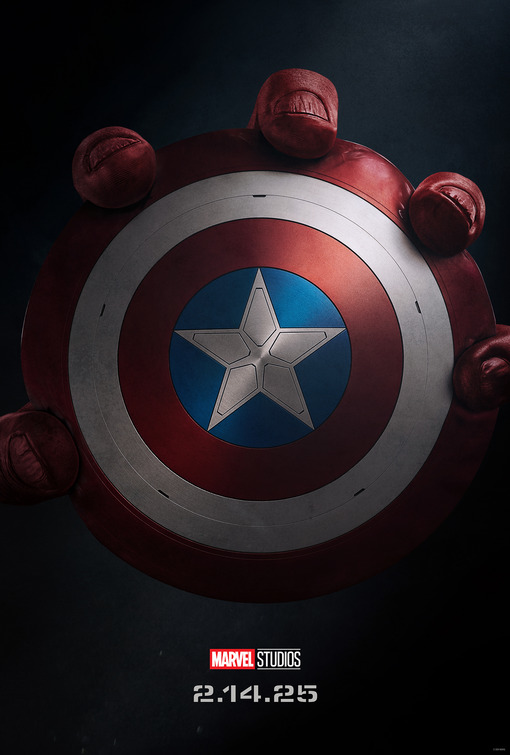
This film draws you in for a significant portion of its runtime with traditional or neutral content before springing its woke agenda. Know before you go!
The entertaining superhero framework and charismatic leads paper over persistent racial subtext and institutional evil framing. Conservative viewers who didn't watch Falcon and the Winter Soldier may not immediately clock the subtext.
Captain America: Brave New World is a Frankenstein's monster of a movie, stitched together from at least three different scripts, multiple rounds of reshoots, and the remnants of a 2008 plotline nobody was asking to resolve. The core problem isn't wokeness. It's competence. The film doesn't know what it wants to be.
Anthony Mackie deserves better. The man is genuinely charismatic, physically committed, and capable of carrying a franchise. Harrison Ford brings exactly what you'd expect: gruff, commanding, and instantly credible as a president with secrets. His transformation into Red Hulk is the film's best visual sequence, and the scene where Sam talks him down by reminding him of cherry blossoms with his daughter Betty is the emotional high point.
The action is where things go sideways. Sam Wilson does not have super soldier serum, yet he survives G-forces that should liquify him and holds his own against a rampaging Hulk. Shira Haas as Ruth Bat-Seraph is roughly five feet tall and the film expects us to believe she can launch two-hundred-pound men across rooms. Tim Blake Nelson's Leader looks like a radioactive sweet potato.
The racial subtext deserves honest assessment. Isaiah Bradley, the Black super soldier experimented on by the U.S. government, is a recurring presence. When President Ross calls Sam "son," Sam reacts with tension clearly coded as racial. The Japanese Prime Minister's line about America being "a country used to taking what it wants" is presented as righteous truth. None of this is fabricated in isolation, but the cumulative effect creates a political subtext that conservative viewers will find impossible to ignore.
The film grossed $415 million worldwide, technically profitable but deeply disappointing for a Captain America film. Conservative viewers who can stomach the racial subtext will find a serviceable superhero film carried by two charismatic leads. The traditional elements, including Sam's loyalty, the father-daughter reconciliation, and accountability for leaders, are genuine but insufficient to overcome the film's structural problems and ideological freight.
| Trope | Category | Location | Authenticity |
|---|---|---|---|
| The Victimhood Meritocracy | WOKE | Throughout -- Isaiah Bradley's storyline positions America's treatment of Black super soldiers as defining moral failure | Mixed -- based on real history and comics canon but emphasis is editorially modern |
| Institutional Evil | WOKE | Throughout -- Government imprisoned and experimented on Bradley, imprisoned Sterns, President is literally a monster | Mixed -- real institutions have real failures but totality of corruption is editorial |
| The Girl Boss | WOKE | Multiple action sequences -- Five-foot-tall Ruth Bat-Seraph launches 200-pound men across rooms | Fabricated -- human biomechanics do not work this way |
| Diversity Retrofit | WOKE | Throughout -- Supporting cast assembled with visible demographic quotas | Mixed |
| Anti-Western Revisionism | WOKE | Summit sequence -- Japanese PM declares America is a country used to taking what it wants | Mixed -- critique has real-world basis but presented one-dimensionally |
| The Bigoted Traditionalist | WOKE | Son scene -- Ross calling Sam son charged with racial significance by the writers | Mixed -- the scene's racial coding is the writers' editorial choice |
| The Legacy Replacement | WOKE | Entire film -- Sam replaces Steve Rogers with race positioned as central to his experience | Mixed -- Sam was Captain America in comics but MCU choice influenced by diversity priorities |
| Redeemed Criminal Systemic | WOKE | Sterns storyline -- Villain partially sympathetic because government broke its promise | Mixed |
| Defense of the Innocent | TRADITIONAL | Throughout -- Sam shields civilians, intercepts planes, risks his life without superpowers | Authentic -- Captain America's core identity preserved |
| The Self-Sacrificing Hero | TRADITIONAL | Multiple sequences -- Sam risks mortal danger without super soldier protection, Torres critically injured | Authentic |
| Father-Daughter Reconciliation | TRADITIONAL | Climax -- Sam talks Red Hulk down by reminding Ross of cherry blossoms with Betty | Authentic -- built on seventeen years of MCU continuity |
| Accountability for Leaders | TRADITIONAL | Final act -- Ross resigns and has himself incarcerated, accepts consequences | Authentic |
| Industry and Perseverance | TRADITIONAL | Throughout -- Sam perseveres without superpowers, refuses the serum as principled choice | Authentic |
Director: Julius Onah
PROGRESSIVENigerian-American filmmaker. His most significant prior work, Luce, is explicitly about race in America. His selection to direct a Black Captain America film was intentional.
Writer: Rob Edwards, Malcolm Spellman & Dalan Musson, Julius Onah & Peter Glanz
Committee screenplay with five credited writers. Spellman carried over from Falcon and the Winter Soldier is responsible for the MCU's most explicit engagement with race.
Fidelity Casting Analysis DIVERGENT
Sam Wilson as Captain America bypasses the more narratively logical choice of Bucky Barnes; supporting cast features heavy artificial diversity.
The original Captain America is a white man from Brooklyn chosen for moral character. Sam Wilson in the comics eventually carries the shield, but the MCU's choice of Sam over Bucky Barnes was clearly influenced by diversity priorities. Mackie is excellent in the role. Ruth Bat-Seraph is stripped of most Israeli identity. Harrison Ford as Ross is excellent casting.
Adult Viewer Insight
Conservative adult viewers should approach Brave New World as a deeply flawed but occasionally entertaining superhero film that carries persistent racial subtext. The film's strongest moments are its most traditional: Sam's genuine heroism, the Ross-Betty reconciliation, and the theme of accountability for leaders. For viewers who can compartmentalize, Mackie and Ford deliver genuinely good performances worth seeing. For viewers who found Falcon and the Winter Soldier's racial themes off-putting, Brave New World offers more of the same, just slightly quieter.
Parental Guidance
Rated PG-13 for intense sequences of violence and action. Standard MCU fare: gunfights, explosions, superhero combat. The Red Hulk transformation may frighten younger children. A character is killed and another seriously injured. No sexual content, substance use, or strong language. For conservative parents, the racial subtext is worth discussing with older children. The Isaiah Bradley storyline presents historically grounded material with modern progressive framing. The film presents a U.S. president who is literally a monster underneath his human exterior. Appropriate for children 10 and up. Ideological discussion recommended for 12 and up.
Find Captain America: Brave New World on Amazon Prime Video, rent, or buy:
▶ Stream or Buy on AmazonAs an Amazon Associate, VirtueVigil earns from qualifying purchases.
Community Discussion 0
Subscribe to comment.
Join the VirtueVigil community to share your perspective on this review.