Captain America: Brave New World
Captain America: Brave New World is a deeply confused film that cannot decide whether it wants to be a political thriller, a superhero spectacle, or a meditation on race in America. It tries to be all three and succeeds fully at none of them.…
Full analysis below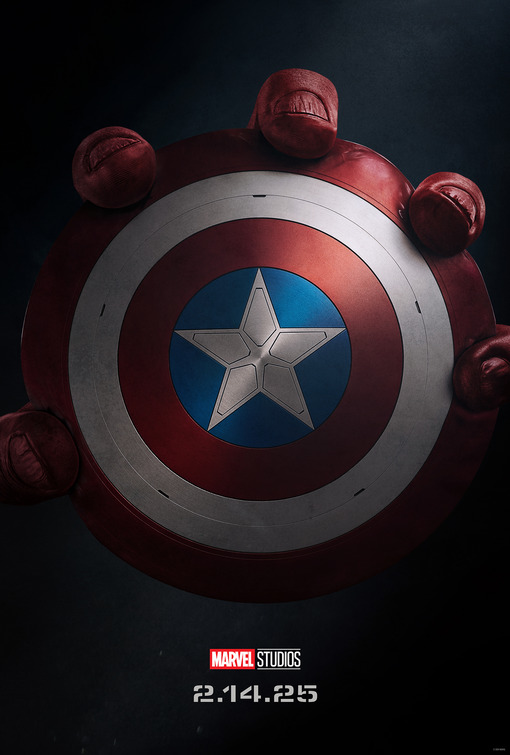
This film draws you in for a significant portion of its runtime with traditional or neutral content before springing its woke agenda. Know before you go!
NOT A WOKE TRAP. The woke content in Captain America: Brave New World is not hidden. Anyone who watched the trailers, read the casting announcements, or saw The Falcon and the Winter Soldier knows exactly what ideological framework this film operates within. The racial subtext, the legacy replacement, the girl boss action sequences - none of it is smuggled in after the halfway mark. Conservative viewers can make an informed decision before buying a ticket. The marketing is honest about what this film is.
Captain America: Brave New World is a deeply confused film that cannot decide whether it wants to be a political thriller, a superhero spectacle, or a meditation on race in America. It tries to be all three and succeeds fully at none of them. The result is a $180 million production that grossed $415 million worldwide - technically profitable, but a catastrophic underperformance for a Captain America title and a clear signal that audiences are not buying what Marvel is currently selling.
Anthony Mackie deserves better than what this film gives him. The man is genuinely charismatic, physically committed, and emotionally grounded. When the script lets him be Captain America - shielding civilians, making impossible choices, standing up when everyone else runs - he is magnetic. Harrison Ford, at 82, brings exactly the gruff commanding presence you would expect. His Red Hulk transformation is the film's best visual sequence, and the climax where Sam talks him down by invoking cherry blossom walks with his daughter Betty is the one scene that earns genuine emotion.
The problems start with the script. Five credited writers produced a Frankenstein's monster of competing narratives. There is the Serpent Society arms-dealing subplot. There is the adamantium treaty geopolitical thriller. There is the Leader's revenge scheme. There is the Isaiah Bradley racial injustice throughline. There is the Red Hulk body horror story. None of these threads receive adequate development because the film is too busy servicing all of them simultaneously. The reshoots are visible. The pacing lurches. Plot points appear and vanish like a game of narrative whack-a-mole.
The action is where the film's credibility collapses. Sam Wilson explicitly does not have the super soldier serum - the film brings this up multiple times as a character point. Yet he survives G-forces that should turn his organs to pudding, walks off broken ribs and deep stab wounds, and goes toe-to-toe with a rampaging Hulk. The disconnect between what the script tells us and what the screen shows us is constant and distracting. Shira Haas as Ruth Bat-Seraph is a talented actress trapped in a physically absurd role - a woman who appears to weigh 80 pounds launching full-grown men across rooms like ragdolls. Tim Blake Nelson's Leader looks like a hemorrhoid gained sentience and enrolled in community college. The villain design is genuinely terrible.
The woke content is real but not as overwhelming as some conservative commentators have claimed. The Isaiah Bradley storyline - a Black super soldier imprisoned and experimented on by the American government - is drawn from the comics and based loosely on real history (the Tuskegee experiments). It runs throughout the film as subtext rather than dominating the plot. When President Ross calls Sam 'son,' the scene is coded with racial tension. The Japanese Prime Minister's declaration that America is 'a country used to taking what it wants' is presented as righteous critique rather than diplomatic posturing. Ruth Bat-Seraph has been scrubbed of her Israeli Sabra identity from the comics. The supporting cast reflects visible demographic engineering.
But the traditional elements are also genuine. Sam Wilson is a legitimate hero who risks his life without superpowers because it is the right thing to do. The father-daughter reconciliation between Ross and Betty provides real emotional weight. Ross ultimately holds himself accountable - resigning the presidency and voluntarily incarcerating himself at the Raft. Sam's loyalty to his friends, his refusal to give up on people even when they become literal monsters, and his moral clarity in the face of corruption are classically heroic qualities that the film, despite its ideological baggage, never undermines.
The verdict: Captain America: Brave New World leans woke but is not a woke disaster. It is a mediocre film with genuine progressive framing that also contains authentic traditional heroism. Conservative viewers who can stomach the racial subtext will find a serviceable superhero movie carried by two excellent lead performances. Conservative viewers who found The Falcon and the Winter Soldier off-putting should skip this entirely - Brave New World is a direct continuation of that show's ideological project, just with better action and worse villains.
Formula: Weighted Score = Severity × Authenticity Multiplier × Centrality Multiplier
🔴 Woke Tropes
| Trope | Severity | Authenticity | Centrality | Score |
|---|---|---|---|---|
| The Legacy Replacement | 3 | Mixed | High | 3.78 |
| Institutional Evil | 4 | Mixed | High | 5.04 |
| The Girl Boss | 3 | Fabricated | Medium | 2.38 |
| The Victimhood Narrative | 3 | Mixed | Medium | 2.38 |
| Racial Subtext Coding | 2 | Mixed | Medium | 1.68 |
| Anti-Western Revisionism | 2 | Mixed | Low | 1.26 |
| Diversity Retrofit | 2 | Mixed | Low | 1.26 |
| Sympathetic Systemic Villain | 2 | Mixed | Low | 1.26 |
| TOTAL WOKE | 19.0 | |||
🟢 Traditional Tropes
| Trope | Severity | Authenticity | Centrality | Score |
|---|---|---|---|---|
| The Self-Sacrificing Hero | 4 | High | High | 6.35 |
| Father-Daughter Reconciliation | 4 | High | High | 6.35 |
| Defense of the Innocent | 3 | High | Medium | 3.78 |
| Accountability for Leaders | 3 | High | Medium | 3.78 |
| Perseverance Without Advantage | 2 | High | Medium | 2.52 |
| TOTAL TRADITIONAL | 22.8 | |||
Score Margin: -4 WOKE
Director: Julius Onah
PROGRESSIVE. Onah's most notable prior work is Luce (2019), a film explicitly about race, identity, and the expectations placed on Black men in America. His selection to direct a Captain America film centered on a Black protagonist was clearly intentional thematic alignment by Marvel Studios.Nigerian-American filmmaker born in Nigeria and raised in the United States. Onah studied at Middlebury College and NYU's Tisch School of the Arts. His feature debut The Girl Is in Trouble (2015) was a low-budget noir. The Cloverfield Paradox (2018) was a troubled production that went straight to Netflix. Luce (2019), starring Octavia Spencer and Naomi Watts, was his breakthrough - a film about a Black student whose seemingly perfect persona conceals deeper complexities about race in America. Onah also co-wrote the Brave New World screenplay with Peter Glanz, making him unusually influential over the film's ideological direction for a Marvel director. He described empathy as Sam Wilson's superpower and wanted to use the character's emotional intelligence to resolve political conflict.
Writer: Rob Edwards, Malcolm Spellman & Dalan Musson, Julius Onah & Peter Glanz
A five-writer committee reflecting the film's troubled development. Malcolm Spellman is the key ideological voice - he created and showran The Falcon and the Winter Soldier, the MCU's most explicit engagement with race in America, including the Isaiah Bradley storyline about a Black super soldier experimented on by the U.S. government. Dalan Musson co-wrote that series. Rob Edwards wrote Treasure Planet and The Princess and the Frog for Disney. Peter Glanz is an indie filmmaker (The Longest Week). The committee structure shows in the film's uneven tone - there are at least three different movies stitched together, and the seams are visible.
Adult Viewer Insight
Conservative adults should calibrate expectations carefully. This is not The Marvels or Eternals level woke. The progressive content is persistent but not preachy in the Falcon and the Winter Soldier sermon-at-the-end sense. The strongest moments are genuinely traditional: Sam's selfless heroism, the Ross-Betty reconciliation, and the accountability theme. Mackie and Ford are both worth watching. The film's biggest sin is not its ideology but its incompetence - five writers, multiple reshoots, and a villain who looks like a mutant vegetable. If you can separate the performers from the production, there are good performances here. If the racial subtext of Falcon and the Winter Soldier bothered you, this film carries the same DNA at a slightly lower volume.
Parental Guidance
Rated PG-13 for sequences of violence and action. Standard MCU intensity: gunfights, explosions, superhero combat, one on-screen death, one critical injury. The Red Hulk transformation is the scariest scene and may frighten children under 8. Mind control sequences where innocent people are compelled to shoot at others are unsettling. No sexual content, strong language, or substance use. The racial and political subtext is worth discussing with children 12 and older. The Isaiah Bradley storyline presents real American history through a progressive editorial lens. The President-as-literal-monster metaphor is not subtle. For conservative families, this is a film best watched with older children who can engage critically with the framing rather than absorb it passively.
Find Captain America: Brave New World on Amazon Prime Video, rent, or buy:
▶ Stream or Buy on AmazonAs an Amazon Associate, VirtueVigil earns from qualifying purchases.
Community Discussion 0
Subscribe to comment.
Join the VirtueVigil community to share your perspective on this review.