
Despicable Me 4
Despicable Me 4 is the franchise at its most comfortable and its most predictable. That is not entirely a bad thing.
Full analysis below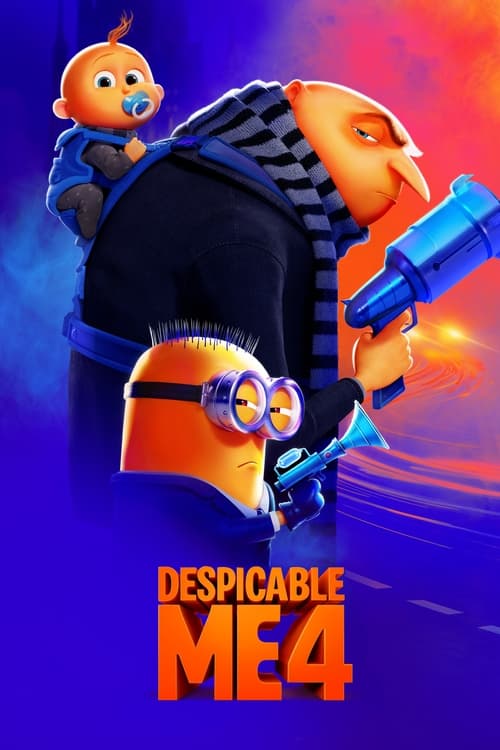
Conservative families can watch this without concern. Gru is a devoted father and husband. The story is about protecting family at great personal cost. The new baby subplot reinforces rather than subverts traditional family bonds. No agenda here.
Despicable Me 4 is the franchise at its most comfortable and its most predictable. That is not entirely a bad thing.
Chris Renaud, who directed the original Despicable Me and has shaped Illumination's aesthetic since the beginning, brings the fourth installment home with the same visual energy and gag-per-minute pace that made the franchise a billion-dollar machine. The film is not going to surprise anyone who has seen the previous entries. It does not try to. What it does instead is deliver exactly what families expect: Gru being a slightly incompetent but deeply devoted father, Minions causing chaos in imaginative ways, and a new villain who exists primarily as a foil for the comedy rather than a genuine threat.
The story picks up with Gru and Lucy settled into domestic life with their three adopted daughters and the new arrival of Gru Jr., an infant who seems genetically programmed to torment his father. When Gru arrests his old school rival Maxime Le Mal at a class reunion, Maxime escapes prison and comes after Gru's family. The Anti-Villain League relocates the entire household to a suburban safe house under new identities. This setup gives the film most of its humor: Gru trying to pass as a normal suburban dad while a teenage neighbor named Poppy figures out who he really is and blackmails him into helping her with a villain heist.
Will Ferrell is well cast as Maxime Le Mal, a French villain who has grafted cockroach DNA into himself and can transform others into cockroach hybrids. This is exactly the kind of cheerfully absurd concept that Illumination does well. Ferrell's buffoon energy suits the character, and Sofia Vergara as his girlfriend Valentina is having visible fun with the role. Neither character is remotely threatening, which is by design. This is comedy, not action.
The film runs two subplots in parallel. Five Minions are selected for a superhero experiment called the Mega Minions, which gives them powers ranging from fire to lightning to size manipulation. Their sequences are the most visually inventive parts of the movie and function as essentially standalone Minions shorts within the larger film. The other subplot involves Gru Jr. spending time with Maxime and Valentina after an accidental mix-up, which gives Gru his emotional arc: a father desperate to protect a baby who does not yet like him.
The fatherhood theme is the film's most genuinely effective element. Gru's relationship with Gru Jr. echoes his original journey with Margo, Edith, and Agnes in the first film, where a man who never wanted children discovers that protecting and loving them is his purpose. Carell plays these moments with real warmth underneath the comedic exterior. When Gru risks everything to get his infant son back from the villains, the film briefly earns its emotional beats.
What it does not earn is the subplot about Poppy. Joey King is energetic and funny as the aspiring teenage villain, but her arc does not resolve in a satisfying way. The heist they pull together is clever, and her dynamic with Gru works as comedy, but the film does not give her story a proper conclusion. She appears to be set up for a future installment rather than resolved within this one.
For conservative families this is uncomplicated viewing. Gru is the patriarch who holds everything together by willingness to sacrifice his own comfort, safety, and identity for his family. Lucy is a devoted partner and capable agent. The three daughters are not political mouthpieces. The humor is physical and appropriate for children. There is no moral ambiguity about the villains, no lectures about social justice, and no attempt to insert modern identity politics into a story about a bald supervillain and his yellow assistants.
The box office result says everything: $972 million worldwide. Families showed up. They got what they came for. Despicable Me 4 is not a film that is trying to change anyone's mind about anything. It is trying to make children laugh and give parents 94 minutes of safe, unchallenging entertainment. On those terms, it succeeds.
| Trope | Category | Location | Authenticity |
|---|---|---|---|
| The Nuclear Family Protector | TRADITIONAL | Throughout - Gru's entire arc is protecting his wife, daughters, and infant son from a dangerous villain who targets them specifically because of him | Authentic. This has been Gru's defining arc since Despicable Me 1 (2010). The franchise is built on the premise that a supervillain's greatest achievement was becoming a father. The fourth film deepens this by adding a new infant and giving Gru a son who mirrors his own early prickliness. |
| Fatherhood as Redemption | TRADITIONAL | Gru Jr. arc throughout - Gru's relationship with his infant son mirrors his original arc with the three girls; the baby torments him but Gru risks everything to protect him | Authentic. The franchise's central thesis is that fatherhood transforms Gru from a villain into a hero. Each installment revisits this theme with a new variation. Here it is the infant who does not yet love him but whom Gru loves anyway. This is genuinely touching when played straight. |
| Industry and Perseverance | TRADITIONAL | Poppy Prescott subplot - a teenager who pursues her goals with resourcefulness and determination, even using blackmail as a tool; her heist planning shows genuine competence | Authentic. Poppy is written as an aspiring villain following in Gru's footsteps, but her drive and self-sufficiency are coded as admirable even if misdirected. The film treats her entrepreneurial spirit with affection. |
| Comedy Without Agenda | TRADITIONAL | Throughout - physical comedy, slapstick, sight gags, and Minion chaos carry the film with no political subtext | Authentic. Illumination's entire brand is built on politically neutral, broadly appealing comedy. The humor in Despicable Me 4 is not trying to score points on any cultural debate. Cockroach transformations, Minion superpowers, and suburban identity deception are the extent of its ambition. |
| Devoted Spouse | TRADITIONAL | Lucy and Gru throughout - married couple who function as a genuine team; Lucy is capable and present, not sidelined or tokenized | Authentic. Lucy has been Gru's partner since Despicable Me 2. She is given her own agency in this film while remaining a committed wife and mother. The marriage is presented as functional and loving without irony. |
| Buffoon Villain (Defanged Threat) | TRADITIONAL | Maxime Le Mal and Valentina throughout - the villains are funny and incompetent rather than genuinely menacing, which allows the film to stay in pure comedy territory | Authentic. Will Ferrell and Sofia Vergara play the villains as delightful absurdist comedic characters. The cockroach powers are gross-out funny, not frightening. This is a feature, not a flaw - Illumination knows its audience. |
| Celebrity Progressive Casting | WOKE | Stephen Colbert as Perry Prescott - off-screen Colbert is one of America's most prominent progressive political commentators; his casting signals studio comfort with progressive celebrity | Minor. Colbert's real-world politics are irrelevant to his character, who is a cheerful suburban dad with no political content whatsoever. This is a trace-level concern at most. |
| Mike White Co-Credit | WOKE | Writing credit - White Lotus creator Mike White co-wrote the script; White is known for progressive social satire | Minimal. The White Lotus aesthetic is entirely absent from this film. White wrote to the franchise's commercial constraints. His co-credit is a creative team signal that does not manifest as content. |
Director: Chris Renaud
GENRE-NEUTRAL - animated entertainment director, no political signalChris Renaud has directed Despicable Me (2010), The Lorax (2012), Despicable Me 2 (2013), The Secret Life of Pets (2016), and now Despicable Me 4. He is an Illumination franchise workhorse whose entire career exists in family-friendly animation. He has no political projects on his resume and no public ideological statements. His films prioritize broad physical comedy, colorful aesthetics, and commercially safe family storytelling. Ideological tendency: NEUTRAL.
Writer: Mike White and Ken Daurio
Mike White is best known as the creator of White Lotus and Enlightened, both of which carry progressive social commentary. His involvement in a children's animated film is unusual and his White Lotus fingerprints are not visible in Despicable Me 4 - this is a commercial work-for-hire, not an auteur project. Ken Daurio co-wrote Despicable Me 1 and 2, and his track record in the franchise is audience-friendly and apolitical. The combination produces a functional family comedy script without ideological content.
Producers
- Chris Meledandri (Illumination) — Meledandri founded Illumination in 2007 and has built it into one of the most commercially successful animation studios in the world. His philosophy is audience-first: broad comedy, minimal controversy, maximum box office. Illumination has never produced a film with a woke ideological agenda. This is not a political company. Commercial entertainment is their only metric. Ideological signal: NEUTRAL.
- Brett Hoffman (Illumination) — Illumination executive producer. No independent ideological signal.
Full Cast
Fidelity Casting Analysis N/A - ORIGINAL IP
Despicable Me is an original franchise with no source material to adapt. Fidelity casting analysis does not apply. The film's casting reflects Illumination's standard practice of hiring established comedy voices regardless of their political profiles. Will Ferrell and Sofia Vergara as French-accented villains is a straightforward casting choice for comedic effect, not a political statement.
Steve Carell (Gru): Carell has been the voice of Gru since 2010. His comedic commitment to the faux-Eastern-European accent and childlike emotional range defines the franchise. Kristen Wiig (Lucy): Returns as Gru's wife and fellow AVL agent. Will Ferrell (Maxime Le Mal): Classic Ferrell buffoon-villain energy, well cast. Joey King (Poppy Prescott): The teenager who blackmails Gru into helping her pull a heist. Lively comedic performance. Sofia Vergara (Valentina): Vergara as the femme-fatale villain girlfriend leans into her own natural accent for comedic effect.
Adult Viewer Insight
Conservative adults can sit back and enjoy this one without monitoring for subtext. Illumination has never been an ideologically ambitious studio and Despicable Me 4 continues that pattern. The film's values are entirely conventional: family protection, fatherhood, loyalty, and the comedic chaos of domestic life. The one casting note worth mentioning is Stephen Colbert as Perry Prescott, Poppy's suburban dad. Colbert is one of the most prominent progressive voices in American entertainment. His presence here carries zero political weight inside the film - he plays a cheerful suburban neighbor and nothing he says or does reflects his real-world politics. This is a reminder that celebrity casting and celebrity politics are not the same thing. Colbert is funny in the role precisely because he plays against his own media persona. Mike White's involvement as co-writer is the only element that might give conservative viewers pause. White created White Lotus, which is a sharp satire of wealthy liberal guilt. But Despicable Me 4 shows none of his auteur sensibility. This is a commercial franchise entry written to spec. The sharper corners of White's voice are entirely absent. When talented writers work in the studio animation system, the system wins. The Mega Minions subplot is the film's purest pleasure. Illumination has always known that the Minions are the franchise's real stars, and giving five of them distinct superpowers and a city to accidentally destroy is exactly the kind of escalation that works. Parents who have been watching Minion content for fifteen years will recognize why these sequences land. Bottom line: this is exactly what it says on the tin.
Parental Guidance
Rated PG. Suitable for all ages with minimal concerns. Violence: Very mild. Slapstick cartoon violence throughout. Cockroach transformation sequences are mildly gross. No blood, no genuine menace. The Mega Minions cause city-scale property destruction played entirely for laughs. Sexual Content: None whatsoever. Language: None. Standard Illumination clean content. Scary Content: The cockroach transformation concept might unsettle very young children or children with insect phobias. Nothing genuinely frightening. Substance Use: None. Age Recommendations: Appropriate for all ages. Ideal for 5-10 year olds. Older children may find it too familiar. Discussion Guidance: (1) Gru puts his family's safety above his own identity and reputation. What does that say about what it means to be a good parent? (2) Maxime Le Mal uses technology to give himself abilities he did not earn. How does that compare to Gru, who relies on his actual skills and relationships? (3) The Minions are loyal to Gru even when he is not around. What does loyalty actually mean?
Find Despicable Me 4 on Amazon Prime Video, rent, or buy:
▶ Stream or Buy on AmazonAs an Amazon Associate, VirtueVigil earns from qualifying purchases.

Community Discussion 0
Subscribe to comment.
Join the VirtueVigil community to share your perspective on this review.