
Frozen
Disney's Frozen is both less radical and more subversive than its reputation suggests.…
Full analysis below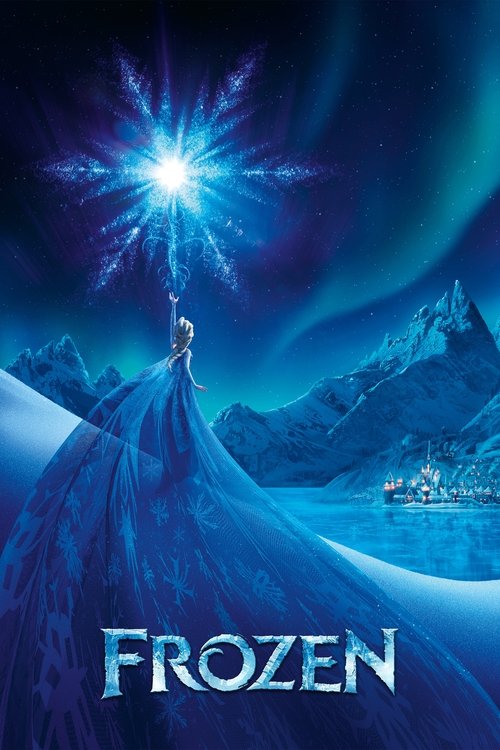
NOT A WOKE TRAP. Frozen's progressive elements are present from the opening act. The subversion of love at first sight, the sidelining of romance in favor of sisterly bonds, and Elsa's empowerment anthem are all front-loaded. There is no concealment.
Disney's Frozen is both less radical and more subversive than its reputation suggests. The film that launched a billion-dollar franchise and became a cultural phenomenon is, at its core, a competently constructed fairy tale musical that happens to rearrange a few pieces of the Disney Princess formula without actually dismantling it. The result is genuinely entertaining, occasionally brilliant, and far more ideologically muddled than either its champions or its critics want to admit.
The setup is classic Disney: Princess Anna of Arendelle, an optimistic and socially starved young woman, sets out to find her older sister Elsa, who has fled the kingdom after accidentally revealing her ice powers at her coronation. Along the way, Anna picks up a gruff ice harvester named Kristoff, his reindeer Sven, and a magical snowman named Olaf. Elsa, meanwhile, builds an ice palace in the mountains and belts out Let It Go, the song that made this movie a cultural event and also made it impossible for parents to enjoy car rides for approximately three years.
The film's central innovation is its twist: the act of true love that saves Anna is not a romantic kiss from Kristoff or a prince, but Anna's self-sacrifice for Elsa. The villain, Prince Hans, is revealed to be a manipulative sociopath who was only pretending to love Anna to seize the throne. This double subversion, romantic love is a trap and sisterly love is salvation, is the engine that drives both the film's feminist reputation and the conservative backlash.
Here is where honest analysis gets interesting. Frozen does subvert the love at first sight trope, and it does center the sister relationship above the romance. These are genuinely progressive moves for Disney. But it does not reject romance entirely. Anna and Kristoff end the film together, and their relationship is presented as healthy precisely because it developed slowly and honestly rather than through a single magical moment. The film is not anti-love. It is anti-stupid-love. That is a distinction worth noting because it is a fundamentally conservative position dressed in progressive clothing.
Elsa's arc is the lightning rod. Let It Go has been interpreted as everything from a coming-out anthem to a celebration of individualism to a rejection of societal norms. The filmmakers have never confirmed the LGBTQ reading, but they have not denied it either, and the parallels are obvious: hiding who you are, living in fear, the liberating moment of self-acceptance. Conservative religious groups, notably Kevin Swanson's Generations Radio, explicitly accused the film of promoting a gay agenda. Whether this was intentional or a product of the film's broad thematic strokes is debatable, but the cultural resonance is undeniable.
What gets less attention is that Elsa's Let It Go moment is actually the midpoint of her arc, not the resolution. The film treats her self-imposed isolation as a problem, not a triumph. She runs away, builds a palace, and declares independence, but she also accidentally plunges her kingdom into eternal winter and nearly kills her sister twice. The actual resolution requires her to return, reconnect, and learn that love (specifically familial love) is the key to controlling her powers. Let It Go is an emotionally cathartic moment, but narratively it represents Elsa choosing selfishness over responsibility. The film ultimately argues that self-acceptance must be accompanied by community and obligation. That is a deeply traditional message hiding inside a progressive anthem.
The animation is gorgeous. The musical numbers are strong, with Let It Go, Do You Want to Build a Snowman, and For the First Time in Forever all landing with real emotional force. Olaf is funnier than he has any right to be. The voice cast is excellent, particularly Idina Menzel, whose Broadway-caliber vocals elevate every scene she inhabits.
The weaknesses are structural. Hans's villain turn feels unearned because the film gives almost no foreshadowing. Kristoff is underwritten, existing primarily as a love interest who is slightly less terrible than Hans. The trolls are annoying. And the worldbuilding is paper-thin, with Arendelle functioning as a generic Scandinavian kingdom with no political or social texture beyond what the plot requires.
Frozen earned $1.28 billion worldwide, won two Academy Awards (Best Animated Feature and Best Original Song), spawned a Broadway musical, multiple shorts, a sequel, and enough merchandise to fill a small country. Its cultural impact is undeniable. Its ideological impact is more complicated than either side wants it to be. It is a film that celebrates sisterly love, earned romance, self-acceptance tempered by responsibility, and the idea that true courage means choosing connection over isolation. Those are values that both progressives and traditionalists can claim, which is probably why it became the biggest animated film of all time.
Formula: Weighted Score = Severity × Authenticity Multiplier × Centrality Multiplier
🔴 Woke Tropes
| Trope | Severity | Authenticity | Centrality | Score |
|---|---|---|---|---|
| Subversion of Romantic Love as Salvation | 4 | High | High | 5.04 |
| Female Empowerment Anthem (Let It Go) | 3 | High | High | 3.78 |
| Male Characters Sidelined or Villainized | 2 | Moderate | Moderate | 1.4 |
| Mockery of Traditional Romance Conventions | 2 | High | Moderate | 1.4 |
| Implicit LGBTQ Allegory | 2 | Moderate | Moderate | 1.4 |
| TOTAL WOKE | 13.0 | |||
🟢 Traditional Tropes
| Trope | Severity | Authenticity | Centrality | Score |
|---|---|---|---|---|
| Sisterly Love and Family Bonds as Highest Value | 5 | High | High | 6.3 |
| Self-Acceptance Requires Community and Duty | 4 | High | High | 5.04 |
| Earned Romance Over Instant Gratification | 3 | High | Moderate | 2.1 |
| Sacrifice and Selflessness as Heroic Virtues | 4 | High | High | 3.6 |
| Consequences for Abandoning Responsibility | 2 | High | Moderate | 1.4 |
| TOTAL TRADITIONAL | 18.4 | |||
Score Margin: +5 TRAD
Director: Chris Buck & Jennifer Lee
MODERATELY PROGRESSIVE. Lee became Disney Animation's Chief Creative Officer and has consistently championed female-centered storytelling. Buck is a Disney veteran with no strong public ideological profile.Jennifer Lee co-directed and wrote the screenplay, making her the first woman to direct a Walt Disney Animation Studios feature. She went on to become CCO of Walt Disney Animation Studios in 2018. Her work consistently centers female agency and challenges traditional fairy tale structures. Chris Buck previously directed Tarzan (1999) and later co-directed Frozen II. Together they created a film that redefined the Disney Princess formula by prioritizing sisterly love over romantic love.
Writer: Jennifer Lee
Lee adapted the story from Hans Christian Andersen's The Snow Queen, though the final product bears little resemblance to the source material. The key creative breakthrough was making Elsa a sympathetic figure rather than a villain, which only happened late in development when Let It Go was written and the team realized Elsa was not evil but misunderstood.
Adult Viewer Insight
Conservative adults should know that Frozen actively subverts the Disney princess romance formula. The villain is a prince. The saving act of love comes from a sister, not a suitor. Let It Go carries unmistakable undertones of coming-out liberation, whether intended or not. That said, the film ultimately endorses duty, family bonds, and the idea that running away from your responsibilities is not freedom. Elsa's arc ends with her returning to her community, not leaving it. The romance between Anna and Kristoff is presented as healthy and earned. Parents who object to Disney questioning traditional fairy tale romance will have issues. Parents who want their children to see female characters with agency, courage, and genuine emotional complexity will find a lot to appreciate.
Parental Guidance
Recommended age: 5+. Frozen is one of the most family-friendly entries in the Disney canon. There is no graphic violence, no sexual content, and no profanity. The action sequences involve ice magic and mild peril. The villain reveal may be confusing for very young viewers. The emotional content around parental death (shown briefly in a shipwreck montage) and Elsa's isolation may be heavy for sensitive children. The songs are catchy to the point of parental insanity, but that is a lifestyle complaint, not a content warning.
Find Frozen on Amazon Prime Video, rent, or buy:
▶ Stream or Buy on AmazonAs an Amazon Associate, VirtueVigil earns from qualifying purchases.
Community Discussion 0
Subscribe to comment.
Join the VirtueVigil community to share your perspective on this review.