Love Lies Bleeding
Rose Glass made Saint Maud on a very small budget, got it into A24's catalog, and watched it become a cult film about a woman whose religious intensity crosses into psychosis.…
Full analysis below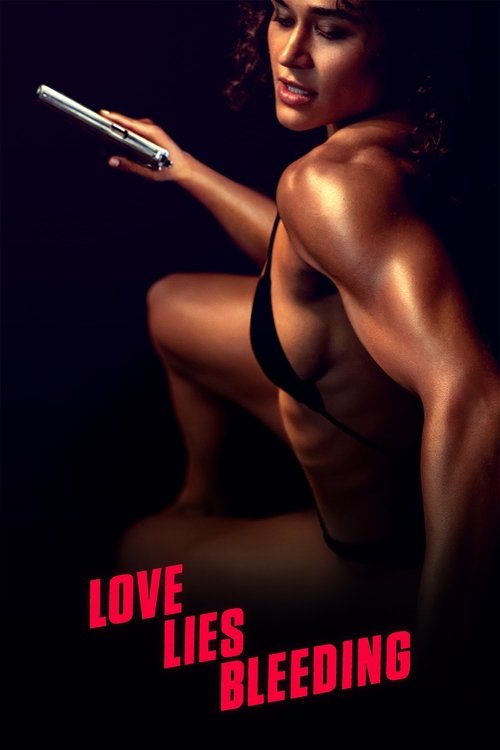
This film draws you in for a significant portion of its runtime with traditional or neutral content before springing its woke agenda. Know before you go!
NOT A WOKE TRAP. The lesbian romance at the film's center, the queer director's stated artistic intentions, and the marketing (Sundance premiere, Kristen Stewart) all signal the film's ideological orientation clearly and early. There is no camouflage here. Conservative viewers will know within the first ten minutes of the film what they are watching.
Rose Glass made Saint Maud on a very small budget, got it into A24's catalog, and watched it become a cult film about a woman whose religious intensity crosses into psychosis. Three years later she came back with Love Lies Bleeding and Kristen Stewart and a surrealist bodybuilder fantasy that nobody saw coming. The film premiered at Sundance 2024 to strong reviews and became one of the year's most discussed releases in the indie-critical world, even if it never crossed over into wide commercial awareness.
Classification: WOKE
Woke Trap Assessment
NOT A WOKE TRAP. Love Lies Bleeding is a lesbian neo-noir that makes no attempt to disguise what it is. The film's central romance between Lou (Kristen Stewart) and Jackie (Katy O'Brian) is explicit, emotionally sustained, and the organizing premise of the entire narrative. There is no camouflage, no bait-and-switch, no surface layer of traditional values masking a progressive interior. The film is what it appears to be from the first five minutes. Conservative audiences will know exactly what they are watching. This review is for those who need to understand what is in the film before deciding, not for those who will discover it unexpectedly.
Creative Team at a Glance
- Director / Co-Writer: Rose Glass - British auteur, Saint Maud, two films two queer female protagonists, consistent thematic DNA
- Co-Writer: Weronika Tofilska
- Lead Producers: Andrea Cornwell (Film4) / A24
- Composer: Clint Mansell
- Top Cast: Kristen Stewart (Lou), Katy O'Brian (Jackie), Ed Harris (Lou Sr.), Jena Malone (Daisy), Dave Franco (JJ)
- Pre-Viewing Prediction: WOKE - Rose Glass's track record, A24's brand, Sundance premiere, and Kristen Stewart's public identity all signal the same direction. Confirmed.
- Fidelity Casting: AUTHENTIC - Original screenplay, contemporary setting.
Lou (Kristen Stewart) manages a run-down gym in a small town somewhere in New Mexico. She is quiet, guarded, estranged from her family. Her father, Lou Sr. (Ed Harris), is the local crime boss who runs a gun range and various criminal enterprises and has a habit of making people who annoy him disappear. Lou wants nothing to do with him.
Jackie (Katy O'Brian) blows through town like weather. She is a drifter, a competitive bodybuilder driving to Las Vegas for a competition she is convinced will change her life. She stops at the gym. Lou sees her. They fall into each other quickly and with complete conviction.
The crime plot arrives through Lou's family. Her sister Daisy (Jena Malone) is in an abusive relationship with JJ (Dave Franco), a nasty, controlling man who beats her regularly. After JJ beats Daisy badly enough to hospitalize her, Jackie - on steroids that have amplified her already considerable physicality - beats JJ to death. Lou helps her dispose of the body.
This puts Lou in a very difficult position. Lou Sr. has his own criminal involvement in the area and his own relationship with the local law enforcement. JJ's absence triggers an investigation. Lou tries to manage the fallout. Jackie continues training for her competition, increasingly disconnected from the consequences of what she has done.
The surrealist element: as Jackie's steroid use intensifies, the film develops a visual language of fantasy and hyperreality around her body. She literally grows in Lou's perception - towering, superhuman, distorted. This is filtered through Lou's adoration as much as Jackie's pharmacology. The film uses it to explore obsessive love and the fantasy of female physical power.
The resolution is bleak and characteristic of the neo-noir genre. Lou Sr.'s criminal machinery closes in. The body is discovered. Jackie's innocence - she acts on instinct, without calculation - makes her a liability. The film ends with Jackie leaving for Las Vegas and Lou, surrounded by the consequences, watching her go. Justice is not delivered cleanly. The crime boss survives. The lovers are separated. The world reasserts its ugly logic.
Trope Analysis - VVWS Weighted Scoring
Formula: Weighted Score = Severity x Authenticity Multiplier x Centrality Multiplier
Authenticity: High=0.7, Moderate=1.0, Low/Injected=1.4 | Centrality: Low=0.5, Moderate=1.0, High=1.8
Red Woke Tropes
| Trope | Severity (1-5) | Auth | Centrality | Weighted Score |
|---|---|---|---|---|
| Lesbian Central Romance as Normalized Default | 4 | 0.7 | 1.8 | 5.04 |
| Abusive Men as Primary Antagonists | 4 | 1.0 | 1.8 | 7.2 |
| Female Body as Site of Agency and Fantasy Power | 3 | 1.4 | 1.0 | 4.2 |
| Patriarchal Family Structure as Organized Crime | 3 | 1.0 | 1.0 | 3.0 |
| Girl Boss (Jackie as physical fantasy of female power) | 2 | 1.4 | 1.0 | 2.8 |
| Justice System Corrupted / Cannot Protect Women | 2 | 1.0 | 1.0 | 2.0 |
| WOKE TOTAL | 24.24 |
Green Traditional Tropes
| Trope | Severity (1-5) | Auth | Centrality | Weighted Score |
|---|---|---|---|---|
| Love Story as Genuine Emotional Commitment | 4 | 0.7 | 1.8 | 5.04 |
| Violence Has Consequences / No Clean Escape | 3 | 0.7 | 1.0 | 2.1 |
| Family Corruption as Moral Poison | 2 | 0.7 | 1.0 | 1.4 |
| TRAD TOTAL | 8.54 |
Score Margin: -17 WOKE
Director Track Record
Rose Glass has two features. Both center queer female protagonists in narratives about obsession, bodily experience, and violence.
Saint Maud (2019) is a folk-horror film about Maud, a devout young nurse who believes God has called her to save the soul of her terminally ill patient, Amanda - a former dancer, secular, sardonic, and surrounded by a life of hedonism that Maud finds sinful. The film is genuinely ambivalent about Maud's faith - it may be genuine spiritual experience or psychosis, and the film refuses to resolve the ambiguity. Maud's religious conviction descends into violence. The final image - Maud immolating herself, seeing herself as a burning saint, and then seeing what she actually is - is one of the most devastating ambiguous endings in recent horror. The film does not mock faith, but it depicts the catastrophic consequences of unmoderated religious certainty in an isolated, troubled woman. Critics aligned with the A24 prestige horror tradition embraced it. It has a 97% critics' score on Rotten Tomatoes.
Love Lies Bleeding (2024) extends Glass's thematic territory from solitary female obsession to partnered female desire, adding crime genre mechanics and a more overt queer lens. The shift from religious obsession to erotic obsession is not a departure - it is the same psychological territory with a different organizing fixation.
Pattern Assessment: Two films. Both queer female protagonists. Both obsession narratives. Both formally inventive. Glass is a significant emerging talent whose ideological orientation is clear and consistent. Ideological tendency: CONSISTENTLY PROGRESSIVE, queer feminist, anti-patriarchal. A filmmaker to watch for quality and for bias.
Full Cast
| Actor | Role |
|---|---|
| Kristen Stewart | Lou |
| Katy O'Brian | Jackie |
| Ed Harris | Lou Sr. |
| Jena Malone | Daisy |
| Dave Franco | JJ |
| Anna Baryshnikov | Daisy's Friend |
| Tait Fletcher | Bodyguard |
Adult Viewer Insight
Love Lies Bleeding will hold no interest for viewers who require either traditional moral resolution or avoidance of queer content. The film is unambiguously a lesbian love story, the queer romance is its emotional center, and there is no redemptive conservative reading available that the film itself would recognize.
That said, there are things worth noting for those who engage with the film critically. The craft is genuine - Glass directs with a confident visual imagination, and the surrealist bodybuilder fantasy sequences are unlike anything else in recent American independent cinema. Clint Mansell's score is exceptional. Kristen Stewart gives one of her best performances, and Katy O'Brian's physical commitment to the role of Jackie - she is a competitive bodybuilder in real life - creates an unusual authenticity.
The film's depiction of male violence is accurate and unglamorous. JJ is not a cartoonish villain - he is a small, mean, controlling man who hits women because he can, and the film depicts this with the mundane ugliness it deserves. Ed Harris's Lou Sr. is a more effective villain: charming, ruthless, a man who has built a little kingdom of crime in the desert and loves his daughters in the specific, conditional way that controlling men love the women they own.
The neo-noir structure - crime, no clean escape, the lovers separated by consequence - is a traditional genre form that the film uses honestly. Nobody wins. The world does not become better. This is not a triumphalist queer liberation narrative. It is a neo-noir that happens to be about two women. That specificity may be worth something to viewers who engage with genre regardless of politics.
Parental Guidance
Rated R for violence, language, drug use, and sexual content.
Violence - SIGNIFICANT:
- Domestic violence depicted. JJ beats Daisy. The violence is shown with realistic ugliness.
- JJ's death: beaten to death, depicted graphically.
- Other acts of violence including a shooting.
- Dead body depicted and disposed of.
Language - MODERATE:
- F-word used regularly. Crude language throughout.
Sexual Content - SIGNIFICANT:
- The lesbian romance includes explicit kissing and implied sex scenes.
- Jackie's bodybuilder physique is depicted with direct visual attention.
- The surrealist fantasy sequences include body-horror adjacent imagery of extreme physical transformation.
Drug Use - SIGNIFICANT:
- Jackie's steroid use is a plot-driving element. Steroid injection depicted. The physical and behavioral effects are dramatized.
Ideological Content for Parental Awareness:
- Lesbian romance is the film's central relationship, depicted as normal and worthy of narrative investment.
- Abusive men are the film's primary antagonists.
- The justice system provides no remedy for domestic violence or criminal patriarchy.
- Female physical power (through steroids) is presented as fantasy and liberation, not cautionary tale.
Age Recommendation: ADULTS ONLY. The violence, sexual content, and drug use collectively make this unsuitable for any minor. The ideological content - sustained lesbian romance as the narrative center - will be incompatible with traditional family values that many parents hold.
Review by VirtueVigil Editorial Team | February 19, 2026
Love Lies Bleeding (2024) | Dir. Rose Glass | A24 / Film4 / MGM+
VVWS Score: WOKE -17 | authIndex: 70
Formula: Weighted Score = Severity × Authenticity Multiplier × Centrality Multiplier
🔴 Woke Tropes
| Trope | Severity | Authenticity | Centrality | Score |
|---|---|---|---|---|
| Lesbian Central Romance as Normalized Default | 4 | High | High | 5.04 |
| Abusive Men as Primary Antagonists | 4 | Moderate | High | 7.2 |
| Female Body as Site of Agency and Fantasy Power | 3 | Low | Moderate | 4.2 |
| TOTAL WOKE | 16.4 | |||
🟢 Traditional Tropes
| Trope | Severity | Authenticity | Centrality | Score |
|---|---|---|---|---|
| Love Story as Genuine Emotional Commitment | 4 | High | High | 5.04 |
| Violence Has Consequences / No Clean Escape | 3 | High | Moderate | 2.1 |
| TOTAL TRADITIONAL | 7.1 | |||
Score Margin: -17 WOKE
Director: Rose Glass
CONSISTENTLY PROGRESSIVE - queer female director, anti-patriarchal narrative structures, bodies as sites of female agency and violence. Her two films share consistent thematic DNA.British writer-director born 1990. Two features, both released through A24: Saint Maud (2019) and Love Lies Bleeding (2024). Saint Maud is a folk-horror film about a devout young nurse whose religious conviction descends into fanaticism - a deeply ambivalent film about faith, female loneliness, and self-destruction. Love Lies Bleeding is a neo-noir about a lesbian relationship in small-town New Mexico with crime thriller elements and a surrealist bodybuilder-as-fantasy-figure aesthetic. Glass has spoken about her interest in female interiority, obsession, and the way bodies become sites of both desire and destruction. She is a critically acclaimed filmmaker whose second film secured a wider release and a significantly larger cultural footprint. Her queer identity informs her work in direct and acknowledged ways.
Writer: Rose Glass & Weronika Tofilska
Glass co-wrote with Weronika Tofilska, her collaborator from her short film work. The script was developed through A24, whose editorial process tends to push auteur visions toward commercial viability. The film retains the surrealist bodybuilder fantasy elements that are its most distinctive quality - evidence that Glass maintained significant creative control.
Producers
- Andrea Cornwell (Film4) — Film4 is the UK's leading independent film fund, behind films including Slumdog Millionaire, 12 Years a Slave, Ex Machina, Room, and The Favourite. They back auteur cinema with commercial potential across the political spectrum. Their involvement signals artistic ambition and awards potential.
- A24 (A24) — The prestige indie distributor. For A24, Love Lies Bleeding fits their brand: a formally inventive, critically acclaimed, genre-adjacent film by an emerging auteur. No independent political agenda from A24 as a company - they follow the filmmakers they back.
Fidelity Casting Analysis AUTHENTIC
Original screenplay set in contemporary New Mexico. No historical fidelity baseline to assess.
Love Lies Bleeding is an original story, not an adaptation. The New Mexico small-town setting is rendered with convincing working-class texture. The casting of Kristen Stewart (bisexual actor, publicly out) in a lesbian lead role, and Katy O'Brian (also publicly queer) as her love interest, is a choice that reflects the queer filmmaker's preference for authentic representation - actors who share the characters' orientation. Ed Harris as the crime-boss father is entirely plausible. No fidelity casting concerns for an original contemporary story.
Adult Viewer Insight
Love Lies Bleeding is a technically accomplished neo-noir by a genuinely talented director, and adults who engage with cinema critically will find things worth examining here. The craft is real. The performances are committed. Clint Mansell's score is exceptional. The neo-noir structure - crime, consequences, no clean escape - is used honestly, not as a cover for triumphalist ideology. But the film's central lesbian romance is explicit and emotionally central, the queer lens is consistent, and the male characters are uniformly abusive, criminal, or complicit. There is no conservative reading of this film that the film itself would recognize. The question for adult viewers is simply whether they engage with craft and genre even when the ideological orientation is incompatible with their values. For most traditional viewers, the answer will be no, and that is a fully reasonable position. The film does not pretend to be something other than what it is.
Parental Guidance
Rated R. Not appropriate for minors under any circumstances. Violence includes domestic abuse, a beating death, and a shooting. Sexual content includes explicit lesbian scenes. Drug use: steroid injection and effects are plot-driving and graphically depicted. Language is strong throughout. The film's central premise - a lesbian love story in a crime-thriller setting - is incompatible with traditional family values. Adults only.
Find Love Lies Bleeding on Amazon Prime Video, rent, or buy:
▶ Stream or Buy on AmazonAs an Amazon Associate, VirtueVigil earns from qualifying purchases.


Community Discussion 0
Subscribe to comment.
Join the VirtueVigil community to share your perspective on this review.