Paddington 2
Here's the thing about Paddington 2: it might be the most morally serious film of the last twenty years. It doesn't feel like it. It's brightly colored and funny and stars a CGI bear who gets into scrapes with marmalade.…
Full analysis below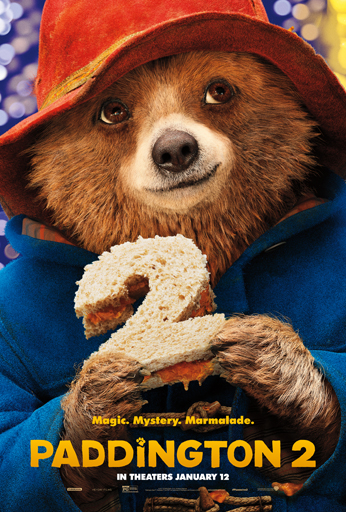
Not a woke trap. Paddington 2 is exactly what it advertises: a warm, funny, gentle family film about a bear who believes the best of everyone. No hidden ideology. No stealth agenda. The film's progressive-adjacent element (prison is humanizing) is minor and never takes over. Conservative families can press play without any concern.
Here's the thing about Paddington 2: it might be the most morally serious film of the last twenty years. It doesn't feel like it. It's brightly colored and funny and stars a CGI bear who gets into scrapes with marmalade. But underneath all that, it is making an argument — a quiet, consistent, deeply felt argument — about what kind of person you should be.
The argument is this: be like Paddington.
Paddington Brown (voiced by Ben Whishaw) wants one thing in this film. He wants to buy his Aunt Lucy an antique pop-up book for her 100th birthday. The book is expensive. He takes on odd jobs around his Notting Hill neighborhood to earn the money. When the book is stolen by a vain, scheming actor named Phoenix Buchanan (Hugh Grant, having the time of his life), Paddington is wrongly convicted of the crime and sent to prison.
What happens next is the film's masterstroke. Paddington goes to prison. And Paddington does not become bitter, or angry, or hardened. He makes friends. He brightens the place up. He teaches the inmates to cook marmalade. He wins over the fearsome cook Knuckles McGinty (Brendan Gleeson) not through toughness or cunning but through pure, relentless decency. Within weeks, Paddington has turned a grim Victorian prison into a warm, flourishing community. Petunias grow in window boxes. Knuckles bakes beautiful pastries. The guards soften.
This is not naivety. The film understands that this is unusual. The other characters are amazed. But it presents Paddington's goodness not as stupidity or innocence but as a choice — a sustained, effortful commitment to seeing the best in people and treating them accordingly. And it shows that choice working.
Hugh Grant's Phoenix Buchanan deserves his own paragraph. It is one of the great comic villain performances in recent cinema. Grant understood something about the character that lesser actors would have missed: Phoenix is not evil. He is vain, self-obsessed, and completely without shame — but he is not cruel. His villainy is almost accidental; he wants the treasure the pop-up book leads to, but he doesn't particularly enjoy hurting Paddington. When the film ends and Paddington extends his characteristic generosity even to Phoenix, it feels earned because Grant has made Phoenix pitiable as well as funny.
Paul King's direction is as controlled as any film this size and budget deserves. He uses practical filmmaking ingenuity — a standout sequence in the prison laundry, a climactic chase through London involving a steam train and a canal — to create spectacle that serves character rather than replacing it. The film's color palette, shifting from warm Notting Hill amber to institutional grey-blue for the prison sequences, does real emotional work.
For VirtueVigil, this earns the rarest score we give: STRONGLY TRADITIONAL. The film is built around community, loyalty, intergenerational family bonds, honest labor, and the idea that goodness is active — not passive, not easy, but a real force in the world. The Brown family rallies to prove Paddington's innocence. Mr. Gruber, the antique shop owner, provides crucial help from loyalty alone. The Notting Hill neighbors who dismissed Paddington earlier in the film are the ones who, in the end, make his rescue possible. Community works. Kindness works. The film insists on this not sentimentally but structurally — the plot only resolves because people showed up for each other.
Is there anything for a conservative viewer to object to? Barely. The prison-as-community angle could be read as naive about criminal justice. The neighborhood is culturally diverse in ways that reflect the real demographics of contemporary London. These are the weakest possible objections to what is, by any honest accounting, one of the most traditionally virtuous films made in the streaming era. Paddington 2 has a 100% Rotten Tomatoes score. It earned it.
Formula: Weighted Score = Severity × Authenticity Multiplier × Centrality Multiplier
🔴 Woke Tropes
| Trope | Severity | Authenticity | Centrality | Score |
|---|---|---|---|---|
| Prison Humanization / Criminal Justice Sympathy | 3 | 0.7 | 1 | 2.1 |
| TOTAL WOKE | 2.1 | |||
🟢 Traditional Tropes
| Trope | Severity | Authenticity | Centrality | Score |
|---|---|---|---|---|
| Family as Foundation / Chosen Family | 5 | 1 | 1.8 | 9 |
| Community Solidarity / Neighbors Who Show Up | 5 | 1 | 1.8 | 9 |
| Goodness as Active / Kindness Has Consequences | 5 | 1 | 1 | 5 |
| Honest Labor / Earning What You Want | 4 | 1 | 1 | 4 |
| Intergenerational Respect / Love for the Elderly | 4 | 1 | 0.5 | 2 |
| Villian's Redemption / Grace Extended | 3 | 1 | 0.5 | 1.5 |
| Masculinity as Protector / Father Figure | 3 | 1 | 0.5 | 1.5 |
| TOTAL TRADITIONAL | 32.0 | |||
Score Margin: +30 TRAD
Director: Paul King
CENTER. King is a British filmmaker whose sensibility is fundamentally humanist and apolitical. His craft is rooted in British comedy traditions and a genuine affection for decency. No culture-war record, no ideological agenda in interviews. His stated goal with both Paddington films was to make something that felt 'genuinely warm without being saccharine.'Paul King began his career in British television comedy, including The Mighty Boosh. His first Paddington film (2014) was a surprise hit that defied cynical expectations for live-action children's fare. With Paddington 2, he deepened his themes of community, belonging, and the power of consistent goodness. He has since directed Wonka (2023), which applies a similar humanist warmth to a darker source character. King represents a rare breed of filmmaker who believes optimism is a serious artistic choice, not a cop-out.
Writer: Paul King, Simon Farnaby
King and Farnaby co-wrote the screenplay with a clear goal: each plot element should arise organically from Paddington's character. The marmalade sandwiches, the book, the prison friendship, the climactic chase through London — all of it flows from who Paddington is. The script is technically accomplished, with a three-act structure that clicks into place with satisfying precision. The humor is visual, verbal, and character-driven in equal measure, never relying on pop culture references or adult winking. It has aged perfectly for exactly this reason.
Adult Viewer Insight
Paddington 2 is the kind of film that conservative adults should screen for everyone they know — not as a political statement, but as a reminder of what movies can do when they believe in something. Paul King is not making a political argument. He is making a moral one. Paddington's consistent goodness is presented not as simplicity but as a sophisticated, demanding way of moving through the world. The film argues that if you treat people well — reliably, patiently, without condition — the world actually gets better. It sounds obvious when you say it like that. It is extraordinarily rare to see it filmed.
Parental Guidance
PG. Appropriate for all ages. One of the safest and warmest family films available. Take the whole family.
Find Paddington 2 on Amazon Prime Video, rent, or buy:
▶ Stream or Buy on AmazonAs an Amazon Associate, VirtueVigil earns from qualifying purchases.
Community Discussion 0
Subscribe to comment.
Join the VirtueVigil community to share your perspective on this review.