
The Bear
Season 1 of The Bear is genuinely great television. Carmen Berzatto returns to Chicago after his brother Michael's suicide, inheriting a failing Italian beef shop, a mountain of debt, and a staff that ranges from hostile to barely functional.…
Full analysis below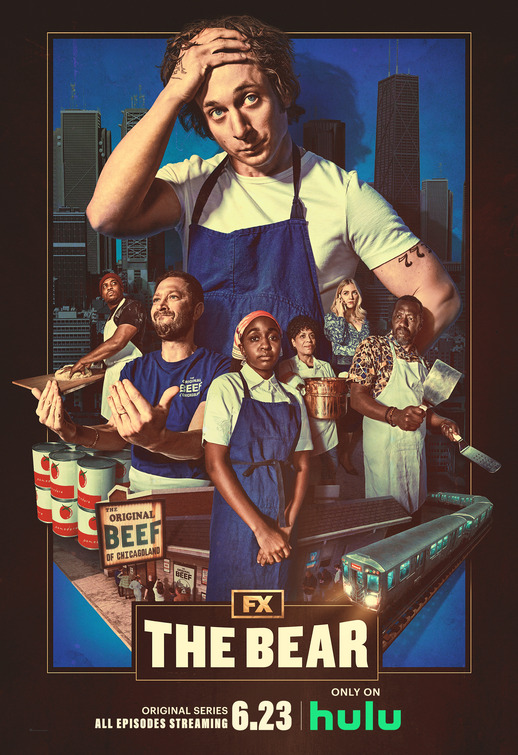
The Bear is not a woke trap. Its diversity is organic to Chicago's restaurant world, its values center on competence and craft, and its later-season drift is creative self-indulgence rather than ideological capture.
Season 1 of The Bear is genuinely great television. Carmen Berzatto returns to Chicago after his brother Michael's suicide, inheriting a failing Italian beef shop, a mountain of debt, and a staff that ranges from hostile to barely functional. The show's first season is a reconstruction story driven by competence. Carmy doesn't win people over with speeches or feelings. He wins them over by being better at the work than anyone else in the room.
The supporting cast is diverse in a way that never calls attention to itself. Sydney Adamu shows up as Carmy's sous chef. She's talented, ambitious, and occasionally in over her head. The show doesn't make her race A Thing. Tina, a Latina line cook, is initially hostile to change. Her resistance is framed as pride and fear, not ignorance. When she comes around, it's because she sees the value. This is what organic diversity looks like.
Season 2 expands the world and hits its highest notes. The Richie episode, Forks, might be the single best episode of television produced in the last five years. Richie stages at a high-end restaurant and discovers that service is a form of excellence he never knew existed. No therapy. No intervention. Just exposure to a higher standard and the decision to rise to it. That's a profoundly conservative arc.
Season 3 is a creative mess but not an ideological one. The show disappears into itself. Carmy spends entire episodes staring at walls. The therapy-industrial complex has arrived with characters processing feelings in clinical language. But even in its weakest season, The Bear doesn't go where you'd expect a captured show to go. There are no diversity lectures. The restaurant's financial struggles are treated as the brutal economics of a small business, not a commentary on capitalism.
The Bear is a show that started as one of the most traditionally-coded prestige dramas on television. Hard work. Competence hierarchies. Male friendship and rivalry. Grief processed through action rather than words. The show hasn't been captured. It's been bloated. There's a difference, and it matters.
| Trope | Category | Location | Authenticity |
|---|---|---|---|
| Therapy Culture | WOKE | S3 and S1 Al-Anon scenes -- Clinical emotional processing increasingly replaces blue-collar emotional vocabulary | Mixed -- Al-Anon is real in the industry but S3 clinical language feels writerly |
| The Victimhood Meritocracy | WOKE | S3 Donna Berzatto flashbacks -- Abusive parenting contextualized as product of her own trauma | Mixed -- real families have this complexity but editorial emphasis softens accountability |
| Infallible Youth | WOKE | S1-S3 -- Sydney consistently the most talented and emotionally intelligent person in the room | Largely authentic -- young hungry chefs do shake up established kitchens |
| Fragile Masculinity Framing | WOKE | S2-S3 -- Carmy's intensity increasingly framed as toxic patterns rather than price of excellence | Mixed -- restaurant kitchens do have toxic cultures but progressive tendency to pathologize is visible |
| Globalist Utopia | WOKE | S3 celebrity chef appearances -- Culinary world as borderless meritocracy | Authentic -- the fine dining world is genuinely global |
| Industry and Perseverance | TRADITIONAL | S1-S3 -- The entire show is built on hard work and pursuit of excellence through physical labor | Authentic -- anyone who has worked in a professional kitchen will recognize this |
| The Self-Sacrificing Hero | TRADITIONAL | S1 Michael's legacy, S2 multiple arcs -- The weight of what these characters give up | Authentic -- restaurant industry has well-documented history of burnout and self-destruction |
| Competence Hierarchy | TRADITIONAL | S1-S3 -- The kitchen operates on strict hierarchy based on skill, Yes Chef is a code | Authentic -- the brigade system is real and functions exactly as depicted |
| Wise Elder / Mentor | TRADITIONAL | S2 Chef Terry (Olivia Colman), S1-S3 Cicero -- Mentorship through high standards | Authentic -- this is how mentorship works in serious culinary programs |
| Defense of the Innocent | TRADITIONAL | S1-S3 -- Natalie's pregnancy, protecting next generation from family dysfunction | Authentic -- generational trauma cycle presented honestly |
| Traditional Femininity | TRADITIONAL | S2 Tina's arc, S2-S3 Natalie's arc -- Women defined by competence not gender grievance | Authentic -- the women on this show feel real |
| Male Friendship and Brotherhood | TRADITIONAL | S1-S3 -- Carmy and Richie relationship is the emotional spine of the series | Deeply authentic -- most honest depiction of male friendship on TV since The Sopranos |
| Small Business Grit | TRADITIONAL | S1-S3 -- Financial pressure of running a restaurant presented with brutal honesty | Authentic -- the financial pressures depicted are realistic and specific |
| Generational Legacy | TRADITIONAL | S1-S3 -- The entire series is about inheritance both literal and spiritual | Authentic -- the weight of family legacy in ethnic and working-class communities portrayed with genuine understanding |
Director: Christopher Storer
MILDLY PROGRESSIVEChicago-area native. Collaborators tend progressive (Burnham, Minhaj, Youssef) but The Bear represents a craft-first departure that prioritizes authenticity over ideology.
Writer: Christopher Storer & Joanna Calo
Calo co-showruns and writes. Previous credits include Bojack Horseman. Character-focused writer whose progressive instincts are tempered by craft.
Fidelity Casting Analysis AUTHENTIC
The cast reflects the actual demographic reality of Chicago's restaurant industry. No forced diversity.
The Bear's casting is one of its greatest strengths. The show is set in Chicago's restaurant world, which is genuinely one of the most diverse workplaces in America. Every casting choice reflects demographic reality: Italian-American chef, Nigerian-American sous chef, Latina line cook, Somali veteran cook. This is what authentic casting looks like.
Adult Viewer Insight
Conservative adult viewers should approach The Bear with enthusiasm for seasons 1 and 2 and measured expectations for season 3. This is not a show trying to sneak progressive politics past you. Its politics are the politics of the kitchen: hierarchy, competence, respect for craft, and loyalty to people rather than ideas. The diversity question is easy: the cast looks like a real Chicago kitchen because it IS modeled on real Chicago kitchens. If more shows handled diversity this way, the culture war around casting would evaporate overnight.
Parental Guidance
The Bear is rated TV-MA. Extremely heavy profanity throughout all three seasons with the F-word used dozens of times per episode. Limited but intense violence including a stabbing incident. The show deals heavily with the aftermath of suicide which is discussed frankly. Minimal sexual content. Moderate substance use with addiction discussed extensively. Anxiety, panic attacks, PTSD, and family dysfunction are major themes. The kitchen scenes are intentionally stressful and can be genuinely anxiety-inducing. 16+ with parental awareness. For mature teenagers interested in cooking or restaurant culture, the show could be a valuable window into the real costs of pursuing excellence.
Find The Bear on Amazon Prime Video, rent, or buy:
▶ Stream or Buy on AmazonAs an Amazon Associate, VirtueVigil earns from qualifying purchases.




Community Discussion 0
Subscribe to comment.
Join the VirtueVigil community to share your perspective on this review.