The White Lotus — Season 3
Mike White's third season of The White Lotus is the most spiritually ambitious television he has made, and that ambition is both its most compelling feature and its most revealing ideological tell.…
Full analysis below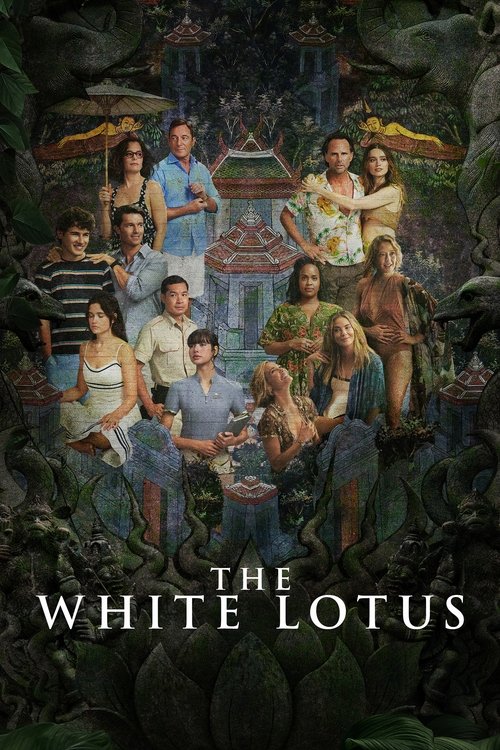
This film draws you in for a significant portion of its runtime with traditional or neutral content before springing its woke agenda. Know before you go!
The show's reputation as even-handed satirist has made it a destination for viewers who expect to laugh at liberal elites. But Season 3 tilts the satire's targets: every privileged American is spiritually hollow and morally compromised, while the Thai resort setting is treated with a reverence the show never extends to Western institutions. The trap springs in the back half when the class contempt shades into active cultural commentary.
Mike White's third season of The White Lotus is the most spiritually ambitious television he has made, and that ambition is both its most compelling feature and its most revealing ideological tell. Set at a luxury wellness resort in Thailand, Season 3 deploys Buddhism the way Season 1 deployed money and Season 2 deployed sex — as a lens for exposing the moral vacuity of wealthy Westerners who think a change of scenery constitutes a change of soul. The craft is impeccable. The performances are extraordinary. And the ideology is baked so deeply into the premise that it takes several episodes to fully surface.
The ensemble is sprawling and deliberately chosen. The Ratliff family anchors the season: Timothy (Jason Isaacs) is a North Carolina financier facing financial ruin he's hiding from his wife Victoria (Parker Posey) and their three adult children. Saxon (Sam Nivola) is the entitled elder son; Piper (Sarah Catherine Hook) is the searcher, drawn toward Buddhist teaching; Lochlan (Patrick Schwarzenegger) is the sensitive youngest, easily influenced. Three women friends on a girls' trip — Kate (Leslie Bibb), Laurie (Carrie Coon), and Jaclyn (Michelle Monaghan) — arrive fraying at the edges of their friendships. And then there's Rick Hatchett (Walton Goggins), a rugged, mysterious man traveling with his young girlfriend Chelsea (Aimee Lou Wood), who may be running from something he hasn't disclosed.
White handles this ensemble with real skill. Every character is written with interior complexity. Nobody is a simple villain or a simple hero. The problem is structural: the satire's targets are pre-selected. The wealthy white Americans are, without exception, spiritually broken, morally compromised, and blind to their own hypocrisy. The Thai characters — particularly the spiritual guide Sritala (Lek Patravadi) and the resort security officer Gaitok (Tayme Thapthimthong) — are granted dignity, interiority, and wisdom. The K-pop star Lisa appears as Mook, a health mentor who navigates the resort's competing guest demands with knowing grace. This asymmetry is not accidental. White is making a point: Eastern spiritual tradition is being commodified and distorted by Western wealth-tourists who cannot genuinely access what they're purchasing. That is a defensible artistic thesis, but it operates on a one-directional axis. The Buddhist framework is presented with a reverence the show's satirical mode never extends to Western religious frameworks.
The most talked-about element of the season is the sexuality. Sam Rockwell delivers a lengthy, provocative monologue about gender experimentation in Thailand — specifically about Thailand's ladyboy culture — played against Walton Goggins's deadpan reactions. It is played for comedy, but it is also clearly White using the format to introduce gender ideology into the season's thematic mix. An incestuous moment between two of the Ratliff children exists almost entirely as provocation, generating heat without narrative payoff. White originally scripted a nonbinary character for Laurie's family but cut the storyline after Trump's reelection, describing it as 'too political' — a decision that simultaneously reveals his political instincts and his awareness of audience limits.
Where Season 3 genuinely works on traditional terms: the Ratliff family dynamics are written with real psychological depth. Timothy's financial crisis creates legitimate dramatic stakes. Victoria's willful blindness and eventual awakening is a genuinely moving character arc. Piper's spiritual searching, while filtered through a Buddhist lens, depicts a young person's hunger for meaning that crosses ideological lines. The season's central question — what does it mean to live well, when you can afford anything? — is not a woke question. It is an ancient question. White is smart enough to understand that. The problem is the answer he provides is consistently shaped by progressive assumptions about power, spirituality, and the corrupting nature of Western wealth.
For conservative viewers, The White Lotus Season 3 is worth engaging with on your own terms. The show's satire is sharper than most prestige television, and it occasionally lands critiques that hit familiar progressive targets as hard as they hit anyone else. But you should enter knowing that the ideological foundation of the season positions Western values as the problem and Eastern spirituality as the corrective, and that this framing never wavers across eight episodes.
| Trope | Category | Location | Authenticity |
|---|---|---|---|
| Western Values as Corruption | WOKE | Throughout all 8 episodes — structural premise of the season | Emphasized. White is making a consistent argument. |
| The Bigoted Traditionalist (Financial Elite) | WOKE | Timothy Ratliff's arc — entitled patriarch concealing financial crimes | Natural. The character is genuinely complex, but the archetype is present. |
| Gender Ideology Insertion | WOKE | Sam Rockwell's monologue on gender experimentation and ladyboy culture | Emphasized. The scene exists to introduce gender commentary, not to advance plot. |
| Eastern Wisdom vs. Western Corruption | WOKE | Buddhist spiritual framework throughout; Thai characters granted moral authority consistently | Emphasized. The asymmetry in how Western vs. Eastern spirituality is treated is deliberate. |
| Class Contempt | WOKE | All American guest storylines — wealth presented as inherently corrupting | Natural. The show's satirical premise requires this. |
| Family Dysfunction Under Pressure | TRAD | The Ratliff family arc — pressure reveals character, family bonds tested and proven | Organic. Timothy and Victoria's arc is genuinely emotionally effective. |
| Spiritual Hunger | TRAD | Piper Ratliff's spiritual searching — desire for genuine meaning beyond material comfort | Organic. Piper's arc depicts the universal human search for meaning. |
| Female Friendship and Loyalty | TRAD | Kate, Laurie, and Jaclyn's girls' trip — friendship tested by honesty | Organic. The three-woman friendship arc explores genuine relational loyalty. |
| Redemption Through Self-Knowledge | TRAD | Multiple character arcs; season-ending character realizations | Natural. The show uses Eastern framing but the desire for redemption is universal. |
Director: Mike White
PROGRESSIVE (Restrained)Mike White writes and directs every episode of The White Lotus. His ideology is sophisticated progressive rather than blunt activist — he satirizes liberalism but from inside it, not from outside it. White is openly gay and has been public about his political leanings, but has explicitly stated he resists identity politics in his storytelling, telling press that he cut a nonbinary character after Trump's reelection because it felt 'too political.' That candor is unusual in Hollywood and deserves credit. But 'resisting identity politics' in White's practice means toning down activist checkboxes, not abandoning a progressive worldview.
Writer: Mike White
White is the sole credited writer of all eight Season 3 episodes. He has described Season 3's thematic ambition as a 'satirical and funny look at death and Eastern religion and spirituality.' His writing is genuinely sharp and bipartisan in tone — conservatives, liberals, and spiritual tourists all get skewered. But the structural assumptions underlying the satire consistently encode progressive worldview: wealth is corrupting, Western masculinity is fragile, and Eastern wisdom offers corrective perspective.
Producers
- Mike White (Rip Cord Productions) — Creator, sole writer, director of all episodes. Ideological imprint total.
- David Bernad (HBO) — Long-time White collaborator. HBO prestige production. Ideologically neutral as a production entity but HBO's content philosophy leans progressive.
- Mark Kamine — Producing partner. No independent ideological signal.
Full Cast
Fidelity Casting Analysis FAITHFUL
Original IP — no source material to assess adaptation fidelity against.
The White Lotus is an entirely original work. There is no source novel, comic, or prior film to compare casting against. All characters and their demographics are Mike White's original creation. The Thai setting incorporates authentic Thai actors and the K-pop star Lisa (Lalisa Manobal) as a health mentor, which reflects the real demographics of Thailand's luxury hospitality industry. No fidelity concerns apply.
Adult Viewer Insight
Conservative adults who appreciate sophisticated drama will find the show genuinely engaging on a character level. Jason Isaacs and Parker Posey are extraordinary. Walton Goggins delivers one of the season's most compelling performances as a man of secrets. But the show's worldview is consistently progressive in its deepest assumptions — the wealthy are corrupt, Western religion is absent or implicitly inadequate, Eastern spirituality offers wisdom the Americans cannot access. Engage critically. The craft is real. The agenda is present.
Parental Guidance
Ages 18+ only. This is prestige adult drama with mature content throughout: - Sexual content: Some nudity and sexual scenes consistent with HBO prestige drama - Language: Adult language throughout - Violence: Several scenes of death, one character death is depicted on screen - Thematic content: Infidelity, financial corruption, drug use, gender discussion - The Sam Rockwell monologue about Thailand's ladyboy culture is explicit in its discussion of gender and sexuality - Not appropriate for any viewer under 18
Community Discussion 0
Subscribe to comment.
Join the VirtueVigil community to share your perspective on this review.