
American History X
American History X is the most honest film ever made about the appeal of white supremacy, which is also what makes it so difficult to score ideologically. It understands its subject too well to be purely a condemnation.…
Full analysis below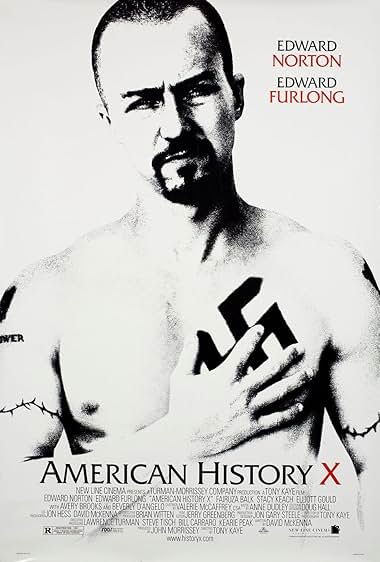
Want to know what's safe to watch? Get our weekly guide to new reviews and woke-free picks. No spam, ever.
American History X does not qualify as a woke trap under VVWS v1.1. The film carries a +5 TRAD margin and a TRADITIONAL LEAN verdict. The woke content is not hidden. The film is openly and explicitly a story about white supremacist ideology and its costs. There are no bait-and-switch dynamics here. The progressive ideological framing is present from the first scene. The film earns its TRADITIONAL LEAN score because Derek's redemption arc is genuinely traditional in structure, personal consequence producing personal transformation, and because the film frames individual responsibility rather than systemic change as the solution. The film is ideologically complex, not deceptive.
Our Verdict on American History X
American History X is the most honest film ever made about the appeal of white supremacy, which is also what makes it so difficult to score ideologically. It understands its subject too well to be purely a condemnation. And it earns a traditional lean precisely because it resolves through personal transformation rather than through politics.
Derek Vinyard is not a buffoon. That is the film's essential choice and its greatest risk. He is intelligent, physically imposing, loyal to his family, genuinely grieving his murdered father, and completely wrong about nearly everything that follows from his grief. The film shows you exactly how a smart, loving, angry young man gets radicalized, not as abstract sociology but as specific biography. His father's comments over dinner, seeds planted early. The Black firefighter his father blames for incompetent coverage. The death itself. Each step is comprehensible. None of it is forgivable.
Edward Norton's performance is one of the great American film performances of the 1990s. He plays Derek's ideology as something inhabited completely rather than performed for the camera. In the black-and-white sequences showing Derek's past, Norton's body communicates the seductive clarity that extremism promises: you know exactly who you are, exactly who your enemies are, exactly what you're fighting for. The prison sequences show that clarity being dismantled piece by piece, not by political argument but by reality. He makes friends with a Black inmate. He is assaulted by his own crew. He realizes Cameron Alexander used him. Experience defeats ideology in a way that argument never could.
That is the film's most traditional element. Derek does not change because someone explains racism to him, though Dr. Sweeney tries. He changes because his direct experience contradicts everything he thought he knew. The film argues that personal accountability and lived experience matter more than ideological frameworks. That is a fundamentally individual, conservative position. You are responsible for your own actions. You must face your own conclusions. No one else can think your way out of your mistakes.
Edward Furlong as Danny is the film's moral center, which sounds counterintuitive since he's a passive character for much of the runtime. Danny is watching Derek's past through Sweeney's assignment to write a paper on it. He is processing in real time what his brother's choices meant and what he is about to repeat. His narration gives the film its reflective distance. And his death at the end, shot by a boy he'd antagonized at school, carrying the weight of his brother's ideological war into a space where it destroys him, is not a twist. It is a consequence. Ideas have consequences. That is what the film is saying.
The woke content is real and it matters. The film frames white working-class anger as primarily the product of manipulation by cynical actors like Cameron Alexander, who profits from the movement while keeping his own hands clean. This is a progressive reading of radicalization: the white working class as victims of bad leadership rather than agents of their own choices. Derek's father is presented as the first source of infection, a man whose casual racism over dinner becomes the template for Derek's later ideology. This implicates not just explicit supremacists but ordinary conservative grievances as the feedstock for extremism. That is an ideologically loaded argument.
But the film is not reducible to that argument. The reason American History X has maintained its reputation across decades is that it is made with genuine love for its characters, even the ones it's condemning. Derek is shown as a real person, not a symbol. His love for Danny is real. His grief for his father is real. His transformation is earned, not announced. The film respects the audience enough to let them sit with that complexity.
The black-and-white cinematography for the past sequences and color for the present is one of cinema's great visual-grammar decisions. The ideology is rendered in a more beautiful format than reality. That's the point. Extremism promises clarity and beauty and purpose. Reality is messier and more human. The color sequences are less cinematically striking and more emotionally true.
American History X earns a TRADITIONAL LEAN rather than MIXED because its core structure, a man whose personal experience forces him to abandon ideology and take individual responsibility for his brother's future, is genuinely traditional. It falls short of full traditional territory because the film's framing of white conservative grievance as manipulation fodder, and its positioning of white nationalism as the defining danger of American working-class life, carry real progressive ideological weight that the traditional elements don't fully counteract.
Woke Tropes & Content Analysis
Formula: Weighted Score = Severity × Authenticity Multiplier × Centrality Multiplier
🔴 Woke Tropes
| Trope | Severity | Authenticity | Centrality | Score |
|---|---|---|---|---|
| White working-class nationalism as root American evil | 4 | High | High | 5.04 |
| Traditional masculine virtues as vectors for radicalization | 4 | High | Moderate | 2.8 |
| Conservative grievances framed as manipulation fodder | 3 | High | Moderate | 2.1 |
| Tragic ending: ideology as the cause of death | 3 | High | Moderate | 2.1 |
| TOTAL WOKE | 12.0 | |||
🟢 Traditional Tropes
| Trope | Severity | Authenticity | Centrality | Score |
|---|---|---|---|---|
| Radical personal redemption through lived consequence | 5 | High | High | 6.3 |
| Brotherhood and family loyalty as redemptive force | 4 | High | High | 5.04 |
| Individual responsibility over ideological framework | 4 | High | Moderate | 2.8 |
| Elder mentor figure: refusing to abandon troubled youth | 3 | Moderate | Moderate | 3 |
| TOTAL TRADITIONAL | 17.1 | |||
Score Margin: +5 TRAD
Director: Tony Kaye
WOKE LEANING. Tony Kaye's filmography is small and his politics are difficult to pin down, but his directorial choices on American History X lean progressive: the film's ideological structure positions white nationalism as the defining evil of working-class American life. His subsequent documentary Lake of Fire (2006), a 152-minute exploration of the abortion debate featuring graphic footage of abortion procedures, is more balanced than its subject matter might suggest, presenting both sides with genuine seriousness. Kaye is not a dogmatist but a provocateur. His instinct is to confront, not to argue. On American History X, he was famously in a violent creative dispute with Edward Norton over the final cut of the film. Norton re-edited the film himself after Kaye's initial cut was rejected by the studio. Kaye tried to remove his name from the film and replace it with 'Humpty Dumpty.' He failed. Whatever his ideological positioning, his influence on the film's final form is complicated by Norton's editorial control.Tony Kaye is a British commercial director who made American History X as his feature debut after years of shooting high-profile advertising campaigns. His famous commercial work includes a Nike spot that used documentary-style footage of inner-city basketball players to sell shoes, an aesthetic approach that would influence his work on American History X. His conflict with Edward Norton over the film's final cut became one of the most publicized creative disputes in late-1990s Hollywood. Kaye claimed Norton's re-edit softened the film's edges and gave Norton's character too much screen time. Norton argued Kaye's cut was incoherent. The result, the film as it was released, is credited to Norton's vision more than Kaye's, which may be why it is more coherent as a narrative than Kaye's reputation as a provocateur would suggest. His subsequent directing work has been sparse. He directed Detachment (2011), a film about a substitute teacher played by Adrien Brody dealing with a failing school system, which received modest critical attention. American History X remains his defining work by a wide margin.
Content Breakdown
Adult Viewer Insight
The most important question American History X raises for conservative viewers is one it never asks explicitly: what do you do with legitimate grievance? Derek's father is killed doing his job. That is real. His anger is real. The film's implicit answer is that his anger was weaponized by Cameron Alexander into something monstrous. But the film doesn't engage seriously with whether his father's death, or the broader economic and cultural displacement of the white working class, represents a legitimate grievance deserving of legitimate political address. The film jumps from 'this is a real wound' to 'here is how it was exploited' without passing through 'and here is what would actually address it.' That gap is where the film's ideological limitations are. Its emotional intelligence about individual transformation is real. Its political intelligence about root causes is shallow. For adults who want to think carefully about radicalization, the film is a useful starting point. It is not a complete argument.
Parental Guidance
Rated R for graphic violence including a curb-stomping, prison rape, pervasive racist language, brief nudity, and mature thematic content. American History X is one of the most graphically violent films in the mainstream American canon. The curb-stomping scene is deliberately and correctly harrowing. Not appropriate for viewers under 16. For mature viewers 16 and older with the capacity to engage critically with difficult material, the film is valuable. The ending requires emotional processing and benefits from adult discussion.
Is American History X Safe for Kids?
[object Object]
Find American History X on Amazon Prime Video, rent, or buy:
▶ Stream or Buy on AmazonAs an Amazon Associate, VirtueVigil earns from qualifying purchases.



Community Discussion 0
Subscribe to comment.
Join the VirtueVigil community to share your perspective on this review.