
How to Make a Killing (2026)
Glen Powell murdering his way through a family tree to reclaim stolen wealth sounds like the pitch for a crowd-pleasing dark comedy - and largely, How to Make a Killing delivers exactly that.…
Full analysis below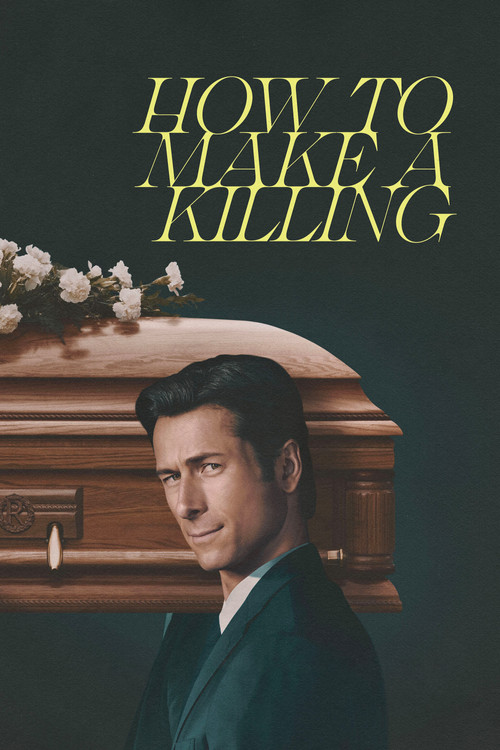
NOT A WOKE TRAP How to Make a Killing plays primarily as a black comedy thriller in the vein of classic British dark comedies - its ideological lean is anti-wealth-class rather than identity-political. The class critique runs throughout, but it's old-school populism rather than DEI-formatted p
Glen Powell murdering his way through a family tree to reclaim stolen wealth sounds like the pitch for a crowd-pleasing dark comedy - and largely, How to Make a Killing delivers exactly that. Director John Patton Ford (Emily the Criminal) has a gift for making economic grievance feel visceral rather than preachy, and with A24's polish and Powell's effortless charisma, this is one of the more entertaining films of early 2026. Just don't mistake its populist glee for ideological innocence.
Becket Redfellow (Glen Powell) was disowned at birth by his obscenely wealthy family - left to build a blue-collar life while his cousins and uncles burn through the Redfellow fortune. Now an adult with a plan and a smile, Becket systematically inserts himself back into the family's orbit - then begins eliminating, one by one, every obstacle standing between him and his inheritance. Narrated with darkly comic detachment by Powell himself, the film moves briskly through a family gallery of targets: the pompous grandfather (Ed Harris), the sanctimonious pastor cousin (Topher Grace), the hapless cousin (Zach Woods), and others. Childhood friend Julia Steinway (Margaret Qualley) complicates matters. So does girlfriend Ruth (Jessica Henwick), who may or may not be ahead of the game.
The film draws openly from Kind Hearts and Coronets - the 1949 British classic in which Alec Guinness played every member of the family being murdered by its heir. Ford updates the premise for modern America: old money vs. working-class grit, institutions that protect the wealthy, and the seductive appeal of simply taking what should have been yours.
Trope Analysis - VVWS Weighted Scoring
🔴 Woke Tropes
| Trope | Severity (1-5) | Authenticity | Centrality | Weighted Score |
|---|---|---|---|---|
| Anti-wealth / anti-inheritance class critique as moral framework | 3 | High - embedded in premise | High | 5.4 |
| Institutions (law, church, family structure) portrayed as complicit in injustice | 2 | High | Moderate | 2.4 |
| Protagonist sympathized despite criminal behavior because system is worse | 2 | High | Moderate | 1.6 |
| WOKE TOTAL | 9.4 |
🟢 Traditional Tropes
| Trope | Severity (1-5) | Authenticity | Centrality | Weighted Score |
|---|---|---|---|---|
| Personal agency and cunning rewarded - protagonist solves his own problem | 4 | High | High | 5.6 |
| Consequences for wrongdoing - film maintains moral accountability arc | 3 | High | High | 3.6 |
| Romance as genuine emotional driver, not political vehicle | 3 | High | Moderate | 2.1 |
| Family legacy and inheritance framed as meaningful (even if contested) | 2 | Moderate | Moderate | 1.6 |
| Work ethic of protagonist vs. idle rich explicitly contrasted | 2 | High | High | 1.2 |
| TRAD TOTAL | 14.1 |
Director Ideological Track Record
John Patton Ford is an AFI-trained writer-director whose debut, Emily the Criminal (2022), was widely - and accurately - described as "capitalism as the Big Bad." Ford is not a scold; he's a storyteller who happens to believe that economic systems crush individuals, and he builds that worldview into his genre mechanics rather than his dialogue. His films don't moralize. They demonstrate. How to Make a Killing fits neatly into this pattern: the target isn't identity politics, it's wealth hoarding. That's an important distinction for conservative viewers. Ford's critique is economic populist, not social justice. You may find yourself agreeing with his premise while disagreeing with his conclusions.
He won the Independent Spirit Award for Best First Screenplay for Emily the Criminal (2022). How to Make a Killing is only his second feature.
<!-- Mercedes-corrected: 2026-02-18 -->
Adult Viewer Insight
The film is deeply enjoyable - Powell delivers one of his most controlled, layered performances, shedding the golden-boy charm just enough to let menace breathe underneath. Margaret Qualley is used too sparingly but lands every scene she's given. Ed Harris as the patriarch is brief and magnetic. The film's class politics will read to some viewers as sharp satire and to others as wishful thinking for economic grievance. Either way, it's not preaching. The film trusts you to draw your own moral conclusions - a rarer quality than it should be.
The body count is high. The comedy is dark. The ending earns its ambiguity.
Director: John Patton Ford
See full reviewSee full review for director profile.
Adult Viewer Insight
The film is deeply enjoyable - Powell delivers one of his most controlled, layered performances, shedding the golden-boy charm just enough to let menace breathe underneath. Margaret Qualley is used too sparingly but lands every scene she's given. Ed Harris as the patriarch is brief and magnetic. The film's class politics will read to some viewers as sharp satire and to others as wishful thinking for economic grievance. Either way, it's not preaching. The film trusts you to draw your own moral conclusions - a rarer quality than it should be. The body count is high. The comedy is dark. The ending earns its ambiguity.
Parental Guidance
Ages 17+ - Hard R: - Multiple murders played for dark comedy; some violence onscreen - Adult language throughout - Sexual content: moderate (non-explicit romantic scenes) - Sustained anti-institutional and anti-wealth messaging that older teens may absorb uncritically - Strong performances may glamorize criminal behavior - Ford deliberately makes Becket sympathetic Not appropriate for children or young teens. Adults with conservative economic views should brace for the premise while recognizing the film doesn't moralize about it. VirtueVigil Editorial Team Review Date: February 2026
Find How to Make a Killing (2026) on Amazon Prime Video, rent, or buy:
▶ Stream or Buy on AmazonAs an Amazon Associate, VirtueVigil earns from qualifying purchases.





Community Discussion 0
Subscribe to comment.
Join the VirtueVigil community to share your perspective on this review.