
Paradise - Season 2
Dan Fogelman built his reputation on This Is Us - a show that knew exactly how to make you cry, that understood emotional architecture with almost clinical precision, and that often used that precision in service of specific progressive narratives about race, identity, and family.…
Full analysis below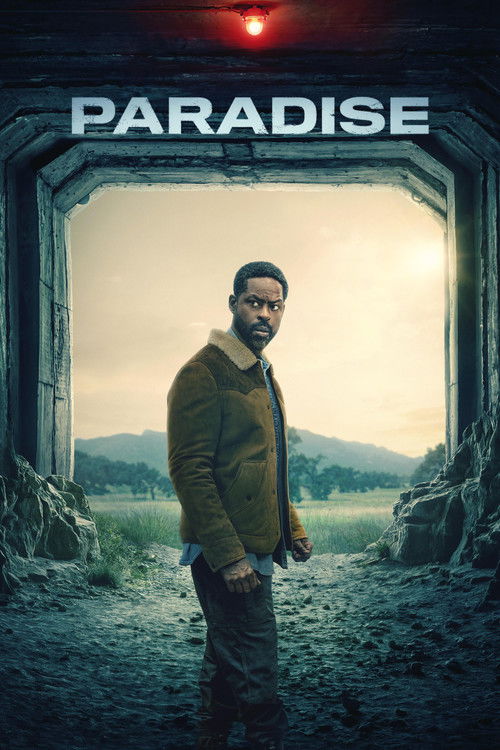
Not a woke trap - with a watchlist note. Paradise prioritizes narrative tension over ideology in its primary storytelling. Woke content is present but moderate and largely incidental. Fogelman's track record warrants monitoring as Season 2 expands outside the bunker.
Dan Fogelman built his reputation on This Is Us - a show that knew exactly how to make you cry, that understood emotional architecture with almost clinical precision, and that often used that precision in service of specific progressive narratives about race, identity, and family. Paradise represents a genuine evolution: the same emotional craftsmanship applied to a genuinely gripping post-apocalyptic mystery with enough genre momentum to carry viewers through even the slower character sequences. Season 1 earned its Emmy recognition. Season 2 faces the harder task of expanding a contained mystery into a sustainable franchise without losing the tight focus that made the first season work.
The question for traditional audiences is not whether Paradise is good television - it is - but whether the ideological content embedded in its storytelling warrants the caution rating that Fogelman's track record suggests. Our assessment: proceed with awareness, not avoidance.
Season 1 Recap: Three years after a catastrophic doomsday event, what remains of the American government and its wealthy elite lives in a vast underground bunker in Colorado called "Paradise." Life is carefully ordered, resources are controlled, and a semblance of civilization is maintained - until Secret Service agent Xavier Collins (Sterling K. Brown) is summoned to find President Cal Bradford (James Marsden) dead. As Xavier investigates a murder that the bunker's power structure wants buried, he uncovers layers of conspiracy, corruption, and secrets about the doomsday itself that challenge everything he thought he knew. The season balances present-day investigation with Bradford-era flashbacks, building a genuinely complex portrait of a president whose public face and private reality diverge dramatically.
Season 2: Fogelman has described Season 2 as "a slightly different show, within the same show." The focus expands beyond the bunker to explore survivors living in the outside world - raising questions about what the doomsday actually was, what the bunker's true purpose has been, and who bears responsibility for the catastrophe. New cast members join as Season 2 broadens the canvas. The Season 1 mysteries partially resolve while new, larger questions open. Xavier remains the moral center, now operating in a world larger and more dangerous than the controlled environment of Paradise.
Dan Fogelman is one of the most effective emotional storytellers in mainstream American television. His work on This Is Us (2016-2022) included storylines addressing racism in America, LGBTQ+ relationships, and progressive family structures, delivered with the emotional manipulation Fogelman has mastered. He is a liberal Hollywood creator who does not hide his politics, but who subordinates explicit messaging to narrative effectiveness. Paradise is his more genre-driven work - and the genre constraints actually reduce the space for ideological insertion. A murder mystery in an underground bunker has less room for social commentary than an intergenerational family drama. But Fogelman's instincts remain and the expansion of Season 2 may provide more opportunity for them to surface.
Paradise is the kind of prestige television that traditional-leaning viewers can engage with honestly: it's genuinely well-made, it has a moral center (Brown's Xavier is fighting for truth and justice, not ideology), and its genre mechanisms are compelling enough to override any ideological frustration. The presidential murder mystery delivers on its genre promises. Compare this to a show like The Moment where the ideology is the entire point - Paradise uses ideology as seasoning, not the main course.
| Trope | Category | Location | Authenticity |
|---|---|---|---|
| Black Protagonist in Heroic Authority Role | WOKE | Core - Sterling K. Brown as Xavier Collins, lead Secret Service agent | Organic - Brown is genuinely excellent; feels organic not tokenistic; character is fundamentally honorable |
| Female Power Broker as Primary Institutional Decision-Maker | WOKE | Core - Julianne Nicholson's 'Sinatra' as world's richest woman and bunker power broker | Mixed - character is morally complex, not lionized; functions as genuine antagonist |
| Corrupt Presidential/Government Institution - Systemic Betrayal Narrative | WOKE | Core - the murdered president and the bunker's hidden truth as central mystery | Mixed - genre convention plus progressive 'institutions lie' framing |
| Psychotherapist Character as Protagonist-Adjacent | WOKE | Supporting - Sarah Shahi as Gabriela Torabi, psychotherapist | Mixed - mental health normalization; functional character |
| Affairs and Infidelity Depicted Without Strong Moral Condemnation | WOKE | Supporting - Bradford/Robinson affair depicted as backstory, not consequence | Mixed - present but not celebrated; treated as character complexity |
| Service and Duty as Highest Calling - Agent Sacrifices Personal Safety for Truth | TRADITIONAL | Core - Xavier Collins' entire character arc across both seasons | Authentic - the show's moral foundation; Sterling K. Brown's creative investment in this |
| Father's Protection of Children as Moral Anchor | TRADITIONAL | Core - Xavier's teenage daughter and son are his emotional north star throughout | Authentic - fatherhood as the grounding value in a world of institutional corruption |
| Justice-Seeking Despite Personal Cost - Individual Refuses to Let Powerful Protect Themselves | TRADITIONAL | Core - Xavier's investigation continues despite personal danger and institutional pressure | Authentic - the show's central narrative engine |
| Institutional Failure Is Not Nihilism - Order and Truth Still Worth Fighting For | TRADITIONAL | Supporting - the show depicts corruption without concluding that institutions are illegitimate | Mixed - present but underdeveloped; worth watching in Season 2 |
Director: Dan Fogelman
PROGRESSIVECreator of This Is Us (2016-2022). One of the most effective emotional storytellers in mainstream American television. Progressive Hollywood figure who subordinates explicit messaging to narrative effectiveness. Genre constraints of Paradise reduce ideological surface area compared to This Is Us.
Writer: Dan Fogelman
Full creative control. Progressive track record but genre-discipline visible in Season 1. Emotional craftsmanship applied to genuine mystery genre mechanics.
Fidelity Casting Analysis N/A
Original property - no source adaptation.
N/A - Original Dan Fogelman property.
Adult Viewer Insight
Paradise is genuinely well-made prestige television. Brown's Xavier is a fundamentally honorable, duty-bound man fighting for truth against powerful corruption - that moral framework is actually quite compatible with conservative values. The ideological content is present but not overwhelming: character framing and casting choices more than explicit messaging. For adult viewers willing to engage critically, this is a watchable, adult-caliber show. Season 2's expansion outside the bunker introduces the biggest wildcard - new characters and settings that Fogelman says will feel 'slightly different.' We'll be watching. Recommended for adult drama fans, political thriller enthusiasts, and This Is Us viewers who handled its progressive elements with critical distance.
Parental Guidance
Paradise is firmly adult prestige television - TV-MA rating appropriate. There is violence, sexual content (affair storyline), complex themes including presidential murder, systemic betrayal, and post-apocalyptic survival. Not suitable for children or young teens. For older teens and adults in traditional households, the show's core moral - a good man fights for truth against powerful corruption - is actually quite compatible with conservative values. The ideological content is present but not overwhelming. Recommended minimum age: 17+ / Adults.
Find Paradise - Season 2 on Amazon Prime Video, rent, or buy:
▶ Stream or Buy on AmazonAs an Amazon Associate, VirtueVigil earns from qualifying purchases.



Community Discussion 0
Subscribe to comment.
Join the VirtueVigil community to share your perspective on this review.