
Gone Girl
Gone Girl came out in 2014 and it has not aged. If anything it has gotten more relevant.
Full analysis below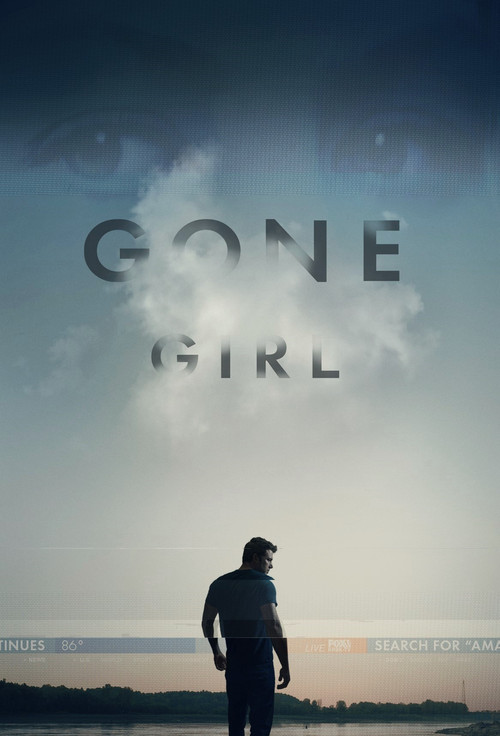
Want to know what's safe to watch? Get our weekly guide to new reviews and woke-free picks. No spam, ever.
Gone Girl (2014) is not a woke trap. Its margin is +6 TRAD with a TRADITIONAL LEAN verdict. The film does contain woke-coded elements, particularly the framing of marriage as a performance imposed on women. But the film's central structural thesis, that feminist victimhood narratives can be weaponized as tools of literal murder and public destruction, is so explicit and so central that it cannot plausibly be read as progressive propaganda. Gillian Flynn has been explicit that she was subverting the 'cool girl' feminist archetype rather than celebrating it. Amy Dunne is the villain. The film never asks you to root for her. Any viewer who finishes Gone Girl thinking it is a feminist empowerment film has misread it fundamentally. There is nothing deceptive about the packaging.
Our Verdict on Gone Girl
Gone Girl came out in 2014 and it has not aged. If anything it has gotten more relevant.
Gillian Flynn wrote the novel and then the screenplay herself. This matters. The film's perspective is entirely hers. And what Flynn wrote is something that, when you strip away the surface of a prestige thriller, turns out to be a sustained demolition of the weaponized victimhood narrative.
Here is what Amy Dunne does: she disappears. She plants evidence that her husband Nick killed her. She makes sure the evidence is exactly what a certain type of media consumer expects from a guilty husband: the younger girlfriend, the large insurance policy, the suspicious behavior. She is constructing a narrative of female victimhood so convincing that it almost works. It would have worked, in fact, if Nick had been slightly less stubborn and slightly more ordinary.
What makes this interesting from a VirtueVigil perspective is that the machinery Amy uses is recognizable. The media coverage in the film, the female news anchor who immediately presumes Nick's guilt, the public that watches and judges from a position of moral certainty, the way accusations function as verdicts before any investigation has occurred: all of this is drawn from reality. Flynn was observing something real about how contemporary culture handles accusations of male violence against women. Amy weaponizes that culture's assumptions. She is not critiquing it from the outside. She is exploiting it from within.
This is not a feminist film. I want to be precise about that. The 'cool girl' monologue, which is the film's most quoted scene and which sounds at first like a feminist critique, is actually a confession by a psychopath. Amy is not describing oppression. She is describing a strategy she deployed and then abandoned. When she says she performed the 'cool girl' for Nick, she is not saying she was victimized. She is saying she made a miscalculation. Her anger is not the anger of someone discovering their own liberation. It is the anger of a predator who was not appreciated appropriately.
David Fincher makes this visually explicit. Amy's diary entries, which we see performed on screen, are warm, intimate, humanizing. The film eventually shows us that the diary is fabricated. Every warm, intimate, humanizing moment in those diary entries was a construction. There is no authentic Amy underneath the performance. Or if there is, we never see it. The film does not give her an inner life that redeems her exterior.
Rosamund Pike's performance is the film's great gift. She plays Amy as someone of extraordinary intelligence operating from a position of total moral vacancy. The intelligence is real. The vacancy is real. She can model other people's responses with near-perfect accuracy, which is what makes her so dangerous. She is the most competent person in every scene she is in. Competence in service of nothing.
Ben Affleck's Nick is the film's moral center, which should be surprising given that he is an unfaithful husband who behaves badly throughout the first act. But Flynn and Fincher make an interesting choice: they make Nick sympathetic not by excusing his failures but by showing that his failures are ordinary human failures rather than monstrous ones. He cheated on his wife. He made money off a bar his wife's parents funded. He is not a great man. He is not remotely in Amy's league as a planner or a schemer. He is just a man who made ordinary bad choices and finds himself accused of murder.
The film's ending, in which Nick is trapped with Amy, is the most interesting choice Flynn makes. It is not a resolution. It is a continuation of captivity. Nick has proved his innocence in the court of public opinion. He has not escaped. Amy is pregnant with his child through forcible means and he cannot leave without appearing to abandon a woman and child. The trap is complete.
For VirtueVigil, the traditional reading of Gone Girl is this: here is what happens when you build a culture that treats accusations as verdicts and female victimhood as automatically credible. The most dangerous person in the film is the one who best understands how to perform victimhood. The justice system fails. The media fails. The only things that come close to working are the stubborn insistence of one detective (Rhonda Boney) that the facts should be investigated, and the loyalty of Nick's sister Margo who refuses to believe the performance.
And in the end, even those things are not enough.
Gone Girl is a film with a deeply conservative subtext wrapped in a thriller's packaging. The verdict is TRADITIONAL LEAN.
Woke Tropes & Content Analysis
Formula: Weighted Score = Severity × Authenticity Multiplier × Centrality Multiplier
🔴 Woke Tropes
| Trope | Severity | Authenticity | Centrality | Score |
|---|---|---|---|---|
| Marriage depicted as patriarchal performance trap | 3 | High | High | 3.78 |
| Male infidelity as contextualizing justification for female violence | 2 | High | Moderate | 1.4 |
| Institutions depicted as instruments of male protection | 2 | Moderate | Low | 1 |
| TOTAL WOKE | 6.2 | |||
🟢 Traditional Tropes
| Trope | Severity | Authenticity | Centrality | Score |
|---|---|---|---|---|
| Feminist victimhood narrative exposed as a weaponized lie | 5 | High | High | 6.3 |
| Moral nihilism and absence of conscience shown as ultimately imprisoning | 3 | High | High | 3.78 |
| Empirical investigation by female detective as truth-seeking function | 2 | High | Moderate | 1.4 |
| Loyalty and authentic love as the film's only moral refuge | 2 | High | Low | 0.7 |
| TOTAL TRADITIONAL | 12.2 | |||
Score Margin: +6 TRAD
Director: David Fincher
MIXED. Fincher is one of American cinema's most technically precise directors and one of the harder to ideologically pin. His films are not political in the conventional sense. Se7en is a horror-thriller about the seven deadly sins. Fight Club critiques consumerism and toxic masculinity from a perspective that defies easy left-right categorization: its hero is radicalized into terrorism by a charismatic false prophet, which is not exactly a progressive parable. The Social Network portrays Mark Zuckerberg as a brilliant, self-destructive sociopath. The Girl with the Dragon Tattoo depicts sexual violence with unflinching directness. Zodiac is a procedural about failure and obsession. Fincher's consistent ideological signature is not left or right but deeply cynical about institutions, systems, and people generally. He has said that he finds optimism dishonest. This cynicism applies equally to progressive and conservative targets. In Gone Girl, the target is the intersection of marriage, media, and gender politics, and Fincher does not spare anyone.David Fincher was born in Denver in 1962 and began his career directing music videos and commercials. His film career began with Alien 3 (1992), a troubled production he has disowned, and then exploded into the cultural consciousness with Se7en (1995) and The Game (1997). Fight Club (1999) is the film that defined his generation of filmmakers and launched a thousand misreadings. Panic Room (2002), Zodiac (2007), The Curious Case of Benjamin Button (2008), The Social Network (2010), The Girl with the Dragon Tattoo (2011), and Gone Girl (2014) make up the core of his theatrical work. He also created and directed much of House of Cards for Netflix. Fincher's technical precision is unequaled in contemporary Hollywood: he typically shoots 50-100 takes of every shot, working with actors until the performance is emptied of visible effort and becomes something that feels inevitable. Rosamund Pike has described the shooting process as exhausting and transformative. The result on screen is a performance of remarkable control. Fincher chose Gone Girl as a project because Gillian Flynn's novel felt to him like a portrait of a marriage trapped in performance, which matched his ongoing interest in the gap between how people present themselves and what they actually are.
Producers
- Reese Witherspoon / Bruna Papandrea (Pacific Standard) - Reese Witherspoon and Bruna Papandrea founded Pacific Standard specifically to develop female-authored stories with complex female protagonists. Witherspoon's production company has since produced Big Little Lies, Wild, and Little Fires Everywhere. From a pure ideology standpoint, Pacific Standard's mandate is to produce stories about women, and its track record leans toward progressive subject matter. Gone Girl is the outlier in their catalog: a story with a complex female protagonist who is also a villain without redemption. Witherspoon has been careful in interviews to say that female complexity is not the same as female heroism.
- New Regency Pictures (New Regency) - New Regency is a production company founded by Arnon Milchan with a strong track record including L.A. Confidential, Fight Club, The Revenant, 12 Years a Slave, and Bohemian Rhapsody. Their political profile is conventional Hollywood but they function primarily as financiers and distributors rather than creative drivers. No meaningful ideological signal in their involvement with Gone Girl.
Full Cast
Content Breakdown
Adult Viewer Insight
The cultural relevance of Gone Girl in 2026 is difficult to overstate. Flynn wrote it in 2012, before the media environment that the film depicts became the dominant feature of public discourse. What she captured, almost prophetically, was the weaponization of victimhood as a power strategy. Amy Dunne is the most precisely realized fictional portrait of that strategy because Flynn was honest enough to make her a villain rather than a tragic victim. Adult viewers who have watched public accusations function as verdicts, who have seen how quickly institutions capitulate to allegations rather than investigate them, who have noticed the way media coverage of certain accusations follows exactly the pattern Amy engineered, will find Gone Girl uncomfortably prescient. The film's villain is not a man. The film's villain is a woman of exceptional intelligence who uses the social machinery of gender politics as a murder weapon. That is a thought that required courage to put on screen in 2014. It has not become less true since.
Parental Guidance
Rated R for strong bloody violence, sexual content/nudity, and language. Gone Girl is a hard-R psychological thriller that earns its rating across all three categories. The violence includes a deeply disturbing scene of throat-cutting with significant blood. Sexual content includes nudity in several scenes, including one of sexual coercion. Strong language throughout. The film is not appropriate for audiences under 17. For mature adult viewers: the film's 149-minute runtime is dense and rewards attention. The structural twist at the midpoint, the revelation of Amy's perspective, recontextualizes everything that came before it. Viewers should avoid spoilers. Parental discussion opportunity: the film is a useful text for conversations about how media shapes our understanding of accusations and guilt, the difference between performance and authenticity, and why institutions need to investigate rather than adjudicate from assumptions.
Is Gone Girl Safe for Kids?
[object Object]
Find Gone Girl on Amazon Prime Video, rent, or buy:
▶ Stream or Buy on AmazonAs an Amazon Associate, VirtueVigil earns from qualifying purchases.
Community Discussion 0
Subscribe to comment.
Join the VirtueVigil community to share your perspective on this review.