
Toy Story
Pixar's first feature is not just a landmark of computer animation. It is a deeply traditional story about the things that matter most: loyalty, sacrifice, and earning your place in the world.
Full analysis below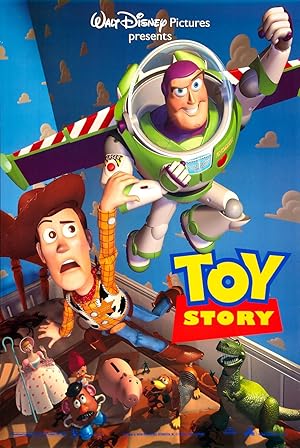
Want to know what's safe to watch? Get our weekly guide to new reviews and woke-free picks. No spam, ever.
Toy Story does not qualify as a woke trap under any reading. The margin is +30 TRAD and the verdict is STRONGLY TRADITIONAL. The film contains essentially zero ideological content. It is a buddy-comedy adventure about jealousy, friendship, and belonging, set in a world where toys come to life when humans are not looking. There is no bait-and-switch. The film's traditional values (loyalty, self-sacrifice, earned redemption, the restoration of order) are visible from the opening scene and consistent throughout the 81-minute runtime. No ideological content is hidden past any runtime threshold because no ideological content exists in the film. This is family entertainment in its purest form.
Our Verdict on Toy Story
Pixar's first feature is not just a landmark of computer animation. It is a deeply traditional story about the things that matter most: loyalty, sacrifice, and earning your place in the world.
Toy Story is 81 minutes long, and not a single one of those minutes wastes time on ideology. The film knows what it is: a buddy comedy about two toys who hate each other, learn to work together, and become friends. That premise is as old as storytelling, and Toy Story executes it with precision, warmth, and genuine wit.
The plot, for the two people who have never seen it: Woody is a pull-string cowboy doll, the favorite toy of a six-year-old boy named Andy. Woody is the leader of Andy's toys, a position he holds with paternal care and quiet authority. When Andy's birthday party produces Buzz Lightyear, a space ranger action figure who believes he is a real astronaut rather than a toy, Woody's status is threatened. His jealousy leads to a series of bad decisions that strand both toys far from Andy, in the house of Sid Phillips, the toy-destroying boy next door. The two must overcome their rivalry to escape Sid's house and return to Andy before the family moves away.
That is the whole plot. And it works because it is true.
The moral architecture of Toy Story is conservative in the deepest sense: things have an order, and the story is about restoring it. Woody is the rightful leader of Andy's room. His authority is earned, not claimed. He keeps the toys organized. He runs the staff meetings. When the toys panic about being replaced, Woody calms them with the voice of a father reassuring his children. His jealousy of Buzz is a flaw, and the film treats it as one. Woody does not get to be jealous and right at the same time. His growth requires him to recognize that Buzz is not his enemy, that Andy's love is not a zero-sum resource, and that the role of a leader is service, not status.
Buzz Lightyear's arc is the other half of the film's moral structure. Buzz arrives believing he is a real Space Ranger. His catchphrases about Star Command and the galactic alliance are not lies. They are his identity. When he sees a television commercial for Buzz Lightyear toys and realizes he is mass-produced plastic, his crisis is existential. 'I'm not a Space Ranger. I'm just a toy.' The film handles this gently. Woody tells Buzz that being a toy is not a demotion. 'Being a toy is a lot better than being a Space Ranger. Over in that house is a kid who thinks you are the greatest. And it's not because you're a Space Ranger. It's because you're a toy. You are his toy.' That is the thesis. Your worth comes not from your advertised identity but from the joy you bring to the people who love you. That is a profoundly traditional idea, and the film earns it.
Sid Phillips is the villain, and he is the right kind of villain for this story. Sid is not evil because of systemic injustice or childhood trauma. Sid is a boy who destroys toys because destroying things is fun, and the film judges him for it. His mutant toys, cobbled together from the parts of his victims, are the film's most direct argument for the dignity of the created thing. They are broken and reassembled, but they are not monsters. They help Woody and Buzz escape. Sid, confronted by his own victims come to life, flees in terror. Justice is simple, visible, and satisfying.
The film ends with Christmas. Andy gets a puppy. Woody and Buzz share a nervous smile. The order of the toy box has been restored, and the status hierarchy has been revised to include the new arrival. This is not a revolution. It is a family growing by one member, with all the anxiety and eventual acceptance that implies.
Toy Story broke technological ground, but what made it last was not the rendering. It was the writing. The film believes in friendship without irony. It believes that competition does not have to be a war. It believes that the people who love you give you your value. It believes that jerks who break things on purpose should be ashamed of themselves. It believes that a cowboy and a spaceman can be friends.
Thirty-one years after its release, those beliefs have held up better than most of the animation software used to render them.
Woke Tropes & Content Analysis
Formula: Weighted Score = Severity × Authenticity Multiplier × Centrality Multiplier
🔴 Woke Tropes
| Trope | Severity | Authenticity | Centrality | Score |
|---|---|---|---|---|
| Minimal Premise-Based Woke Signal | 1 | Moderate | Low | 0.5 |
| TOTAL WOKE | 0.5 | |||
🟢 Traditional Tropes
| Trope | Severity | Authenticity | Centrality | Score |
|---|---|---|---|---|
| The Self-Sacrificing Hero | 4 | High | High | 5.04 |
| The Rugged Individualist | 3 | High | Moderate | 2.1 |
| The Principled Patriarch | 2 | High | Low | 0.7 |
| The Meritocratic Triumph | 3 | Moderate | Moderate | 3 |
| Objective Good vs. Evil | 4 | Moderate | High | 7.2 |
| Industry and Perseverance | 3 | High | Moderate | 2.1 |
| The Forgiving Heart | 2 | Moderate | Moderate | 2 |
| Defense of the Innocent | 3 | High | Moderate | 2.1 |
| Justice Restored | 3 | High | Moderate | 2.1 |
| The Restored Home | 3 | High | High | 3.78 |
| TOTAL TRADITIONAL | 30.1 | |||
Score Margin: +30 TRAD
Director: John Lasseter
TRADITIONAL. Lasseter's career at Pixar and later at Disney Animation was defined by a singular commitment to storytelling craftsmanship over ideology. His films (Toy Story, A Bug's Life, Toy Story 2, Cars, Cars 2) are built on universal themes: friendship, loyalty, growth, and finding one's purpose. Lasseter was famously fired from Disney in the 1980s for pushing computer animation, then returned to lead the studio after the Pixar acquisition. His career is a meritocratic triumph in its own right: a man who bet on a new technology, built a studio from scratch, and changed the medium forever. Lasseter's personal troubles with workplace conduct in 2017 do not diminish the creative legacy, but they are noted here for completeness. The films he directed and produced remain models of apolitical, emotionally resonant entertainment.John Lasseter (b. 1957) is an American animator, director, and former chief creative officer of Pixar, Walt Disney Animation Studios, and DisneyToon Studios. He directed Toy Story (1995), A Bug's Life (1998), Toy Story 2 (1999), Cars (2006), and Cars 2 (2011), and executive-produced every Pixar feature through 2018. He won two Academy Awards, including a Special Achievement Award for Toy Story. His work defined the computer animation medium and established Pixar as the most reliable producer of quality family entertainment in Hollywood.
Content Breakdown
Adult Viewer Insight
Toy Story rewards adult rewatches in ways the target audience of six-year-olds cannot appreciate. The leadership dynamics among Andy's toys mirror a functional small organization: Woody delegates tasks, manages morale, and makes hard calls. Mr. Potato Head is the cynical veteran who questions authority. Rex is the anxious newcomer. Hamm is the sardonic operator who sees everything clearly. These are adult dynamics rendered in primary colors. The film also functions as a stealth essay on the nature of identity. Buzz's crisis, realizing his identity was manufactured by a corporation, could in other hands become a critique of consumer capitalism. Pixar, instead, resolves it through personal relationships. You are real because someone loves you. That is not an anti-capitalist argument. It is a statement about where meaning comes from, and the film is right about it. The Sid sequences contain the film's most thoughtful material. Sid's treatment of toys is cruelty without purpose, which makes him more disturbing than any fantastical villain. The mutant toys, who speak only in mechanical clicks and whirs, are the film's most sympathetic figures. They were broken and remade, but they chose to help. That quiet dignity is the film's gentlest and most traditional note.
Parental Guidance
Rated G. Suitable for all ages with no content concerns. The mildest of tension in the Sid sequences. Recommended starting at age 4. The film's values are positive across the board: friendship over rivalry, loyalty over jealousy, and the dignity of being loved. An easy recommendation for any family.
Is Toy Story Safe for Kids?
[object Object]
Find Toy Story on Amazon Prime Video, rent, or buy:
▶ Stream or Buy on AmazonAs an Amazon Associate, VirtueVigil earns from qualifying purchases.

Community Discussion 0
Subscribe to comment.
Join the VirtueVigil community to share your perspective on this review.