
Up
The opening four minutes of Up contain more emotional truth than most films achieve in their entire runtime. You know the sequence. Carl meets Ellie. They share a dream. They build a life together. They plan to go to Paradise Falls. They don't. Ellie gets sick. Carl holds her hand at the end.…
Full analysis below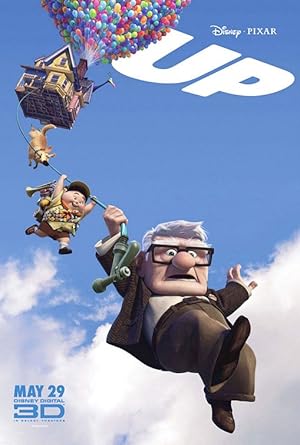
Want to know what's safe to watch? Get our weekly guide to new reviews and woke-free picks. No spam, ever.
Up is not a woke trap under any reading of VVWS v1.1. The margin is +26 TRAD and the verdict is STRONGLY TRADITIONAL. The film's minor woke signals are both structurally necessary to the plot and counterbalanced by the film's overwhelming commitment to traditional values of love, fidelity, mentorship, and sacrifice. Russell's absent father is a plot element that creates Carl's mentor role rather than a critique of fatherhood as an institution. The villain is not a stand-in for American masculine achievement; he is a specific cautionary tale about obsession corrupting a good man's gifts. Up earns STRONGLY TRADITIONAL without qualification.
Our Verdict on Up
The opening four minutes of Up contain more emotional truth than most films achieve in their entire runtime. You know the sequence. Carl meets Ellie. They share a dream. They build a life together. They plan to go to Paradise Falls. They don't. Ellie gets sick. Carl holds her hand at the end. He walks out of the hospital alone. He is 78 years old and everything that mattered is gone.
And then a kid rings his doorbell.
Pete Docter's genius is in what he does with that sequence. He does not give it to you as prologue to the adventure story. He gives it to you as the whole movie's moral foundation. Everything that follows, every balloon and talking dog and airship confrontation, is about whether Carl Fredricksen can choose to live again rather than continue to grieve.
The adventure structure is familiar. An old man accidentally takes an eight-year-old along on a trip to South America in a house lifted by ten thousand balloons. They encounter a famous explorer gone mad, a colorful bird, and a dog who can talk. The adventure is real and exciting and Pete Docter executes it with complete confidence. But it's scaffolding. The actual movie is about grief and purpose and what it means to honor someone you loved.
Carl has preserved his house as a monument to Ellie. Every object in it carries her presence. He has made his home into a shrine, which means he has made his present into a museum of his past. His refusal to sell to the developers is not just stubbornness; it's loyalty to a love he doesn't know how to stop expressing. And then the house becomes a vehicle, literally, and he has to choose whether to spend his remaining years preserving the memory or using it to finally live the dream Ellie gave him.
Russell's presence is not incidental to this. He is a Wilderness Explorer who needs one more badge, Helping the Elderly, and who has no father in his life. His father exists but does not show up. His need for a father figure is real and functional, not decorative. Carl's transformation from someone who treats Russell as an annoyance to someone who genuinely loves him is the film's second love story, and it's nearly as moving as the first.
Charles Muntz, the villain, is a fascinating figure. He was Carl's hero as a child: an explorer who promised to bring back proof of a legendary bird. He spent seventy years hunting it, and the hunt consumed everything else he was. He has the bird. He has Paradise Falls. He lost everything that would have made the accomplishment matter. Muntz is what Carl could become if he lets his devotion to Ellie's memory replace his capacity for new love. He is not a political villain. He is a moral cautionary tale about what obsession does to a person over decades.
The film's climax requires Carl to let go: specifically, to let the house, which has been his anchor and his shrine, fall away in order to save Russell and the bird Kevin. He watches Ellie's adventure book open to the pages she filled herself: not with Paradise Falls, but with their life together. She had her adventure. It was enough. Now she wants him to go have his.
The last scene is Carl at a restaurant with Russell and Russell's father's empty seat. Carl takes the seat. He becomes the father Russell needed. He pins the Ellie badge, the grape soda bottle cap, on Russell's sash. He is done grieving. He is not done loving.
Up is a film about what love costs and what it gives back, about how the dead can still guide the living if we let them, and about how men can do profound good in the world by doing the simple thing of showing up for a child who needs them. That's a traditional message delivered with extraordinary craft.
Woke Tropes & Content Analysis
Formula: Weighted Score = Severity × Authenticity Multiplier × Centrality Multiplier
🔴 Woke Tropes
| Trope | Severity | Authenticity | Centrality | Score |
|---|---|---|---|---|
| Absent father / incomplete family | 3 | High | Moderate | 2.1 |
| Authority figure as corrupted villain | 1 | Low | Low | 0.7 |
| TOTAL WOKE | 2.8 | |||
🟢 Traditional Tropes
| Trope | Severity | Authenticity | Centrality | Score |
|---|---|---|---|---|
| Lifelong marriage and devotion celebrated as the highest good | 5 | High | High | 6.3 |
| Keeping promises to the dead as a binding moral obligation | 4 | High | High | 5.04 |
| Intergenerational male mentorship | 4 | High | High | 5.04 |
| Self-sacrifice for others as the highest expression of love | 4 | High | High | 5.04 |
| Courage and adventure as masculine virtues | 3 | High | Moderate | 2.1 |
| Grief transformed into purpose and service | 4 | High | High | 5.04 |
| TOTAL TRADITIONAL | 28.6 | |||
Score Margin: +26 TRAD
Director: Pete Docter
TRADITIONAL LEANING. Docter is Pixar's most emotionally ambitious director, responsible for Up, Inside Out, and Soul. All three are films that take the inner life seriously: grief, emotional complexity, purpose, meaning. None of them are ideologically progressive in the political sense. Up opens with the most emotionally devastating four minutes in the history of animated film and then spends the next ninety minutes arguing that love does not end with death, that promises made to the people we love bind us across time, and that the best thing a man can do with his grief is let it teach him to be useful to someone who needs him. That is not a progressive message. It's a deeply human one with strong traditional roots.Pete Docter joined Pixar in 1990 and has directed Monsters, Inc., Up, Inside Out, and Soul. He is the studio's most philosophically ambitious filmmaker, consistently interested in questions about emotion, purpose, and what constitutes a life well-lived. His films do not have easy answers. Up asks whether the life Carl is clinging to (his memory of Ellie, his refusal to move on) is actually a life at all. The answer the film arrives at is both tender and demanding: you honor the dead by living, not by preserving their absence. Docter earned his Best Animated Feature and Best Original Score Oscar for Up. He was the first animated film nominated for Best Picture under the expanded nomination system.
Content Breakdown
Adult Viewer Insight
Up rewards adult viewers with something children simply cannot access: the full emotional weight of the marriage montage. Children see Carl and Ellie as characters. Adults see themselves or their parents or their fears. The sequence is so precisely calibrated to adult grief that it becomes a kind of diagnostic test: how much of your own life flashes through those four minutes? That emotional activation is what makes the rest of the film work differently for adults. When Carl finally opens Ellie's adventure book and finds her message to him, adults are experiencing a direct conversation about how to live after enormous loss. The film's answer is both tender and demanding. You do not honor the dead by stopping. You honor them by continuing, and by making their love useful in a world that still needs it.
Parental Guidance
Rated PG for peril and some thematic elements. The thematic elements are grief and loss, handled with extraordinary care. The PG is honest: this film will make adults cry, and it may make sensitive children cry as well. That's not a warning against watching it. It's an argument for watching it with your family and talking afterward. The action sequences are exciting but not graphic. No sexual content. No significant language. One of the best films Pixar has ever made and one of the best arguments that animation can take adult themes seriously without abandoning its responsibility to children.
Is Up Safe for Kids?
[object Object]
Find Up on Amazon Prime Video, rent, or buy:
▶ Stream or Buy on AmazonAs an Amazon Associate, VirtueVigil earns from qualifying purchases.

Community Discussion 0
Subscribe to comment.
Join the VirtueVigil community to share your perspective on this review.