
The Equalizer
The Equalizer (2014) is a film about a man who knows the right thing to do and does it, at considerable personal cost, with extraordinary precision. That's the whole movie. It sounds simple.…
Full analysis below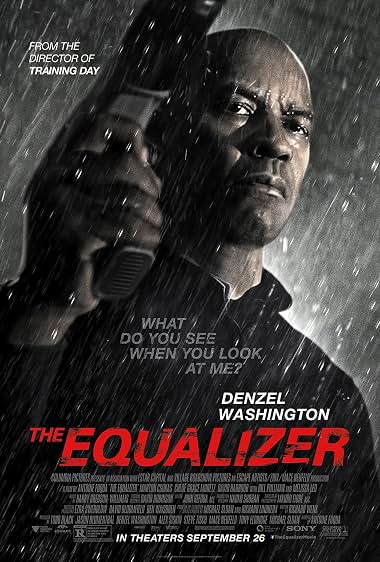
Want to know what's safe to watch? Get our weekly guide to new reviews and woke-free picks. No spam, ever.
The Equalizer is not a woke trap. The film is exactly what it presents itself as: a man with lethal skills choosing to use them in defense of people who cannot defend themselves. This is established in the first twenty minutes and it never changes. No ideological bait-and-switch, no late-film pivot to progressive messaging. The moral universe is consistent from first scene to last.
Our Verdict on The Equalizer
The Equalizer (2014) is a film about a man who knows the right thing to do and does it, at considerable personal cost, with extraordinary precision. That's the whole movie. It sounds simple. It isn't, because Denzel Washington is not a simple actor, and Antoine Fuqua is not a filmmaker who settles for straightforward.
Robert McCall (Washington) works at a Home Mart in Boston, a Lowe's-adjacent hardware store where he knows every employee by name and is working through a reading list he and his late wife never finished. He wakes before dawn. He times himself making oatmeal. He eats alone at a diner most nights, reading whatever book he's on, and he is genuinely at peace there. The diner is where he meets Teri (Chloe Grace Moretz), a teenage girl who is too knowing for her age and living in an arrangement that McCall is too experienced not to recognize immediately.
He talks to her on successive nights. She shows him a picture she drew of herself standing in front of the Eiffel Tower. She wants to be a singer. He tells her she can be anything she wants to be. She smiles like she doesn't believe that anymore but likes hearing it anyway.
Then she is beaten nearly to death by her handlers and McCall goes to their apartment to offer them money to let her go. They laugh at him. He kills all five of them in nineteen seconds. He times it with his watch.
This is the inciting incident of The Equalizer, and what makes it work is what comes after it. McCall is not filled with adrenaline or exhilaration. He goes home, scrubs the blood off his hands, and sits in the dark thinking about what he has just started. He is not surprised by what he did. He is thinking about what comes next.
What comes next is Teddy (Marton Csokas), a fixer sent from Russia to investigate the deaths of five connected men. Csokas plays Teddy as a man of genuine intelligence and complete amorality. He is not a blunt instrument. He understands power, leverage, and institutional dynamics. He has a counterpart for every move McCall makes. The film's middle act is a chess match between two highly competent men who have both spent decades operating in darkness, and the dialogue between them, when they finally meet, is some of the best villain-hero exchange in recent action cinema.
Fuqua stages the violence with the same deliberateness Washington brings to the character. The action sequences are not chaotic. They are planned, executed, and concluded. McCall does not spray bullets. He moves through space with awareness of every object in it, using whatever is at hand: a cork, a wire, a shelf bracket. The hardware store finale, widely cited as one of the best action sequences of the 2010s, is a masterclass in environmental storytelling. McCall is home. The antagonists are not.
But the film is not just about the violence. It's about what the violence is in service of. McCall mentors Ralphie (Johnny Skourtis), the overweight kid at the store who wants to be a security guard but won't do the push-ups to pass the physical. McCall pushes him. He sets a standard and enforces it because he believes Ralphie is capable of meeting it. When Ralphie passes his test, McCall is as pleased as he is about anything in the film. The mentorship is not incidental. It is the film's argument about what a good man with exceptional skills should actually be doing with his life.
The ending is decisive. McCall does not disappear back into his quiet life. He posts his number online: got a problem, no one else can help? He will find you. It is the most traditional ending possible for this kind of film, and it works because Washington has spent 132 minutes making it feel earned rather than inevitable.
Woke Tropes & Content Analysis
Formula: Weighted Score = Severity × Authenticity Multiplier × Centrality Multiplier
🔴 Woke Tropes
| Trope | Severity | Authenticity | Centrality | Score |
|---|---|---|---|---|
| Corrupt Authority Figures | 2 | 0.7 | 0.5 | 0.7 |
| TOTAL WOKE | 0.7 | |||
🟢 Traditional Tropes
| Trope | Severity | Authenticity | Centrality | Score |
|---|---|---|---|---|
| The Protector | 5 | 0.7 | 1.8 | 6.3 |
| Objective Good vs. Evil | 5 | 0.7 | 1.8 | 6.3 |
| Protecting the Innocent | 5 | 0.7 | 1.8 | 6.3 |
| Masculine Virtue Through Discipline | 4 | 0.7 | 1 | 2.8 |
| Mentorship | 3 | 0.7 | 1 | 2.1 |
| Redemption Through Moral Obligation | 3 | 0.7 | 1 | 2.1 |
| TOTAL TRADITIONAL | 25.9 | |||
Score Margin: +25 TRAD
Content Breakdown
Adult Viewer Insight
The Equalizer earns its R-rating through strong, brutal violence. Robert McCall's kills are methodical, efficient, and often gruesome. The film does not sanitize the consequences: McCall's background as a government operative is a genuine moral burden. Language is strong throughout. Brief sexual content in the Russian underworld context. The film is a righteous-man-with-skills thriller: the strong protect the weak.
Parental Guidance
R. Recommended for 17+. Strong bloody violence and language throughout, including some sexual references. Sustained graphic violence throughout: stabbings, drowning, gunshots, blunt-force trauma; several sequences are deliberately brutal and prolonged. A teenager is depicted as a victim of sex trafficking and shown in scenes that establish her exploitation without being explicit. Strong profanity used frequently, including the f-word. Russian organized crime depicted in detail; murder and intimidation are routine within the villain group. Sexual references; brief suggestion of prostitution. Corrupt law enforcement depicted working in service of organized crime. This is a hard R and not appropriate for anyone under seventeen without parental co-viewing and discussion. The violence is not gratuitous in the sense that it serves the story, but it is genuinely brutal. The hardware store finale, in particular, is an extended sequence of precise lethal violence that is designed to be satisfying and is. Parents should understand that the film's moral framework is clear: a good man killing bad men to protect vulnerable people. For audiences who accept that framework, the violence functions as justice. For audiences who don't, it's just carnage. The trafficking subplot is handled with restraint but its implications are clear. Not for young teenagers.
Is The Equalizer Safe for Kids?
[object Object]
Find The Equalizer on Amazon Prime Video, rent, or buy:
▶ Stream or Buy on AmazonAs an Amazon Associate, VirtueVigil earns from qualifying purchases.
Community Discussion 0
Subscribe to comment.
Join the VirtueVigil community to share your perspective on this review.