
WALL-E
WALL-E is one of the most technically and emotionally ambitious animated films ever made. It is also one of the most ideologically complicated films Pixar has produced. These two facts exist in the same movie, and reviewing it honestly requires holding both.
Full analysis below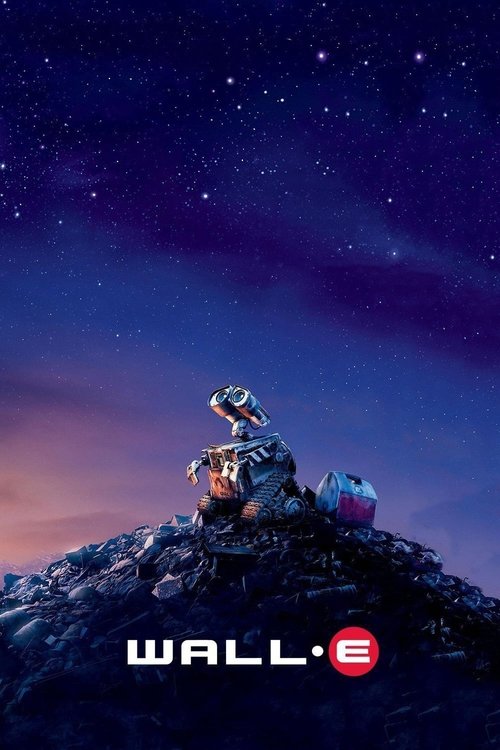
Want to know what's safe to watch? Get our weekly guide to new reviews and woke-free picks. No spam, ever.
WALL-E does not qualify as a woke trap under VVWS v1.1. A woke trap requires that the woke content be concealed until more than 50 percent of the runtime. WALL-E's environmental and anti-consumerism messaging is embedded in the premise itself: the film opens on a garbage-covered Earth. The Buy n Large corporation's role in destroying the planet is established in the first ten minutes via video playback. There is no deception. The film's ideology is front-loaded and visible. The margin is barely positive at +1 TRAD, reflecting genuine ideological tension between the film's anti-corporate environmental argument and its traditional love story and pro-human-agency ending.
Our Verdict on WALL-E
WALL-E is one of the most technically and emotionally ambitious animated films ever made. It is also one of the most ideologically complicated films Pixar has produced. These two facts exist in the same movie, and reviewing it honestly requires holding both.
The first thirty minutes are almost dialogue-free. WALL-E, a small trash-compacting robot, is the last working machine on an abandoned Earth. He has been doing his job for seven hundred years, compacting garbage into cubes and stacking them into towers that now dwarf skyscrapers. He has developed something like a personality and something like longing. He collects things: a Rubik's cube, a rubber duck, a VHS copy of Hello, Dolly! He watches the musical on repeat. He doesn't understand it, exactly, but he understands the reaching toward another person that it depicts.
Then EVE arrives. A sleek white robot sent from a spaceship to scan for plant life on Earth. WALL-E falls immediately and completely in love with her. He shows her his treasures. He takes her hand. When lightning threatens her, he throws himself over her. The romance between two robots with no shared language is better constructed than the love story in most live-action films, because it is built entirely out of behavior. WALL-E doesn't tell EVE how he feels. He acts it, every frame.
So that's one film. Here's the other one.
The premise requires you to accept that Buy n Large Corporation destroyed the Earth through unchecked consumerism and corporate irresponsibility. The humans who once lived here are now aboard the Axiom, a giant luxury spaceship, where BNL has been serving them for seven hundred years. They are obese. They hover in motorized chairs and stare at screens and drink their food through straws. They have not looked at each other in centuries. When two of them, John and Mary, have their screens blocked by WALL-E and actually look at each other, they are stunned by the pool, the stars, the other human being they had not noticed.
This is the critique, and it is not subtle. Corporate comfort-maximization has made humanity passive, fat, and incapable. The film names the villain: a corporation. It shows the consequence: the literal destruction of Earth, the infantilization of the species. This is environmental and anti-consumerism ideology at the structural level of the premise. You cannot watch WALL-E without engaging with it because it is the world of the film.
The honest VVWS score reflects the tension. The woke tropes score heavily because the ideology is real, embedded, and central. The traditional tropes score almost as heavily because WALL-E's love story and the Captain's redemptive arc are genuine and powerful.
The Captain's arc is the film's most underrated element. He has been running on autopilot, letting the ship's computer AUTO make every decision. When he discovers that Earth has a plant, that humanity could return, that there is something worth fighting for, he has to physically stand up against a robot that will not let him. The act of standing, literally pushing against a machine that is trying to keep him sitting, is the film's most traditionally human moment. Individual agency reasserting itself against systemic dependency. He chooses to do hard things rather than easy ones.
EVE's arc also reads traditionally. She has a directive: find plant, return to ship. She follows her programming. Then WALL-E happens to her, and she has to decide what she actually values. She chooses him. She risks her mission, her design, her purpose. She crosses the vastness of space for a little robot who held her hand in a rainstorm.
The ending gives you both arguments at once. Humanity returns to Earth. They rebuild. They plant the first crops with their own hands. An ancient and manual act. The corporate system that kept them dependent collapses. Human agency wins. This is the traditional redemption the film earns after setting up its anti-corporate argument. It is not a contradiction. It is the film completing its own arc.
WALL-E is not a propaganda film. It is a film with a political premise and a traditional heart. For conservative viewers, the honest answer is that the environmental and anti-corporate messaging is real and you should know it going in. The love story and the human redemption arc are equally real. The film earned a MIXED verdict because it genuinely holds both.
Woke Tropes & Content Analysis
Formula: Weighted Score = Severity × Authenticity Multiplier × Centrality Multiplier
🔴 Woke Tropes
| Trope | Severity | Authenticity | Centrality | Score |
|---|---|---|---|---|
| Anti-corporate villainy / corporate capitalism destroys Earth | 4 | High | High | 5.04 |
| Environmentalism / humanity destroyed the planet through consumerism | 4 | High | High | 5.04 |
| Humanity reduced to passive, obese consumers by corporate dependency | 3 | Moderate | Moderate | 3 |
| Technology dependency / automation as dehumanization | 2 | Moderate | Moderate | 2 |
| TOTAL WOKE | 15.1 | |||
🟢 Traditional Tropes
| Trope | Severity | Authenticity | Centrality | Score |
|---|---|---|---|---|
| Selfless romantic devotion as the highest calling | 5 | High | High | 6.3 |
| Human agency and return to Earth / return to work | 4 | High | High | 5.04 |
| Courage to act against a system that keeps you passive | 4 | High | Moderate | 2.8 |
| Sacrifice in service of love | 3 | High | Moderate | 2.1 |
| TOTAL TRADITIONAL | 16.2 | |||
Score Margin: +1 TRAD
Director: Andrew Stanton
MIXED LEANING WOKE. Finding Nemo is straightforwardly pro-fatherhood. WALL-E carries a heavier ideological payload: the destruction of Earth through corporate greed and consumerism, humanity reduced to passive, obese consumers by a corporation's comfort-maximization program. These are left-coded political arguments delivered through the premise itself. Stanton has said in interviews that WALL-E grew from his concern about whether he was raising his kids to be truly alive or just comfortable. That personal origin does not strip the political content. The anti-corporate environmental argument is real and it is the film's first act foundation.Andrew Stanton is one of Pixar's founding generation. He directed A Bug's Life, Finding Nemo, and WALL-E before his live-action detour with John Carter (2012). WALL-E is his most thematically ambitious film and his most ideologically charged. The premise required him to argue, visually, that unchecked corporate capitalism and consumer culture would result in a ruined Earth and a lobotomized humanity. He makes that argument compellingly. He then complicates it with a love story and an ending that restores human agency. The tension between those two things is what makes WALL-E worth talking about. It is not a simple propaganda film. But it is not a neutral film either.
Content Breakdown
Adult Viewer Insight
The political reading of WALL-E that bothers conservative adults is understandable and not wrong. Buy n Large is every criticism of corporate America in one logo. The obese passengers on the Axiom look like a critique of American consumer culture that the filmmakers could not have been unaware of. Stanton has said the film is about parenting and about whether he was raising his kids to be truly alive. That personal framing is real and it coexists with the political one. What conservative adults will find genuinely satisfying is the ending. Humanity does not wait for the corporation or the government or the robot to fix things. The Captain gets up out of his chair. The people return to Earth. They plant seeds with their hands. The message at the end of the film is not that systems save us. It is that humans, acting with agency and love, save themselves. That is worth something.
Parental Guidance
Rated G. No language, no sexual content, no conventional violence. The challenges for parents are thematic. Very young children will mostly experience it as a sweet robot love story and not engage with the corporate satire or obesity commentary. Older children may ask why the people are so fat or why the Earth is covered in garbage. These are good conversations to have. WALL-E's near-death sequence near the end is emotionally intense. Overall, one of the safer Pixar films from a content standpoint.
Is WALL-E Safe for Kids?
[object Object]
Find WALL-E on Amazon Prime Video, rent, or buy:
▶ Stream or Buy on AmazonAs an Amazon Associate, VirtueVigil earns from qualifying purchases.

Community Discussion 0
Subscribe to comment.
Join the VirtueVigil community to share your perspective on this review.